Production ml

High-Performance Engineering: Forward Deployed at Aston Martin F1

High-Performance Engineering: Forward Deployed at Aston Martin F1

A session on CoreWeave's forward deployed engineering partnership with the Aston Martin Aramco F1 Team, covering why Formula 1 is an unforgiving environment for AI, and three projects: a unified data platform for aerodynamic and telemetry data, Delta to Map, a small transformer model that reduces the gap between wind tunnel predictions and track measurements, and Radio Insights, a fine-tuned speech-to-text and agentic system that makes sense of 40 live radio channels. The discussion extracts lessons applicable to any team moving AI from experiment to production under fixed deadlines.
Evals in AI: A Deep Dive — Tejas Kumar, IBM

Evals in AI: A Deep Dive — Tejas Kumar, IBM

This deep dive into AI evaluation (evals) starts by clarifying their role in providing ahead-of-time reliability and security for non-deterministic systems, contrasted with just-in-time harnesses. Tejas Kumar defines evals as "fuzzy unit tests" and outlines their core components: test cases, expected behavior, a judge, and aggregation. He explores various evaluation techniques, emphasizing the challenges and biases of using LLMs as judges, such as position bias, sycophancy, self-preference, and verbosity. The presentation details a practical methodology for calibrating LLM judges against human verdicts using a "golden dataset" to achieve an 80-85% agreement threshold, which can then be enforced as a CI/CD gate. A live coding demonstration illustrates the evolution from simple string matching to a policy-aware LLM judge, showcasing how refining policy and incorporating RAG (Retrieval Augmented Generation) via OpenRAG dramatically improves decision-making. The discussion also covers strategies for maintaining living datasets in production and managing evaluation costs.

Routing LLM Inference in Production: From Engine Signals to Policy — Qianru Lao & Lu Zhang, OpenAI

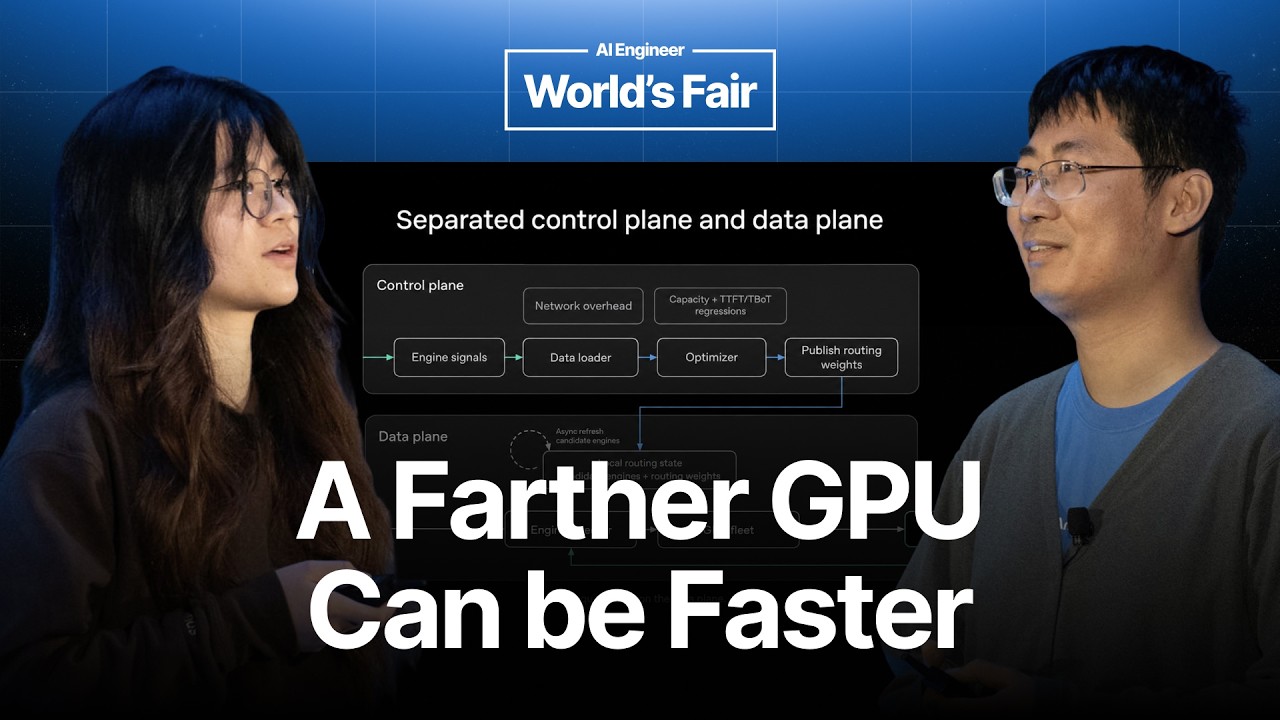
Routing LLM Inference in Production: From Engine Signals to Policy — Qianru Lao & Lu Zhang, OpenAI

This talk outlines OpenAI's journey in building a robust inference load balancer. It details the transition from an initial feedback-loop-driven system, which suffered from explainability issues and disruptive oscillations, to a sophisticated control plane/data plane architecture. The new system leverages a global view to optimize end-to-end latency across all traffic, balancing network distance with engine-side queuing, and includes critical protection mechanisms like outlier penalties, dynamic retry budgets, and load shedding to ensure stability in production.

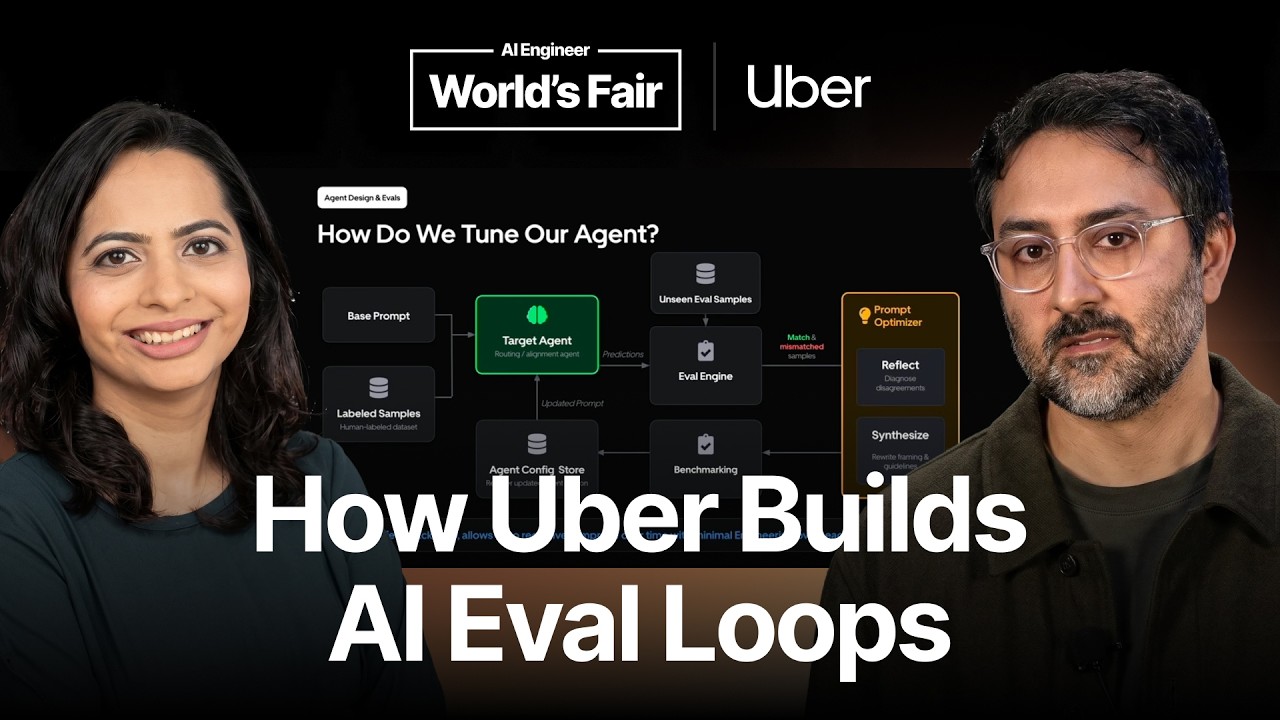
Building Closed-Loop Evals for a Multimodal Agent at Scale — Soumya Gupta & Jai Chopra, Uber

Building Closed-Loop Evals for a Multimodal Agent at Scale — Soumya Gupta & Jai Chopra, Uber

This talk details how Uber Eats designed and implemented a multimodal AI agent to enhance food photography for independent merchants, addressing challenges like maintaining authenticity, merchant brand, and marketplace diversity while operating at scale. It covers the intricate evaluation strategies for routing and image editing agents, including continuous learning loops, managing drift, countering reward hacking, and balancing creative freedom with rigid safety guardrails. The speakers explain how they built a closed feedback loop combining offline human labeling, internal dogfooding, and online production signals to ensure robust and adaptive performance.

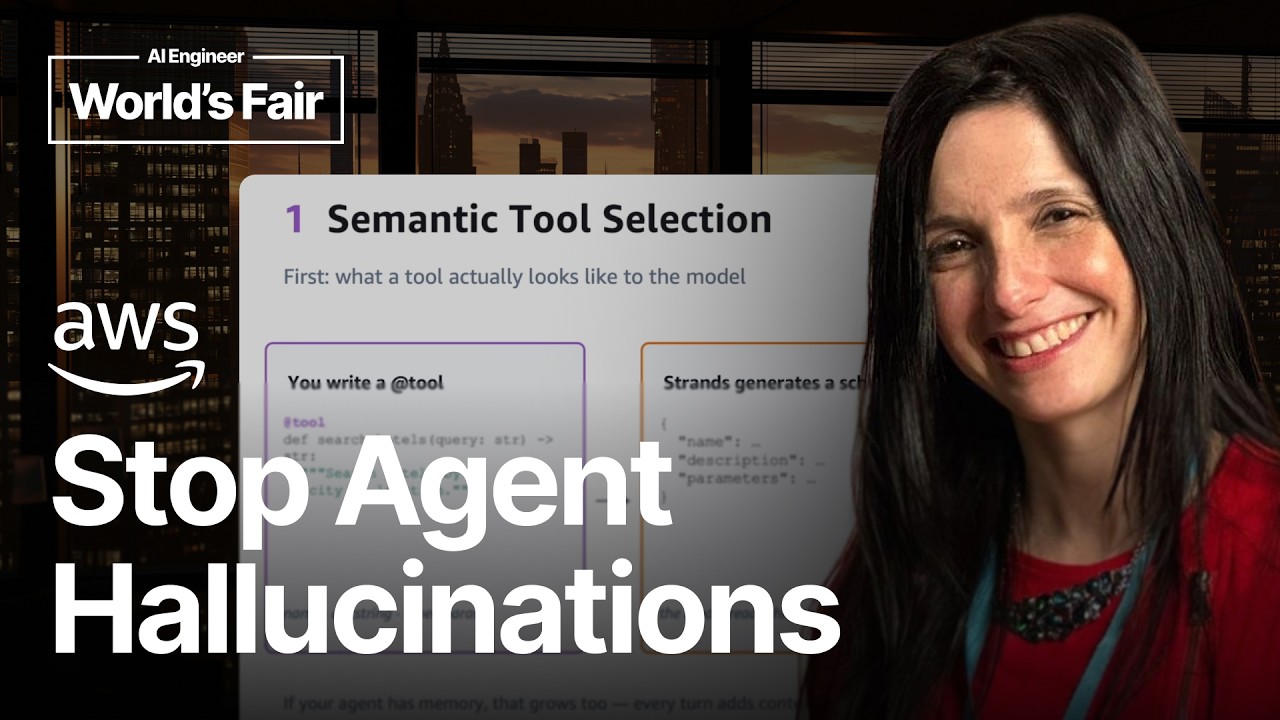
Stop AI Agent Hallucinations: 5 Techniques + Production Patterns - Elizabeth Fuentes, AWS

Stop AI Agent Hallucinations: 5 Techniques + Production Patterns - Elizabeth Fuentes, AWS

Explore five research-backed techniques to overcome common AI agent architectural limitations like hallucination, inefficient tool use, and rule violations. Learn how to implement semantic tool selection, Graph-RAG, multi-agent validation, neurosymbolic guardrails, and agent steering through code changes, not prompt engineering, and deploy them using AWS Bedrock Agent Core for robust and cost-effective AI agents.

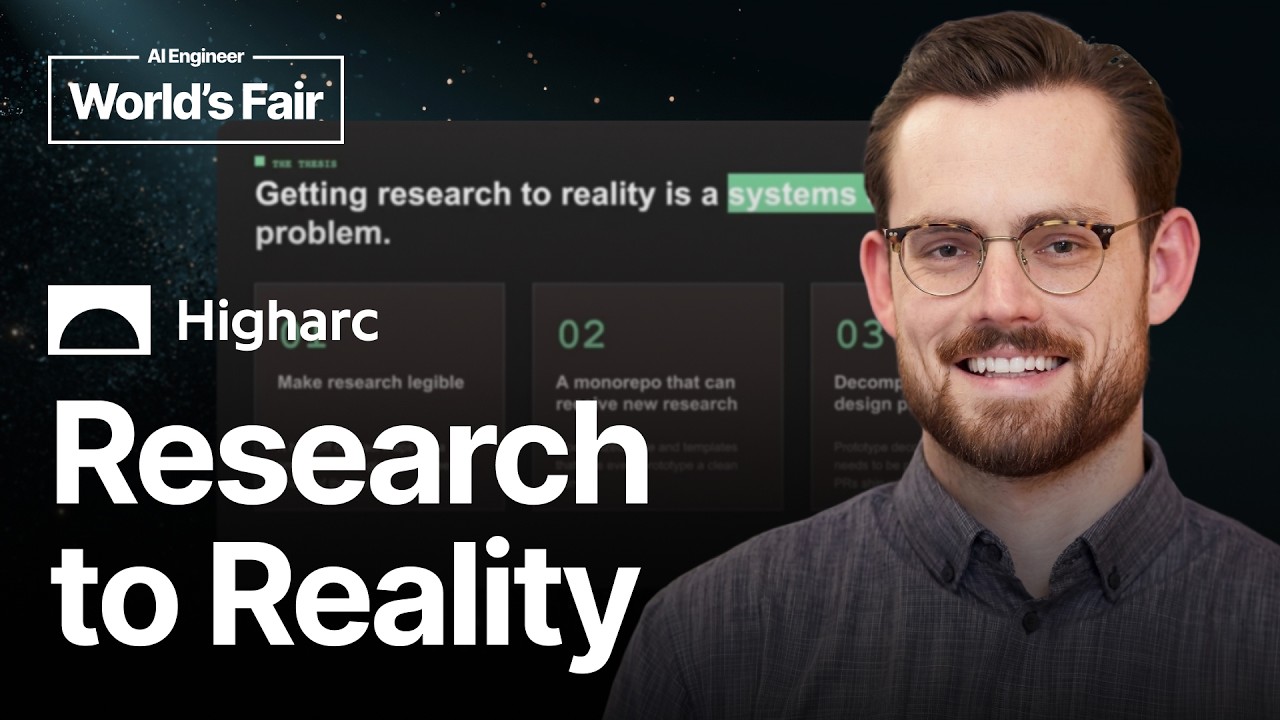
Research to Reality: Bringing Frontier ML Research to Production - Vaidas Razgaitis, Higharc

Research to Reality: Bringing Frontier ML Research to Production - Vaidas Razgaitis, Higharc

Vaidas Razgaitis, Senior Research Engineer at Higharc, shares three tactical tips to accelerate the transition of novel AI/ML research into production-ready features. He emphasizes addressing the critical handoff challenge between ML researchers and software engineers through structured documentation (Research Prototype Taxonomy Document), a well-organized monorepo utilizing decoupled microservices, and a systematic approach to code decomposition and PR review. These strategies aim to improve legibility, maintainability, and delivery speed for ML-driven products.