Orchestration

Why Agents are Driving Software Development to the Cloud

Why Agents are Driving Software Development to the Cloud

Zach Lloyd, CEO of Warp, explains why the future of software development is moving from local, interactive agents to cloud-native, collaborative systems. He discusses the flaws in the "dev box" sandbox model, the decline of traditional SaaS interfaces in favor of "just-in-time apps," and how platforms like Warp's Oz are providing the necessary orchestration, observability, and access control for teams to effectively deploy AI agents at scale.
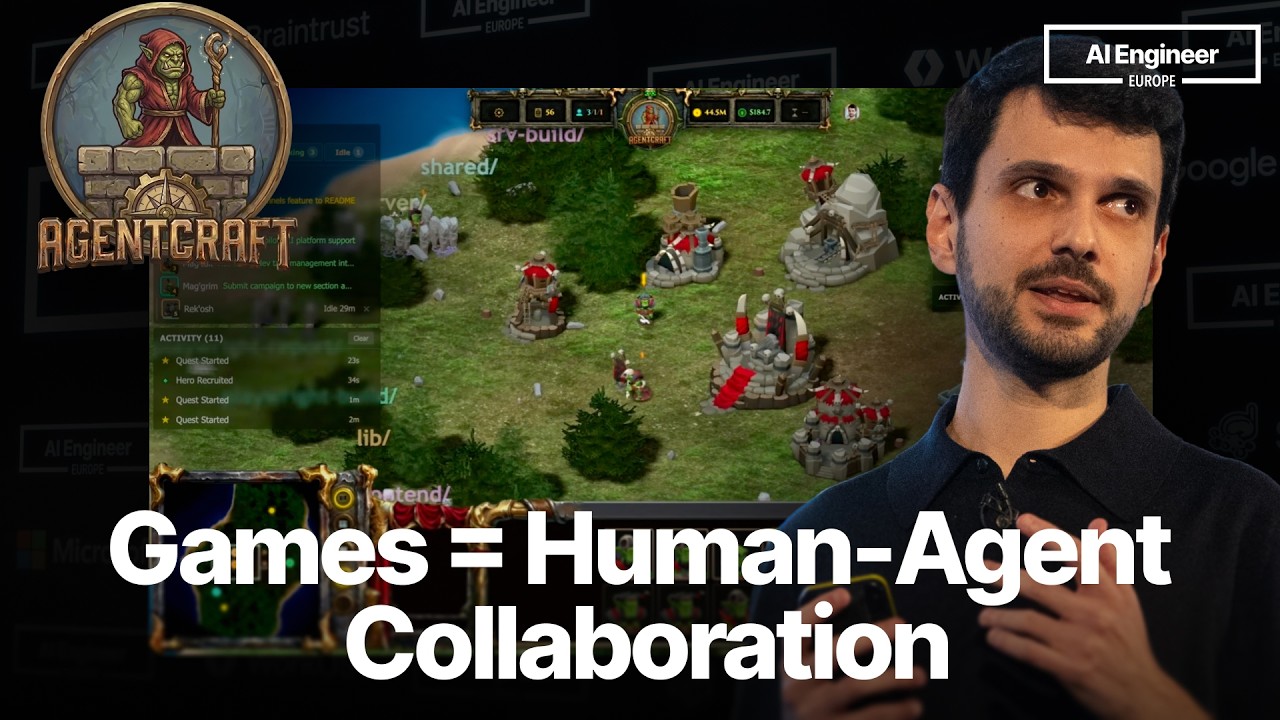
AgentCraft: Putting the Orc in Orchestration — Ido Salomon

AgentCraft: Putting the Orc in Orchestration — Ido Salomon

As the number of AI agents grows, humans become the bottleneck. This talk introduces AgentCraft, a game-inspired orchestrator that draws lessons from Real-Time Strategy (RTS) games to enhance human-agent collaboration, improve visibility, and increase agent autonomy, ultimately raising the ceiling of what's possible.

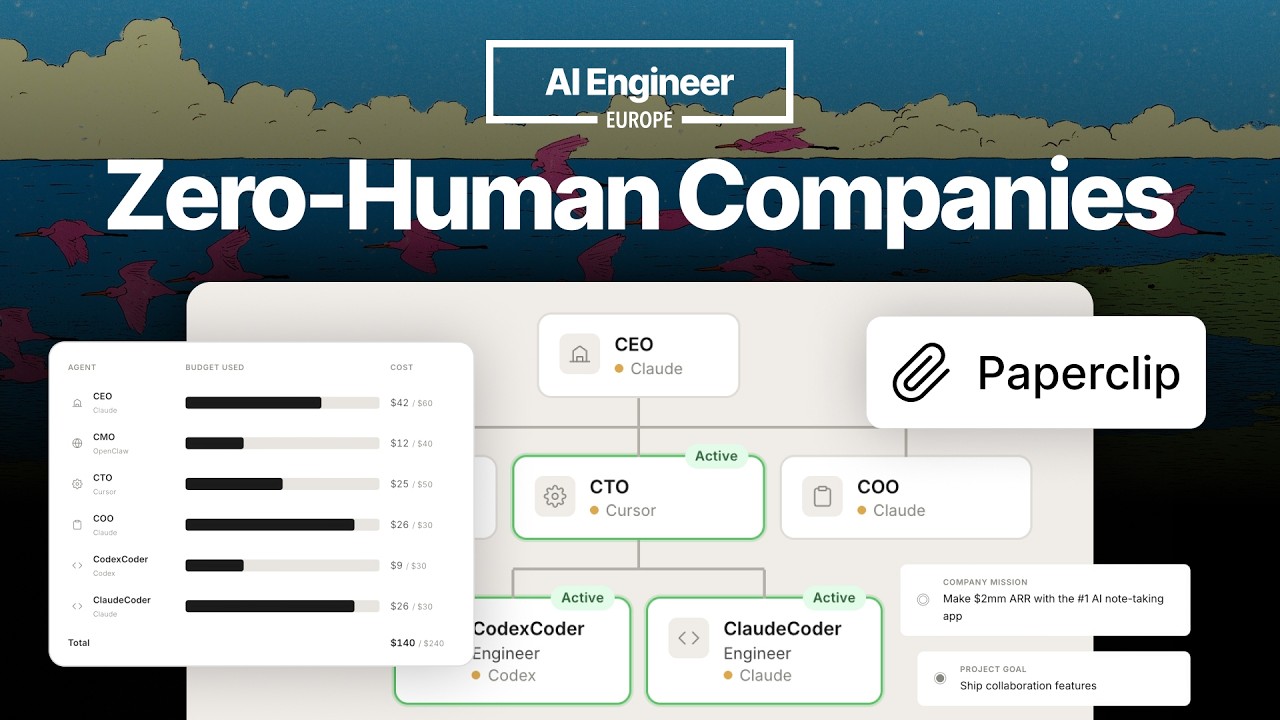
Paperclip: Open Source Human Control Plane for AI Labor — Dotta Bippa

Paperclip: Open Source Human Control Plane for AI Labor — Dotta Bippa

Dotta, the creator of Paperclip, introduces it as an open-source orchestrator for building "zero-human companies." This talk demonstrates how to set up an organization of AI agents, leverage skills and custom instructions for reliable work, and automate business processes. Through a live demo, Dotta showcases creating a company from scratch, managing agent workflows with QA and routines, and outlines the exciting future roadmap for the platform.

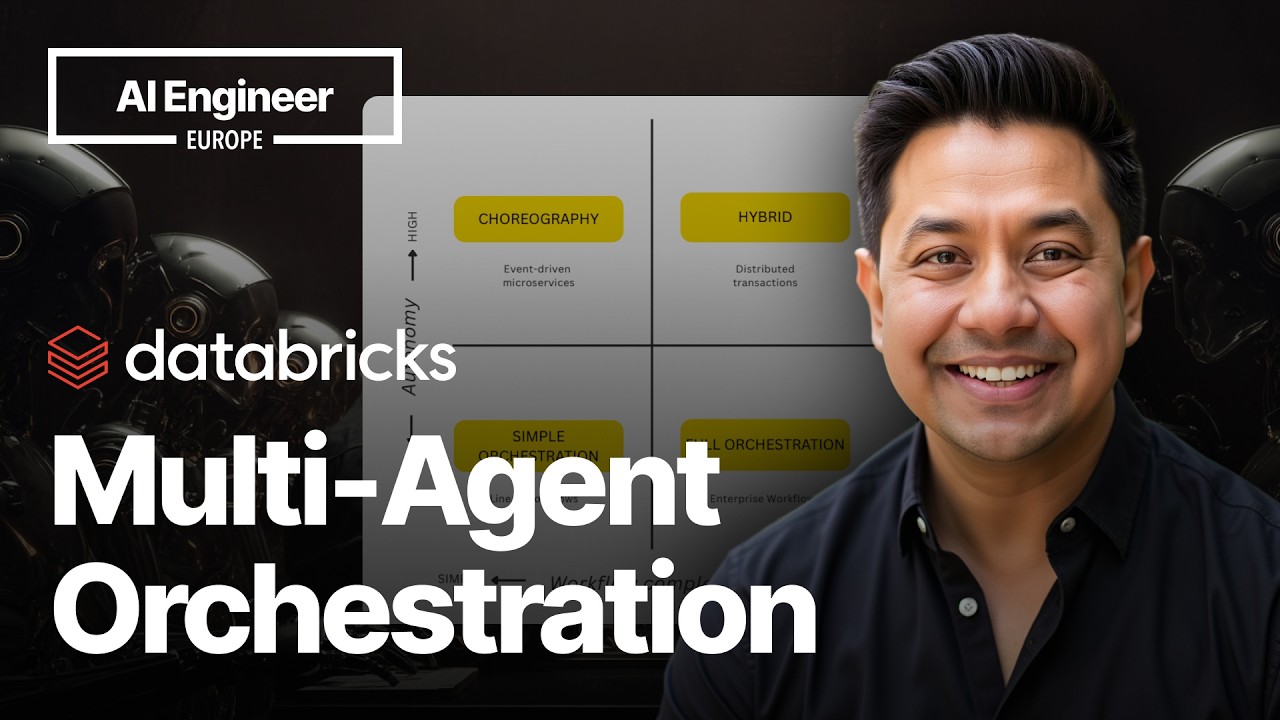
From Chaos to Choreography: Multi-Agent Orchestration Patterns That Actually Work — Sandipan Bhaumik

From Chaos to Choreography: Multi-Agent Orchestration Patterns That Actually Work — Sandipan Bhaumik

Sandipan Bhaumik from Databricks explains that scaling from one to many AI agents is a distributed systems problem, not an AI one. He details common architectural anti-patterns like shared mutable state that cause race conditions and silent failures. The talk provides a practical framework based on distributed systems engineering, covering crucial patterns like choreography vs. orchestration, immutable state management with versioning, data contracts, and failure recovery using circuit breakers and compensation (Saga) patterns. Bhaumik illustrates how to build a robust, production-grade multi-agent architecture using tools like Databricks, LangGraph, and MLflow.

How to Pass Context in an Agentic AI Flow

How to Pass Context in an Agentic AI Flow

Grant Miller contrasts the static, single-application context of traditional OAuth with the dynamic, multi-system nature of agentic AI. He explains that agentic flows, involving orchestration, multiple agents, and LLMs, require a more sophisticated approach than simple prompt engineering. The video introduces 'context engineering' as the key strategy, which involves managing the entire system state, user context, and task history to optimize AI interactions and deliver accurate, context-aware responses.

Write Reliable Software with Temporal

Write Reliable Software with Temporal

Johann Schleier-Smith from Temporal explains Durable Execution, a paradigm for building reliable, long-running applications. He details how Temporal's model of deterministic workflows and stateful activities provides a robust alternative to traditional checkpointing and event-driven architectures, especially for complex, LLM-driven agentic systems.