How to Pass Context in an Agentic AI Flow
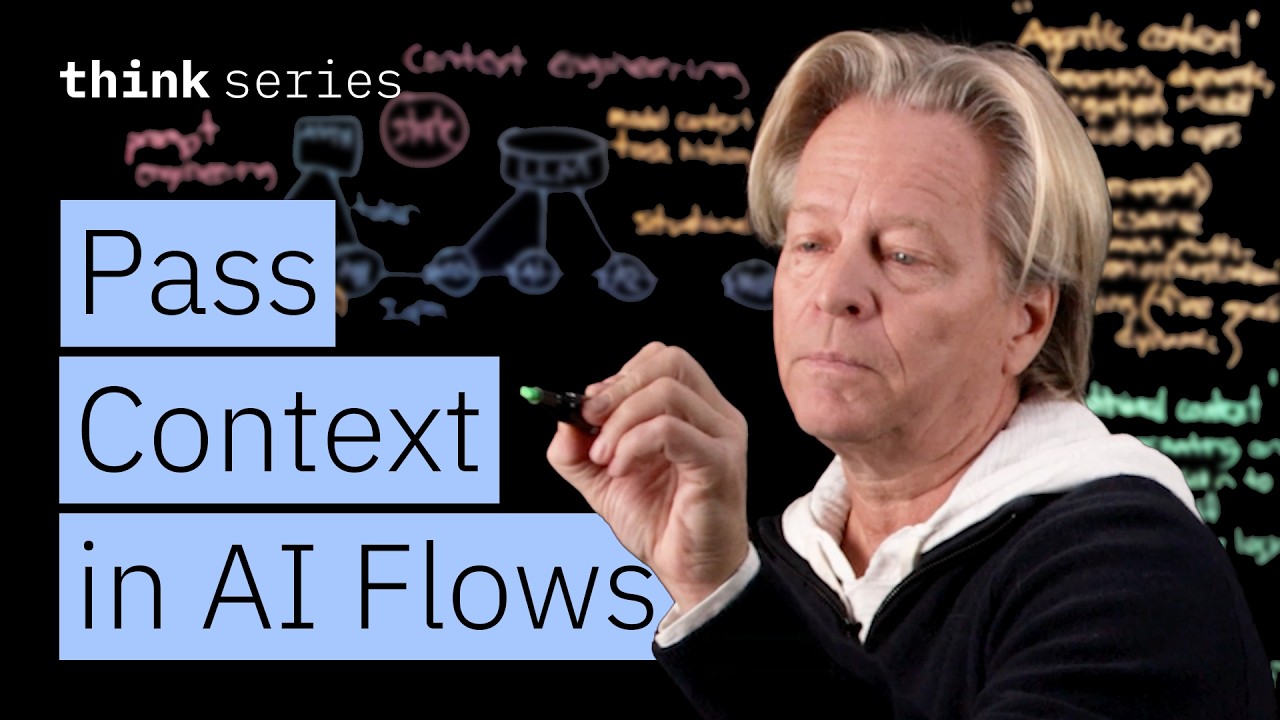
Grant Miller contrasts the static, single-application context of traditional OAuth with the dynamic, multi-system nature of agentic AI. He explains that agentic flows, involving orchestration, multiple agents, and LLMs, require a more sophisticated approach than simple prompt engineering. The video introduces 'context engineering' as the key strategy, which involves managing the entire system state, user context, and task history to optimize AI interactions and deliver accurate, context-aware responses.
Understanding Context: From Traditional OAuth to Agentic AI
Context in traditional systems, like those using OAuth, is well-defined and constrained. It typically involves three core components:
- Who: A specific user.
- What: The application and resource the user is interacting with.
- Conditions: The permissions (scopes) granted for a single login session, often managed via a token.
This model is straightforward but limited to a single application acting on a user’s behalf for a specific, pre-defined task.
Agentic systems introduce a far more complex and dynamic environment. The context here is not static but is defined by several key characteristics:
- Autonomous: Agents can think and perform tasks independently.
- Dynamic: The path to a solution is non-deterministic and can change with each execution.
- Delegation-based: Agents can delegate tasks to other agents or systems.
- Multi-system: Interactions span multiple applications, agents, LLMs, and resources.
In an agentic flow, the context expands significantly. The “who” now includes the user and multiple agents. The “what” is no longer a single resource but a multi-system orchestration. The “conditions” are not static scopes but fine-grained, dynamic access rules that adapt to the situation.
The Dimensions of Context in Agentic Systems
To effectively manage an agentic system, one must consider multiple layers of context that interact with each other:
- Situational Context: This refers to the overall state of the environment, including the orchestration layer, all active agents, servers, and available resources. It’s the