Oauth

How to Let AI Agents Sign Up for Your App Safely — Isabelle Williams, WorkOS

How to Let AI Agents Sign Up for Your App Safely — Isabelle Williams, WorkOS

Isabelle Williams of WorkOS demonstrates how to make an application ready for agent users, using a travel app called Waypoint. She covers the auth.md protocol for anonymous agent access and claim flows, ID-JAG identity assertions that let an agent's provider vouch for a user without a signup form, and scoped, revocable agent tokens that keep agent permissions auditable and bounded.
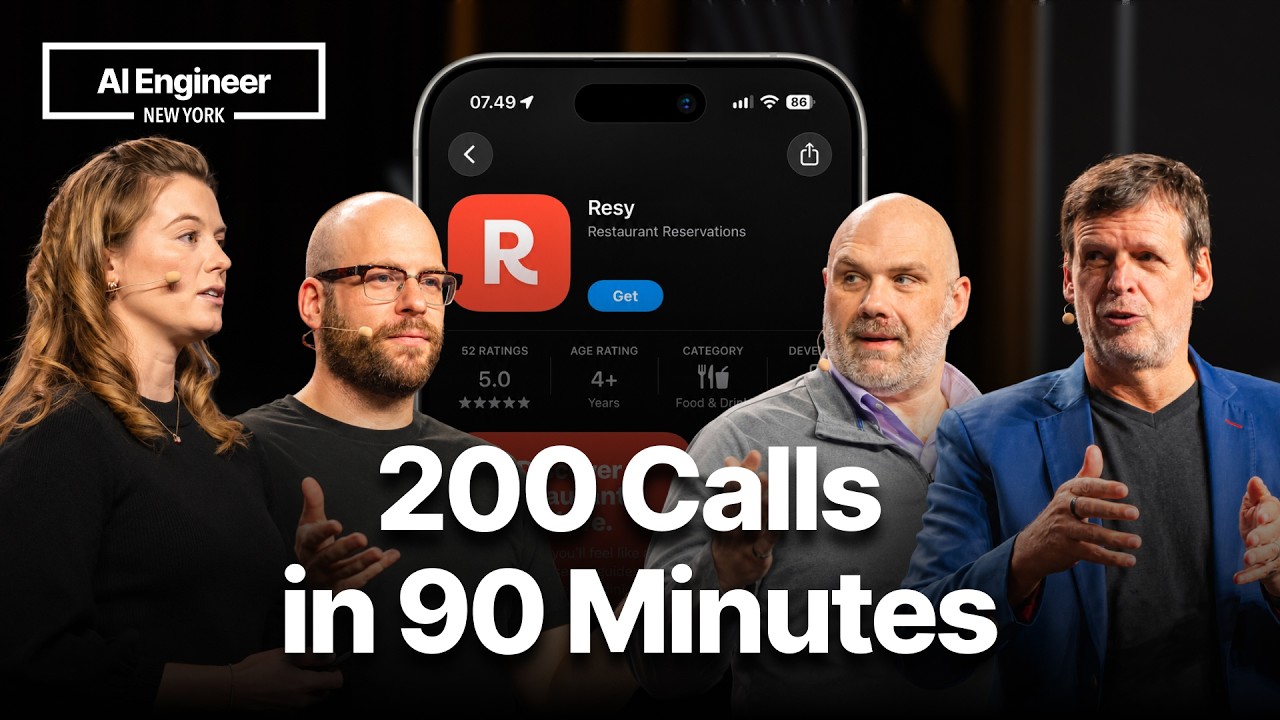
An AI Agent Got Its User Banned From Resy — Keycard, JPMorgan Chase & AAuth

An AI Agent Got Its User Banned From Resy — Keycard, JPMorgan Chase & AAuth

A panel of experts discusses the challenges of granting autonomy to AI agents due to coarse-grained authorization systems. They advocate for intent-based runtime authorization, leveraging concepts like "missions" and "budgets" from AOTH, brain-hands architecture, and dynamic policy management. The discussion covers agentic commerce, accountability through tamper-resistant audit logs, and whether P(doom) is a real threat, emphasizing engineering ingenuity and societal learning from failures.

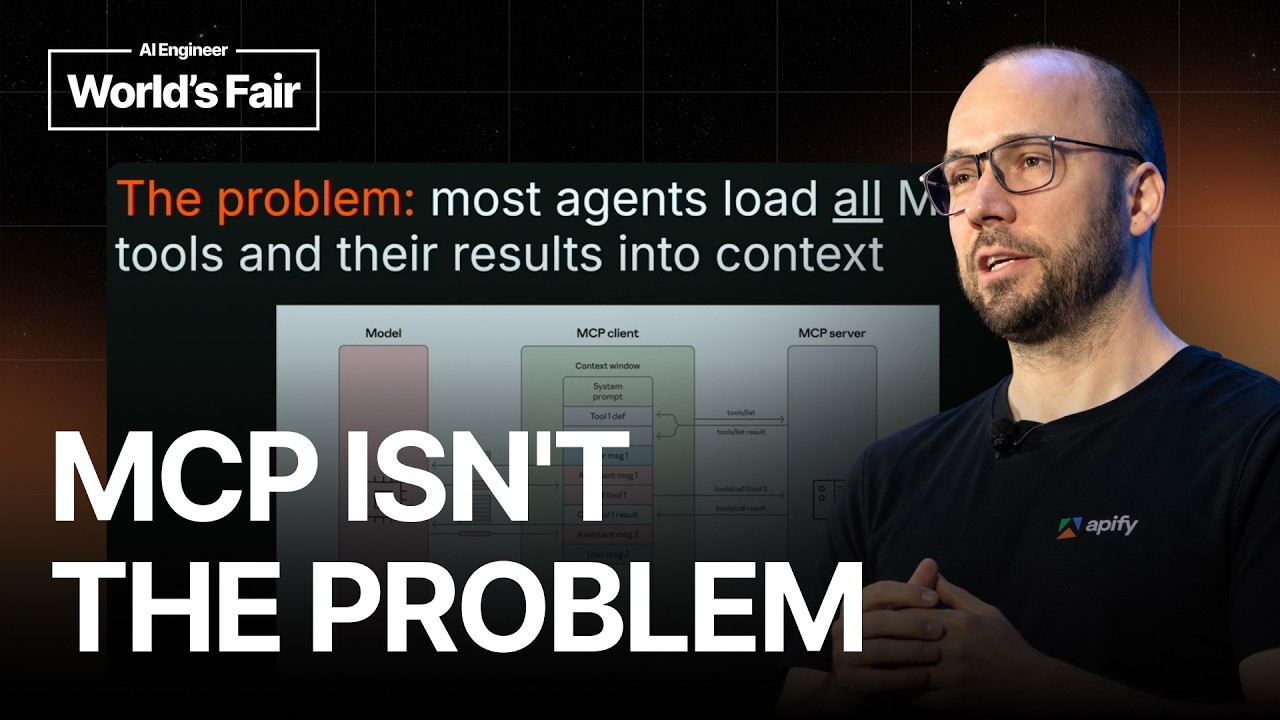
MCP Doesn't Suck. Your Agent Does. — Jan Čurn, Apify

MCP Doesn't Suck. Your Agent Does. — Jan Čurn, Apify

Jan Čurn, founder and CEO of Apify, argues that the backlash against MCP targets the wrong layer. Context bloat and token burn come from naive agent harnesses, not the protocol. He reviews the industry's three main fixes (sub-agents, progressive tool discovery and Code Mode), explains why agents work well with CLIs, proposes MCP for remote access and CLIs for local use, and demos mcpc, Apify's open-source universal MCP CLI client, alongside early Connector Evals results.

5 Ways to Connect AI Agents to Tools: From APIs to MCP

5 Ways to Connect AI Agents to Tools: From APIs to MCP

Grant Miller outlines five evolving patterns for integrating AI agents with tools, starting from simple direct API connections to complex, secure token-based architectures. The discussion highlights the progression of these methods, emphasizing how authentication, user delegation, abstraction layers like MCP, and secure credential management using vaults improve security, observability, and scalability in agentic systems.

How to Pass Context in an Agentic AI Flow

How to Pass Context in an Agentic AI Flow

Grant Miller contrasts the static, single-application context of traditional OAuth with the dynamic, multi-system nature of agentic AI. He explains that agentic flows, involving orchestration, multiple agents, and LLMs, require a more sophisticated approach than simple prompt engineering. The video introduces 'context engineering' as the key strategy, which involves managing the entire system state, user context, and task history to optimize AI interactions and deliver accurate, context-aware responses.

Identity for AI Agents - Patrick Riley & Carlos Galan, Auth0

Identity for AI Agents - Patrick Riley & Carlos Galan, Auth0

This session from Okta and Auth0 introduces a comprehensive framework for securing AI agents, covering identity establishment, delegated API access via Token Vault, user consent for risky operations using Asynchronous Authorization (CIBA), and integration with MCP servers.