Open telemetry

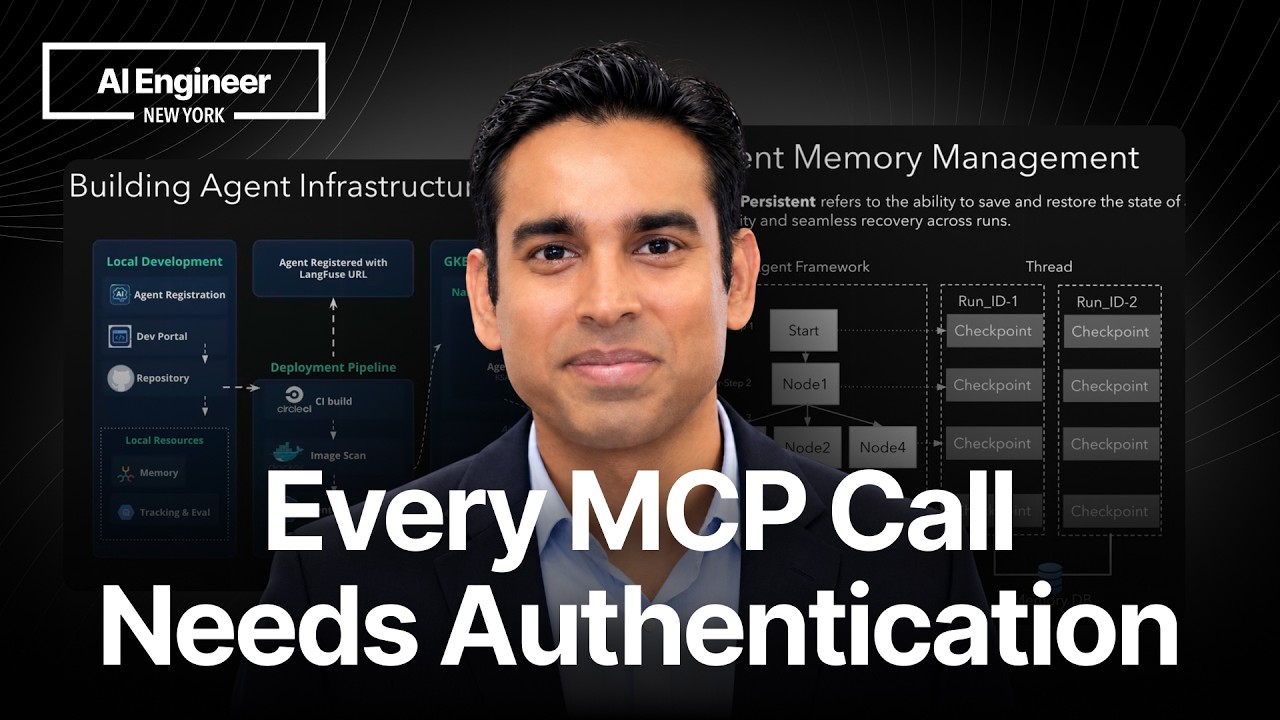
Paving the Road to Production: Governed Enterprise AI Agents — Harish Gaggar, Credit Karma

Paving the Road to Production: Governed Enterprise AI Agents — Harish Gaggar, Credit Karma

Harish Gaggar of Intuit Credit Karma walks through an internal paved path for taking enterprise AI agents from experiments to production. The talk covers portal-based registration and provisioning, a centralized authenticated MCP gateway with custom reviewed MCP servers, gateway monitoring with OpenTelemetry, Tempo, Prometheus, and Grafana, LangGraph workflows with policy checks and human approval, durable memory through threads and checkpoints, agent tracking and evaluation records, PII filtering, and context optimization for token reduction.

AI Agents Don't Read Your Policy Docs. They Hit Your APIs — Gravitee

AI Agents Don't Read Your Policy Docs. They Hit Your APIs — Gravitee

Sam, CTO at Gravity, argues that AI agent governance must be enforced in infrastructure rather than in prompts or policy documents. Through five live demos against a hotel-booking agent, he shows a gateway blocking destructive tool calls, preventing data exfiltration, rate-limiting runaway agents, serving cached semantic responses, and rejecting oversized prompts before any LLM call. He also covers observability, vendor decoupling via LLM routing, trimming bloated MCP tool lists, and managing shadow AI.

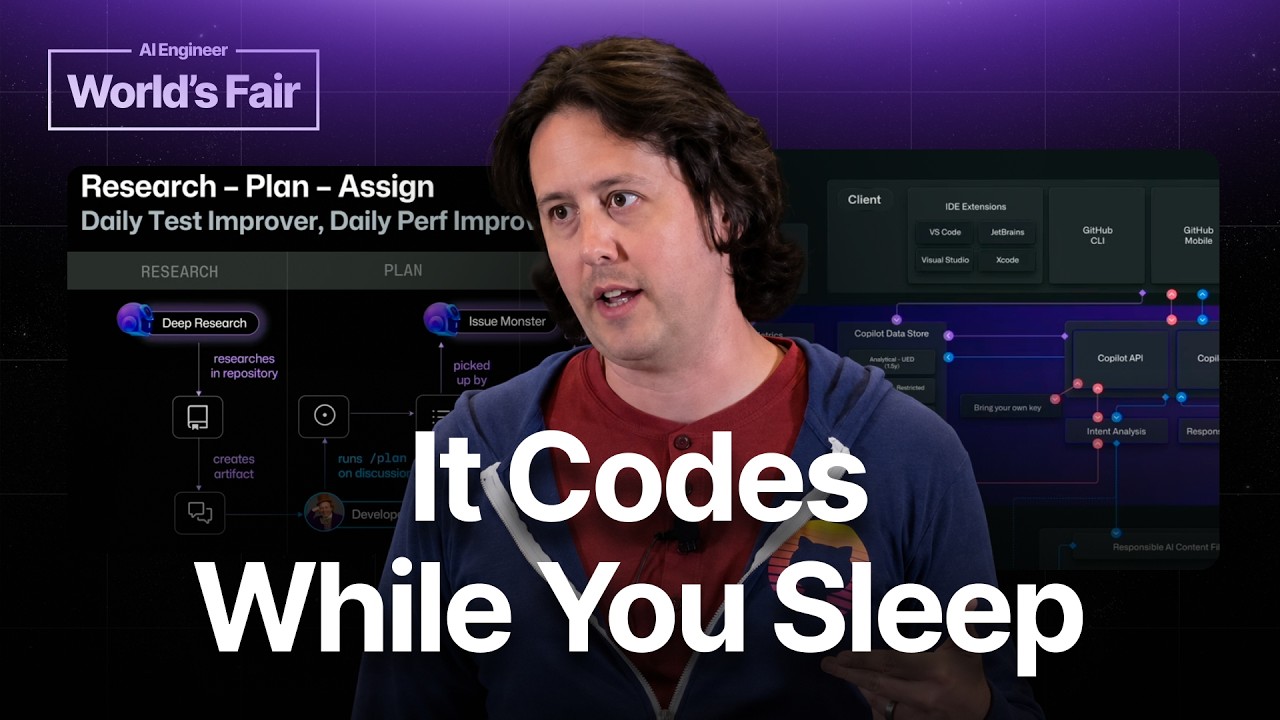
From Your Laptop to the Pipeline: Scaling Custom Agents with GitHub Copilot

From Your Laptop to the Pipeline: Scaling Custom Agents with GitHub Copilot

Jose Palafox, a GitHub Field Copilot Specialist, walks through taking a Copilot agent from a single laptop to an organization-wide, pipeline-hosted system. Topics include how the Copilot harness and CLI work, building custom agents with the agent builder, sharing them through marketplaces, orchestrating cross-repository changes, and running headless agents in GitHub Actions through GitHub Agentic Workflows, with a focus on observability and cost control.

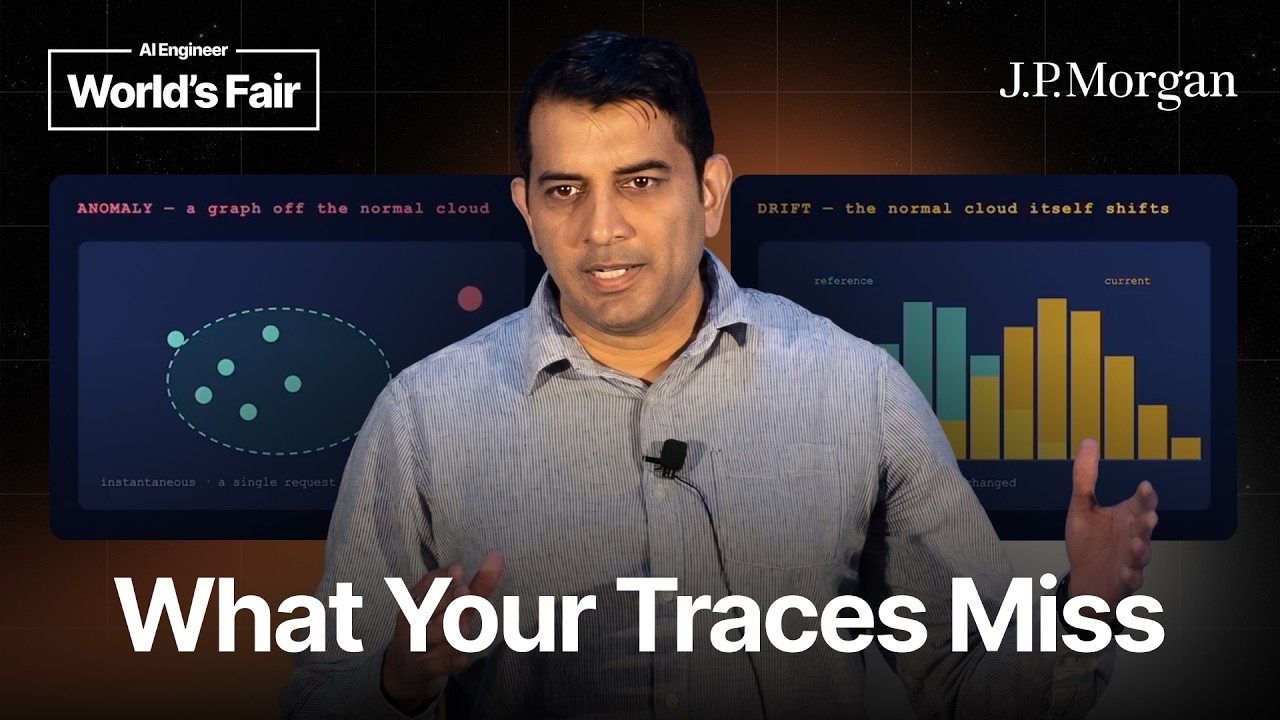
Learned Execution Graphs for Anomaly Detection & Drift in APIs — Ritvik Pandya, JP Morgan Chase

Learned Execution Graphs for Anomaly Detection & Drift in APIs — Ritvik Pandya, JP Morgan Chase

Ritvik Pandya from JP Morgan introduces 'learn execution graphs'—short-lived DAGs representing API request processing—to detect anomalies and drift in high-throughput systems. This approach localizes performance issues to exact nodes, identifies skipped or reordered steps, and differentiates between transient anomalies and fundamental system drift (structural, volume, or behavioral). It leverages per-client baselines and OpenTelemetry data to reduce mean time to discovery (MTTD) from hours to seconds, enhancing system reliability and observability.

Open vs Closed Source Agent Infra?

Open vs Closed Source Agent Infra?

This panel delves into the strategic implementation of open-source, community-driven agentic stacks, balancing the benefits of open-source frameworks and models for rapid iteration, cost-efficiency, and compliance against the complexities of abstraction and debugging in production environments. Experts from NVIDIA, Stacklok, and Prosus discuss when to adopt open source, challenges in framework choice, the critical need for robust observability, and the role of no-code solutions for diverse user groups, emphasizing the importance of aligning tooling decisions with specific use cases and organizational needs.

Why You Should Care About Observability in LLM Workflows

Why You Should Care About Observability in LLM Workflows

An inside look at AlwaysCool.ai's journey from simple GPT wrappers to a production-ready agentic infrastructure. This talk covers the evolution from synchronous tools to asynchronous, multi-step flows orchestrated by LangGraph, the critical role of OpenTelemetry for compliance and observability, and the architectural patterns of using FastAPI to serve centralized AI agents.