Multimodal ai

Has AI Finally Cracked Time Series Forecasting?

Has AI Finally Cracked Time Series Forecasting?

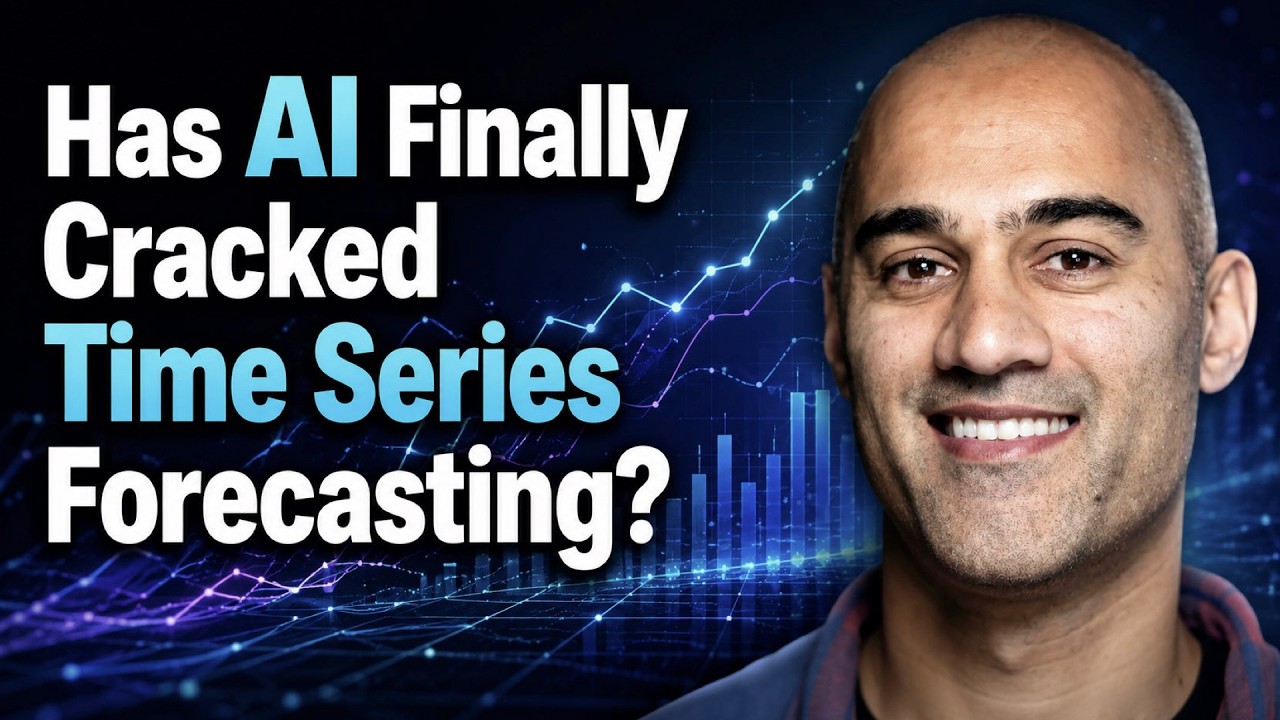
Ameet Talwalkar, CMU professor and Datadog's Chief Scientist, traces the journey of time series foundation models from early skepticism to their current impact. He details Datadog's Toto V1 and V2, highlighting breakthroughs in zero-shot performance, scaling, and the crucial role of data mix. The discussion extends to the vision of 'world models' for observability, integrating diverse data for self-healing software systems, and concludes with insights on open-weights models and AI's transformative effect on computer science and academic research.
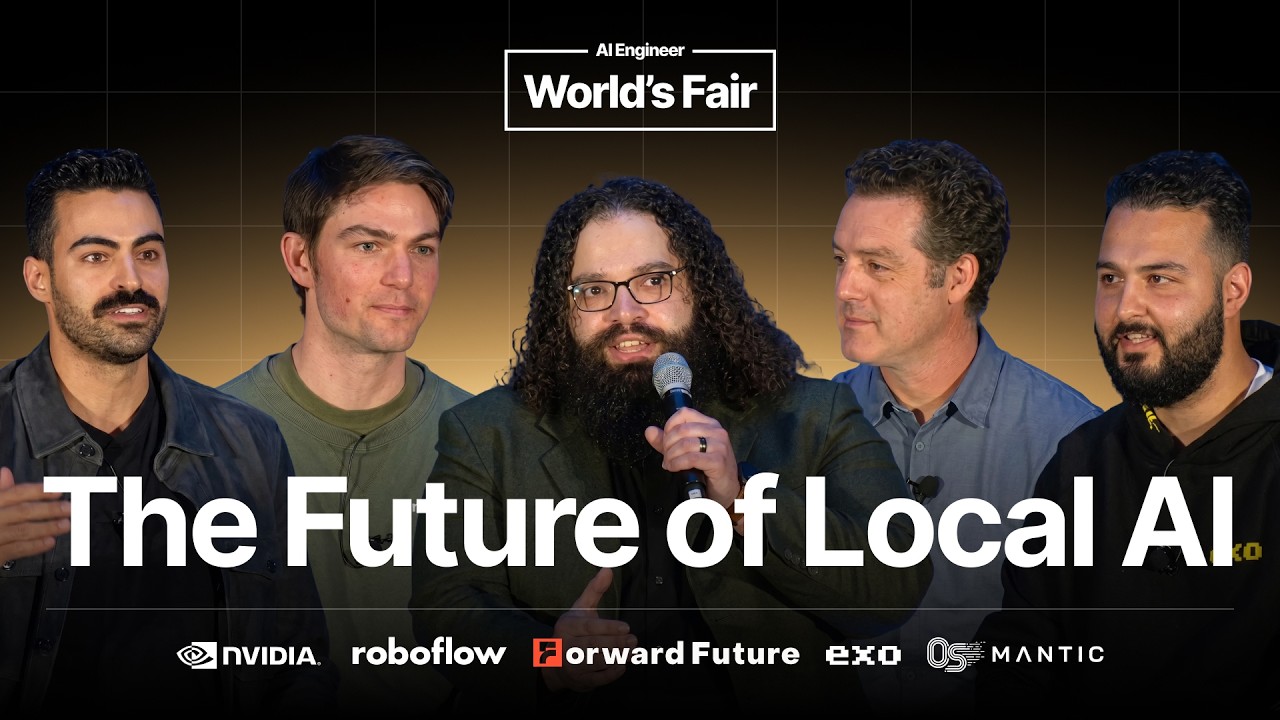
State of the Union: Why Local, Why Now — NVIDIA, Osmantic, Roboflow, EXO Labs, @matthew_berman

State of the Union: Why Local, Why Now — NVIDIA, Osmantic, Roboflow, EXO Labs, @matthew_berman

This panel discussion explores the inflection point of Local AI, driven by advanced models, improved hardware, and a robust ecosystem. Experts discuss how this shift addresses critical concerns around privacy, cost, sovereignty, and resilience, emphasizing the pivotal role of open-source AI and specialized models. They delve into technical optimizations, the evolution from generalized to specialized AI, and the challenges of making local AI accessible and performant for both enterprise and individual users.

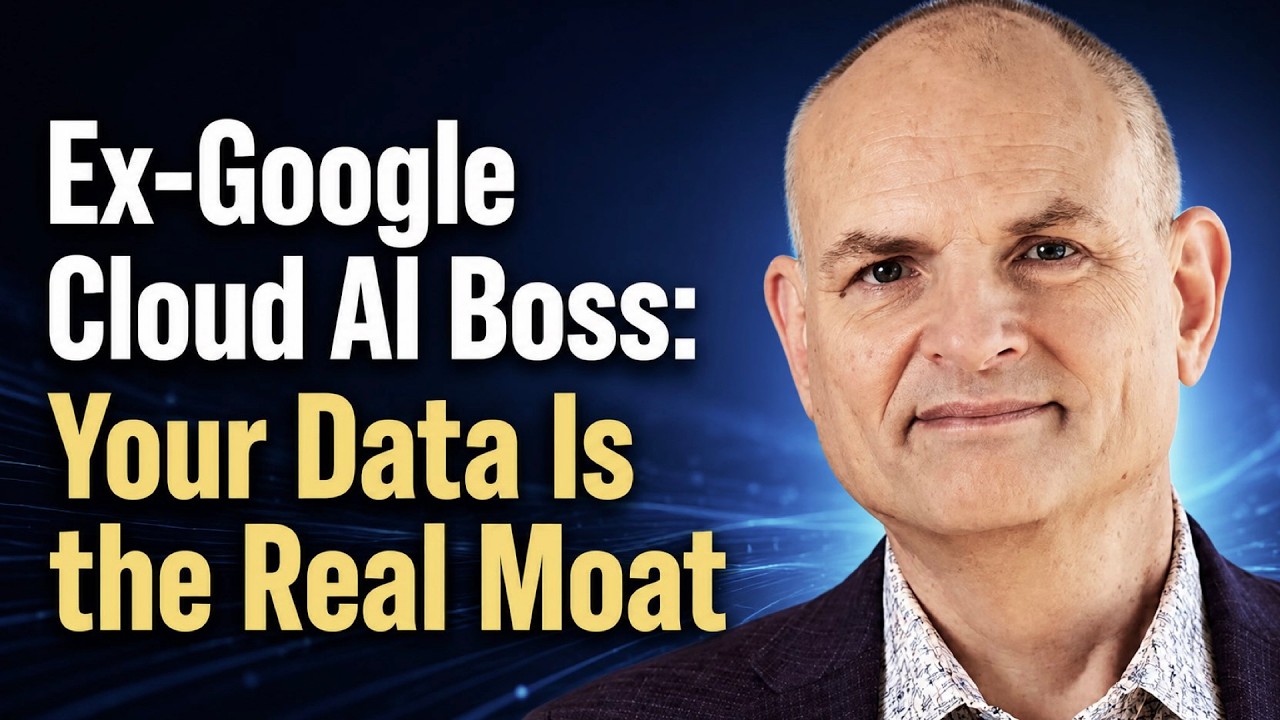
Ex-Google Cloud AI Boss: Your Data Is the Real Moat

Ex-Google Cloud AI Boss: Your Data Is the Real Moat

Andrew Moore, CEO of Lovelace AI, discusses YottaGraph, a rapidly growing, automatically constructed knowledge graph designed as a context engine for enterprise AI agents. He highlights Lovelace's differentiation from public knowledge graphs by focusing on integrating private enterprise data, the engineering challenges of entity resolution and fast multi-hop reasoning, and the critical importance of graph amendability and auditability for mission-critical applications. Moore also touches upon the future of computer science education, advocating for product management skills and emphasizing the strategic importance of domestically developed open-weights models.

Multimodal & Embodied Intelligence (Pt 1), Panel on Multimodal AI: Progress, Pitfalls, Possibilities

Multimodal & Embodied Intelligence (Pt 1), Panel on Multimodal AI: Progress, Pitfalls, Possibilities

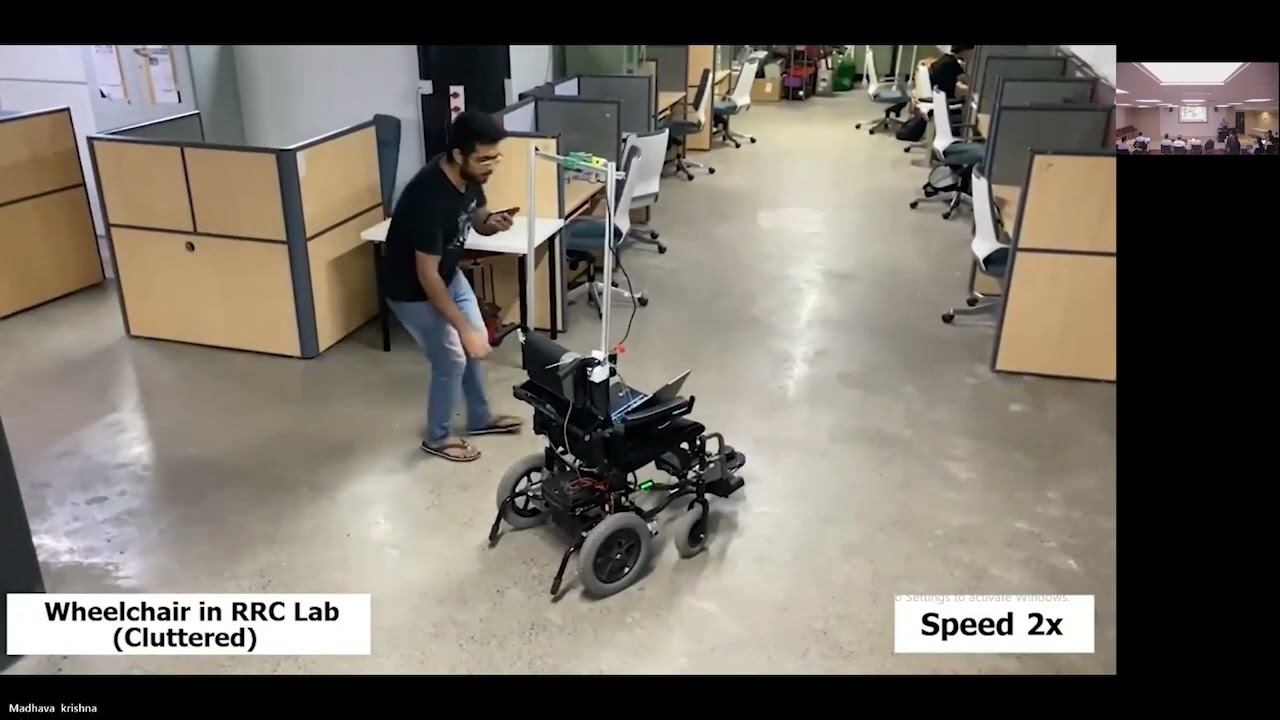
This session explored Multimodal and Embodied Intelligence, featuring talks on hybrid AI in robotics (classical vs. end-to-end), AI's role in healthcare (focusing on NCDs, deployment, and uncertainty modeling), and fundamental perception challenges in multimodal reasoning (using educational video QA and visual puzzles). A panel discussed the impact of foundation models, the blurred lines between AGI and human-like AI, critical deployment pitfalls (human factors, efficiency, architectural limits), and future directions, emphasizing task-specific models and the redefinition of 'foundation models.'

Welcome Session - Microsoft Research India Academic Summit 2026

Welcome Session - Microsoft Research India Academic Summit 2026

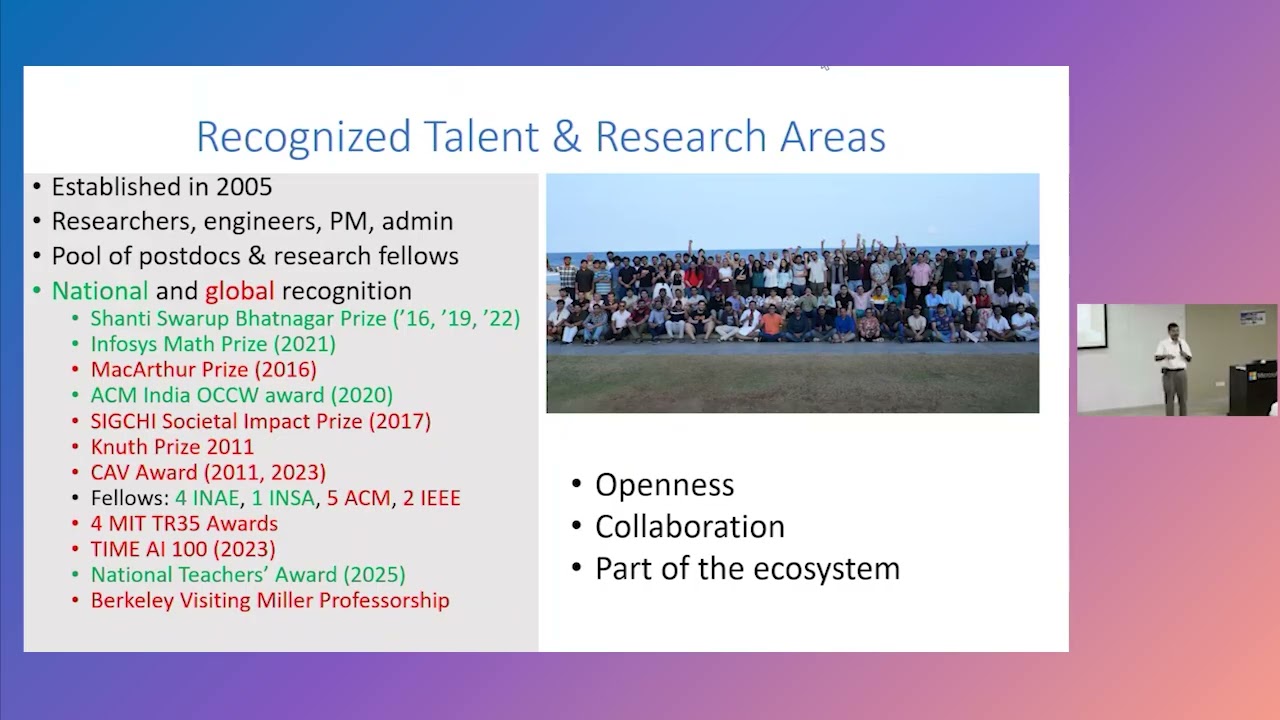
The Microsoft Research India Academic Summit 2026 opens with MSR India Lab Director Venkat Padmanabhan outlining the lab's collaborative research philosophy and Microsoft's evolution into an AI infrastructure powerhouse. He details MSR India's four core research pillars: fundamental AI advancements, specialized domain solutions, efficiency across the AI stack (including small language models), and the crucial diffusion of AI technologies for societal impact in India and the Global South, exemplified by diverse projects and collaborations.

Why Tejal Patwardhan stopped underestimating the models - Episode 21

Why Tejal Patwardhan stopped underestimating the models - Episode 21

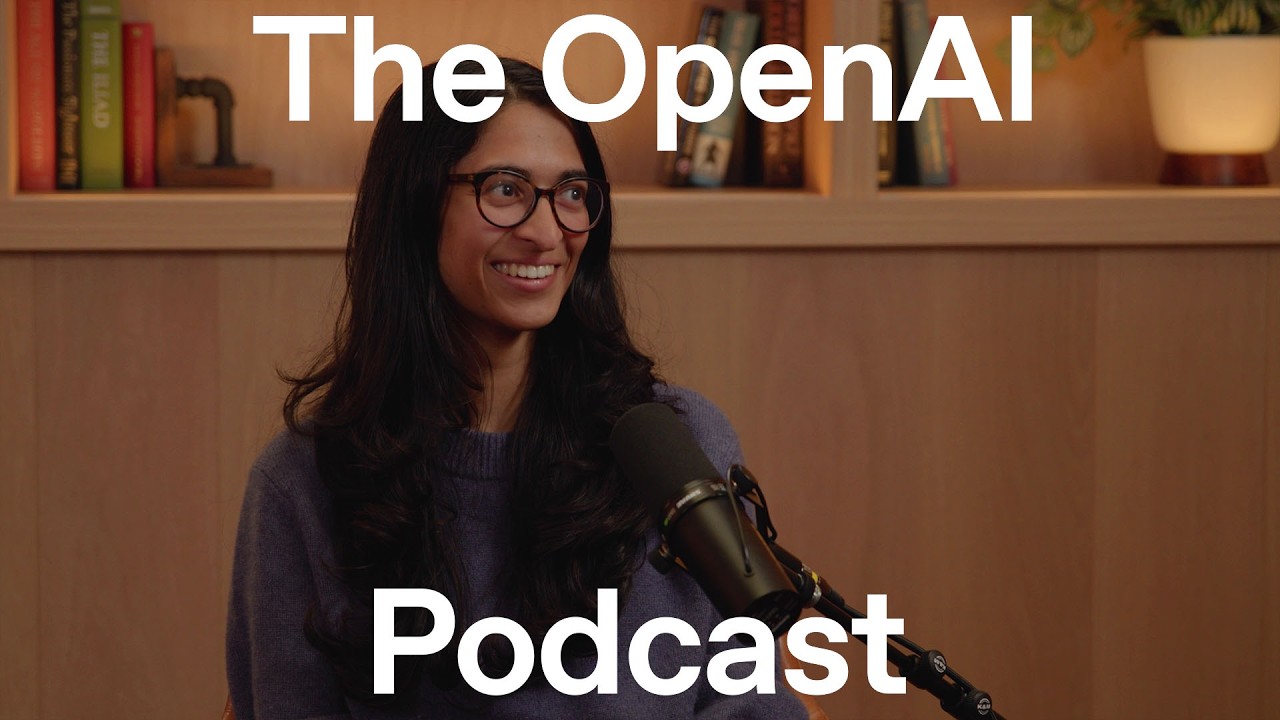
Tejal Patwardhan, head of OpenAI's frontier evals team, discusses the critical evolution of AI evaluations. She explains why traditional benchmarks fail as models become more capable, how OpenAI develops realistic, long-horizon tests (including groundbreaking wet lab experiments), and the implications of rapidly advancing multimodal and reasoning models for scientific discovery and the future of human work.