Model context protocol

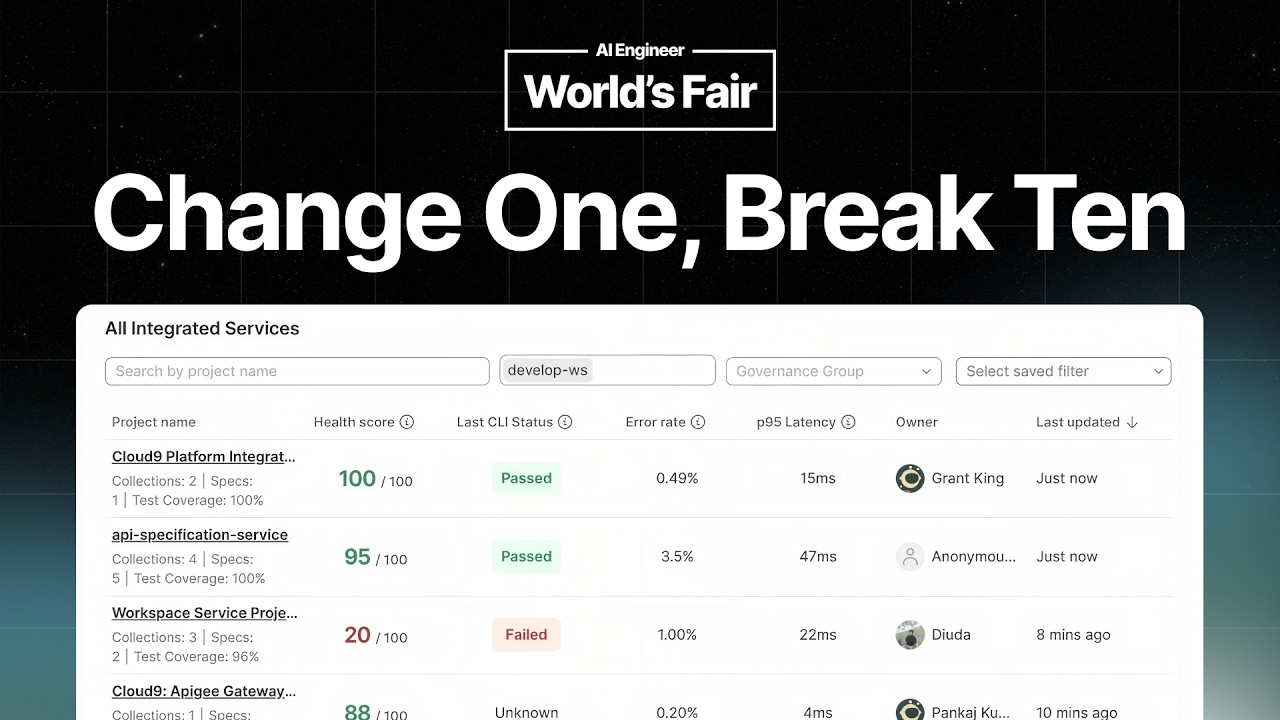
We Mapped 115 Microservices for Our Coding Agents — Kamalakannan Nandagopal, Postman

We Mapped 115 Microservices for Our Coding Agents — Kamalakannan Nandagopal, Postman

Kamalakannan Nandagopal from Postman explains why coding agents struggle beyond a single repo and how an API context graph, grounded in code and production telemetry, gives agents system-wide awareness. The talk covers evals built from real PRs, wins on API discovery, redesign and impact assessment, a stale-graph failure, and a 21-page architecture review generated by the agent.

Why Bigger Context Windows Won't Save Your Agent — Elizabeth Fuentes Leone, AWS

Why Bigger Context Windows Won't Save Your Agent — Elizabeth Fuentes Leone, AWS

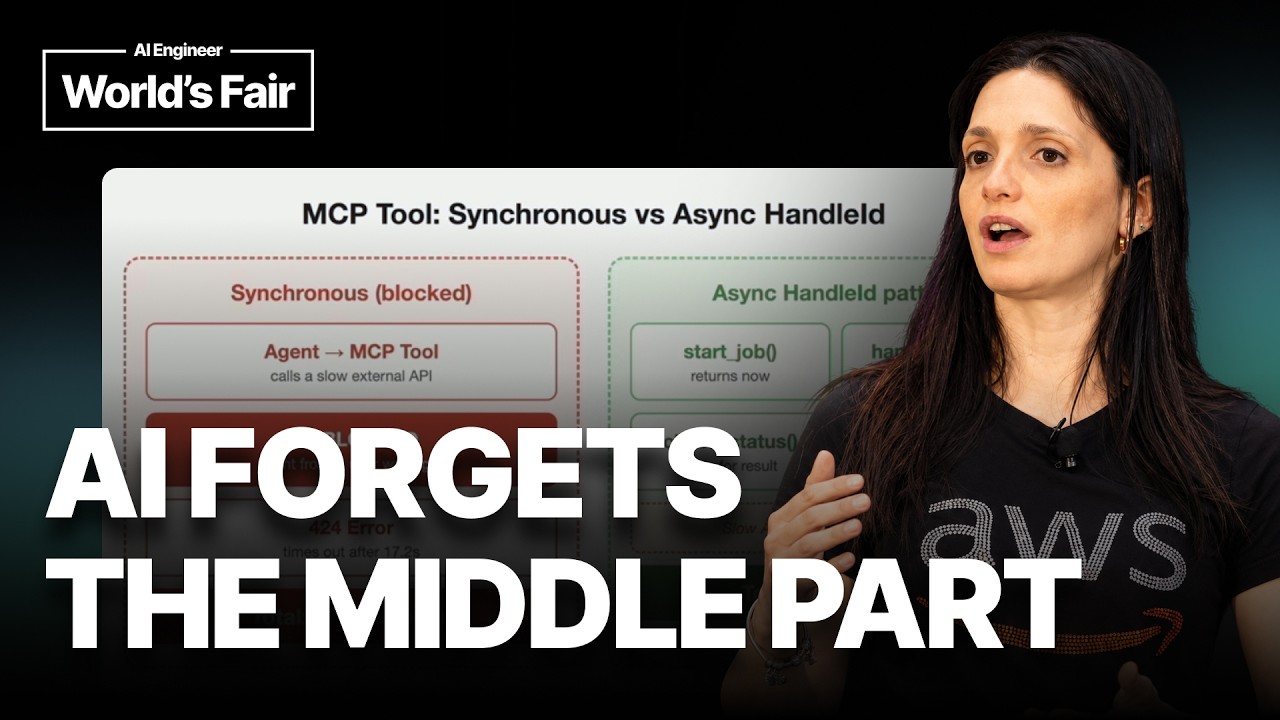
Elizabeth Fuentes Leone, developer advocate at AWS, explains why agents break when tools return huge outputs, why bigger context windows do not fix the problem because models lose the middle of long contexts, and how four context engineering strategies (externalize, select, compress, isolate) can be implemented with the open-source Strands Agents framework.

From 36% to 100%: How Self-Improving Agents Write Their Own Skills — Rafal Wilinski, Runlayer

From 36% to 100%: How Self-Improving Agents Write Their Own Skills — Rafal Wilinski, Runlayer

Rafal Wilinski of Runlayer argues that when one agent solves a hard problem, that knowledge should become a skill shared across the whole company. He covers why skills matter more as agents run longer, three problems with current skills, using MCP as a governed distribution layer, distilling skills from successful and failed agent traces inspired by the Voyager paper, and the organizational flywheel as a durable competitive advantage.

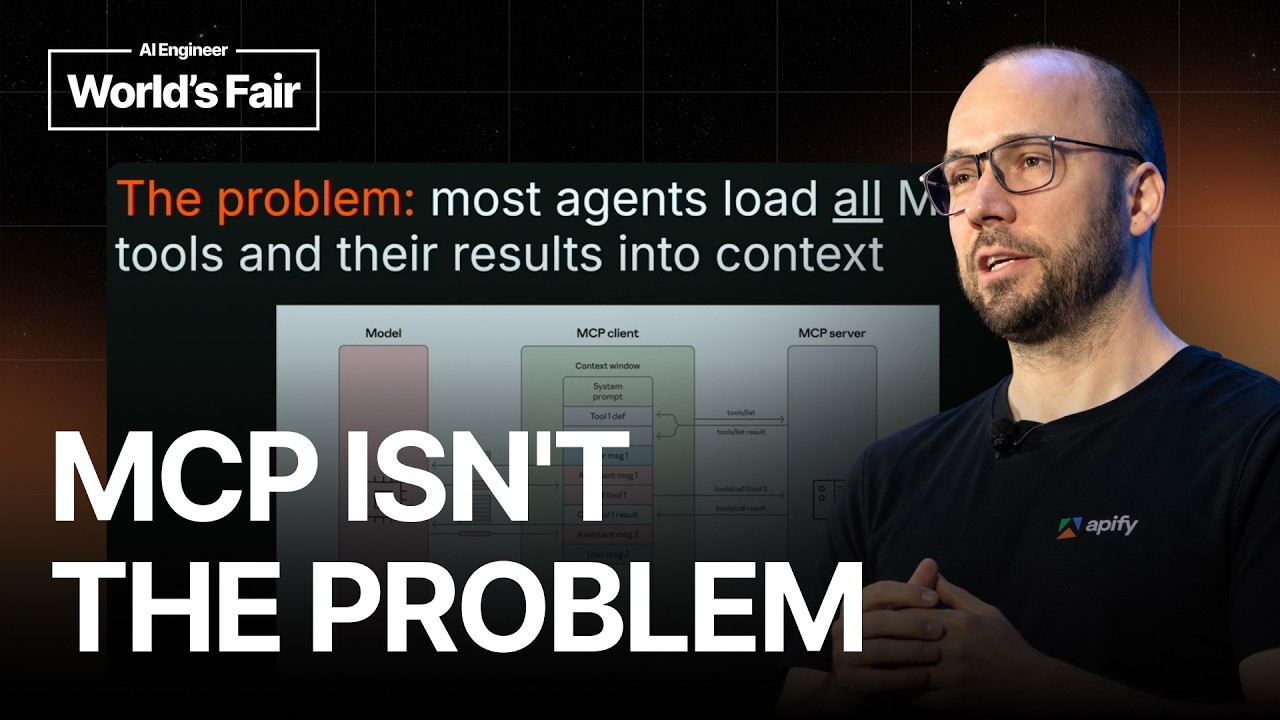
MCP Doesn't Suck. Your Agent Does. — Jan Čurn, Apify

MCP Doesn't Suck. Your Agent Does. — Jan Čurn, Apify

Jan Čurn, founder and CEO of Apify, argues that the backlash against MCP targets the wrong layer. Context bloat and token burn come from naive agent harnesses, not the protocol. He reviews the industry's three main fixes (sub-agents, progressive tool discovery and Code Mode), explains why agents work well with CLIs, proposes MCP for remote access and CLIs for local use, and demos mcpc, Apify's open-source universal MCP CLI client, alongside early Connector Evals results.

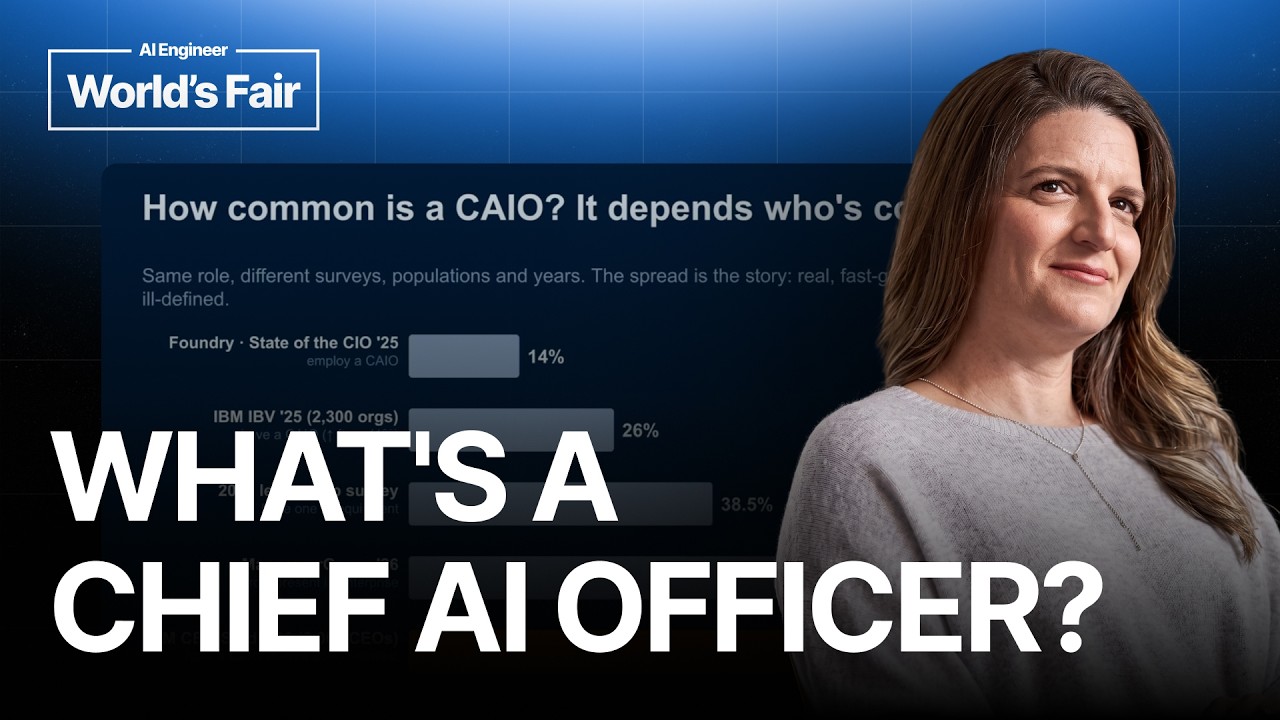
The Chief AI Officer: Scientist, Architect, Coach — Rania Khalaf, WSO2

The Chief AI Officer: Scientist, Architect, Coach — Rania Khalaf, WSO2

Rania Khalaf, Chief AI Officer at WSO2 and formerly a long-time leader at IBM Research, shares a framework for a role that is still being defined. She covers the Scientist, Architect and Coach focus areas, how the balance shifts by company type and AI maturity, and why she measures AI adoption, agent readiness and market signals instead of token counts. She also addresses the need for CEO backing and the question of who should own AI.

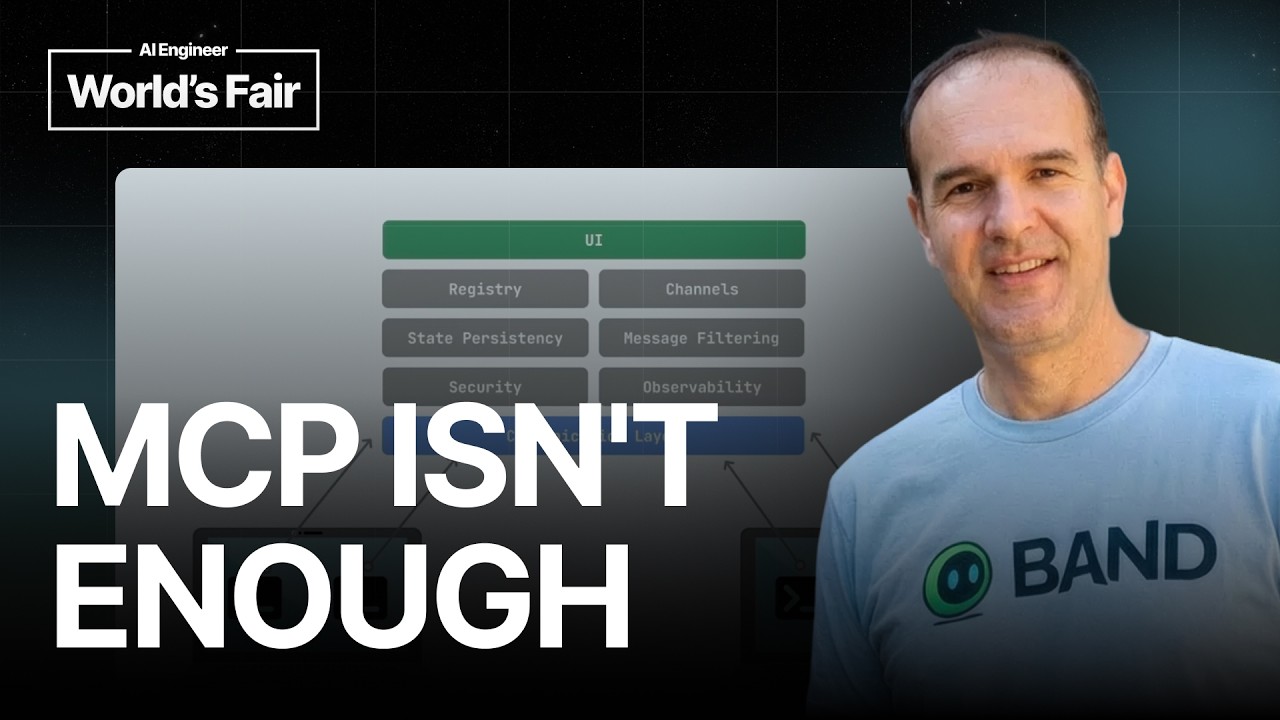
Your Agents Are in Solitary Confinement: Why MCP & A2A Aren't Enough — Vlad Luzin, Band

Your Agents Are in Solitary Confinement: Why MCP & A2A Aren't Enough — Vlad Luzin, Band

Vlad Luzin, co-founder and CTO of Band, argues that connecting AI agents is a distributed systems problem that current tools such as MCP, A2A and messaging platforms do not solve. He lays out what is required for real agent collaboration, including ordered real-time transport, persistence, runtime binding, agent-first abstractions and governance, then demonstrates Codex, LangGraph and Claude Code agents finding and working with each other under full human-in-the-loop visibility.