Model context protocol

No, That's Not a Software Factory — Ryan Cooke, WorkOS

No, That's Not a Software Factory — Ryan Cooke, WorkOS

Ryan Cooke of WorkOS argues that software factories should be judged by customer outcomes rather than PR counts or AI-generated code volume. He describes how WorkOS embedded its product engineering process into its factory through TARS, Horizon, a PM agent that drafts Hilltop docs, and an internal MCP gateway connected to Snowflake, along with bug triage, owned sandboxes, a memory layer and outcome-focused metrics.
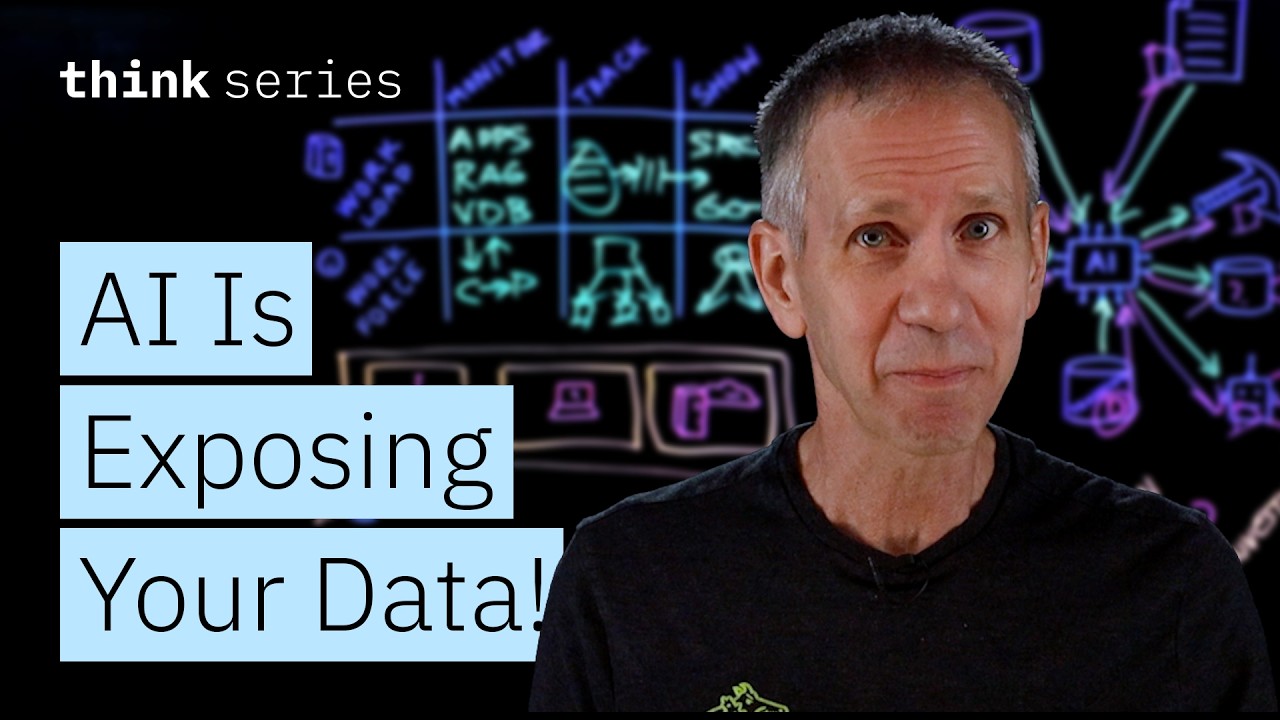
AI Is Exposing Your Data: An AI Security Problem You Can't See

AI Is Exposing Your Data: An AI Security Problem You Can't See

Jeff Crume explains how AI agents, RAG pipelines, prompts, tools, and models move sensitive data through modern AI systems, and why traditional DLP falls short. He outlines a unified approach built on data lineage, workload and workforce visibility, proactive risk identification, and compliance reporting.

The Universal Remote Control for AI — Alex Hancock, Block

The Universal Remote Control for AI — Alex Hancock, Block

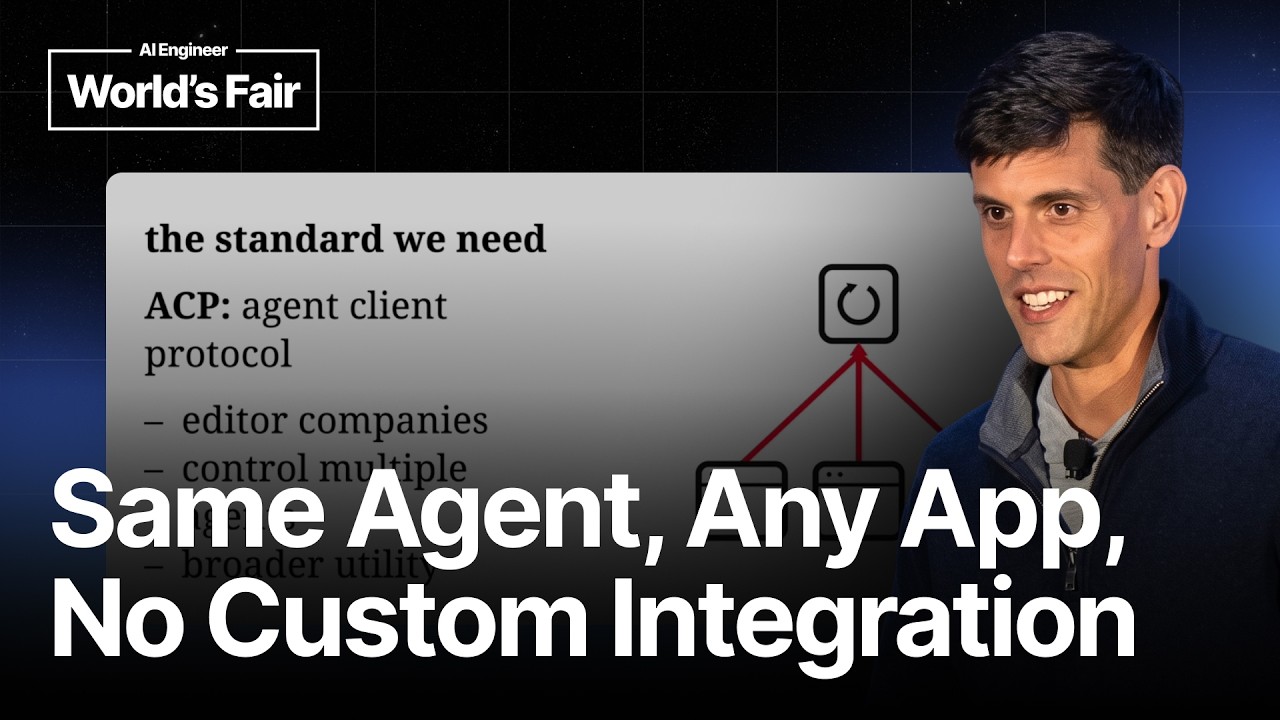
Alex Hancock discusses the need for a standardized protocol for client-to-agent communication in AI, similar to how MCP standardizes agent-to-tool interaction. He introduces the Agent Client Protocol (ACP), born from Zed and JetBrains, as a JSON RPC-based solution for client software to control agent harnesses, send tasks, and receive updates. Hancock demonstrates ACP's flexibility with multiple clients driving a single agent and highlights how its new remote transport capability, combined with MCP and model APIs, enables independent placement of all agentic stack components, fostering a competitive ecosystem that will significantly enhance user experience.

5 Ways to Connect AI Agents to Tools: From APIs to MCP

5 Ways to Connect AI Agents to Tools: From APIs to MCP

Grant Miller outlines five evolving patterns for integrating AI agents with tools, starting from simple direct API connections to complex, secure token-based architectures. The discussion highlights the progression of these methods, emphasizing how authentication, user delegation, abstraction layers like MCP, and secure credential management using vaults improve security, observability, and scalability in agentic systems.

Using Spec-Driven Development for Production Workflows - Erik Hanchett, AWS

Using Spec-Driven Development for Production Workflows - Erik Hanchett, AWS

Erik Hanchett discusses spec-driven development (SDD) as a structured approach to building complex software features with AI coding assistants. He explains how to guide AI "interns" through distinct phases of requirements, design, and implementation, emphasizing context management, the use of "skills," and the crucial role of the human in the loop for review. Hanchett highlights AWS's Kiro tool, which automates much of this process, and the Model Context Protocol (MCP) for integrating external data sources, offering a pathway to higher-quality code and more effective AI collaboration.

Power agents with full context of your experiments and traces with W&B MCP server

Power agents with full context of your experiments and traces with W&B MCP server

The W&B Model Context Protocol (MCP) is a hosted endpoint that enables AI agents to intelligently interact with all Weights & Biases data, including runs, traces, evaluations, and reports. It features discovery tools for smart queries, automated analysis for comparing experiments and identifying regressions, and seamless integration with IDEs, coding agents, and chat interfaces like Mistral AI for streamlined ML workflows and on-the-go reporting.