Machine learning operations

AI Evals for Cross-Functional Teams — Nachiket Paranjape & Swaroop Chitlur Haridas, DoorDash

AI Evals for Cross-Functional Teams — Nachiket Paranjape & Swaroop Chitlur Haridas, DoorDash

DoorDash's GenAI platform team transformed evaluation from an engineering-centric task into a cross-functional workflow. By adopting an API-first strategy, they empowered non-engineers like Strategy & Operations to "vibe code" their own annotation UIs using coding agents and self-serve calibrate LLM judge prompts. This approach dramatically reduced annotation costs, accelerated iteration, and fostered broader organizational ownership of AI quality.
CLAUDE.md, AGENTS.md, Skills, Hooks and Subagents: A Field Guide to Steering AI Agents (Ep. 1022)

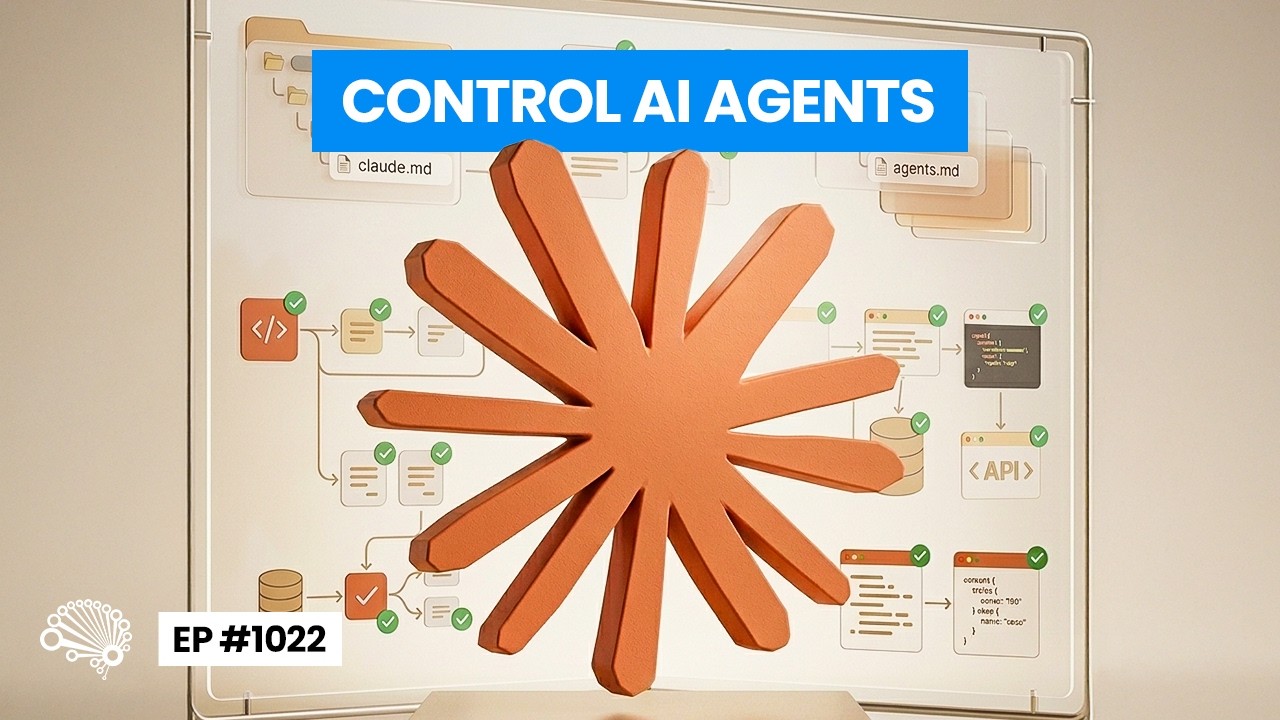
CLAUDE.md, AGENTS.md, Skills, Hooks and Subagents: A Field Guide to Steering AI Agents (Ep. 1022)

Episode 1022 dissects the crucial aspect of effectively steering AI agents by determining the optimal placement of instructions to ensure reliability and cost-efficiency. It explores seven distinct methods for instruction delivery, contrasting instructions as probabilities with hooks as guarantees, and highlights the industry-wide adoption of standards like `agents.md` and the importance of human-crafted guidance for superior agent performance.

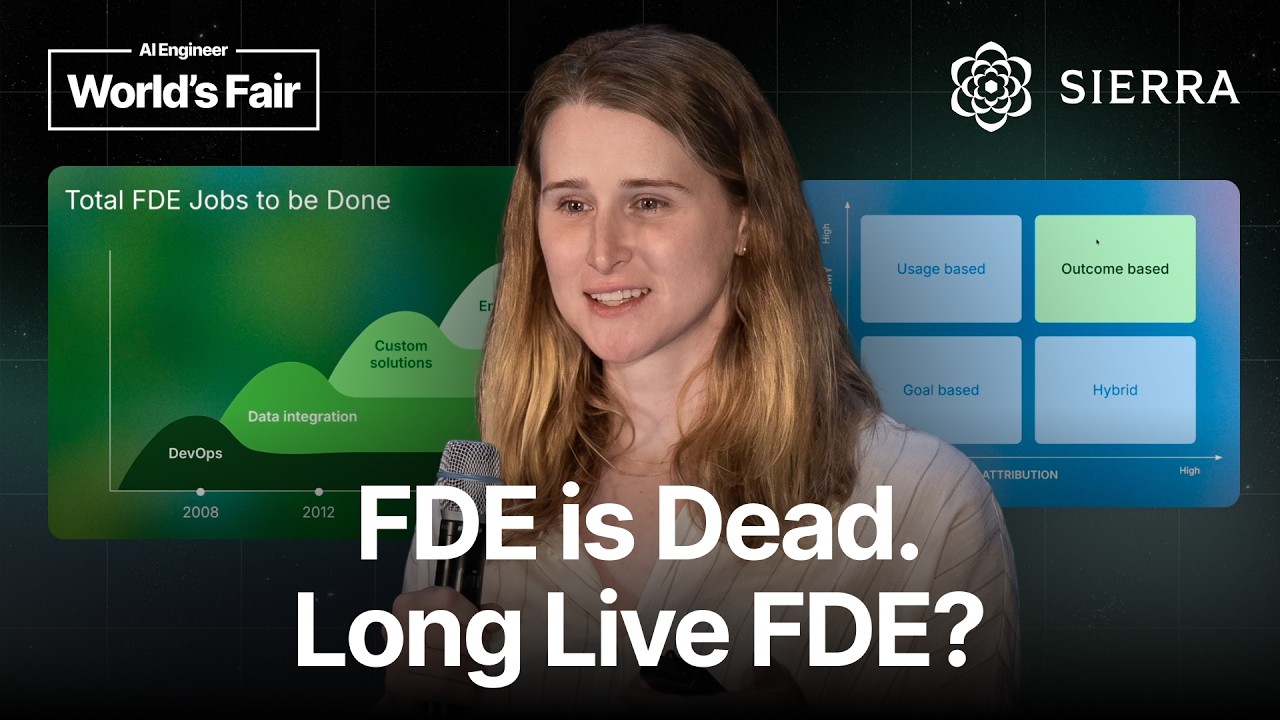
The Dirty Secret of Forward Deployed Engineering — Natalie Meurer, Sierra

The Dirty Secret of Forward Deployed Engineering — Natalie Meurer, Sierra

Natalie Meurer discusses the "dirty secret" of Forward Deployed Engineering (FDE), arguing that its definition has broadened so much it has lost specific meaning, yet remains critical in the age of AI. She traces its evolution at Palantir from pure DevOps to data integration, custom solutions, and enablement, highlighting customer accountability as its enduring core. Meurer contends that as AI makes code cheap, the focus shifts to integrating data, understanding customers, and achieving outcomes—making agent engineering a direct descendant of FDE under a new name, especially evident in the move towards outcome-based pricing models.

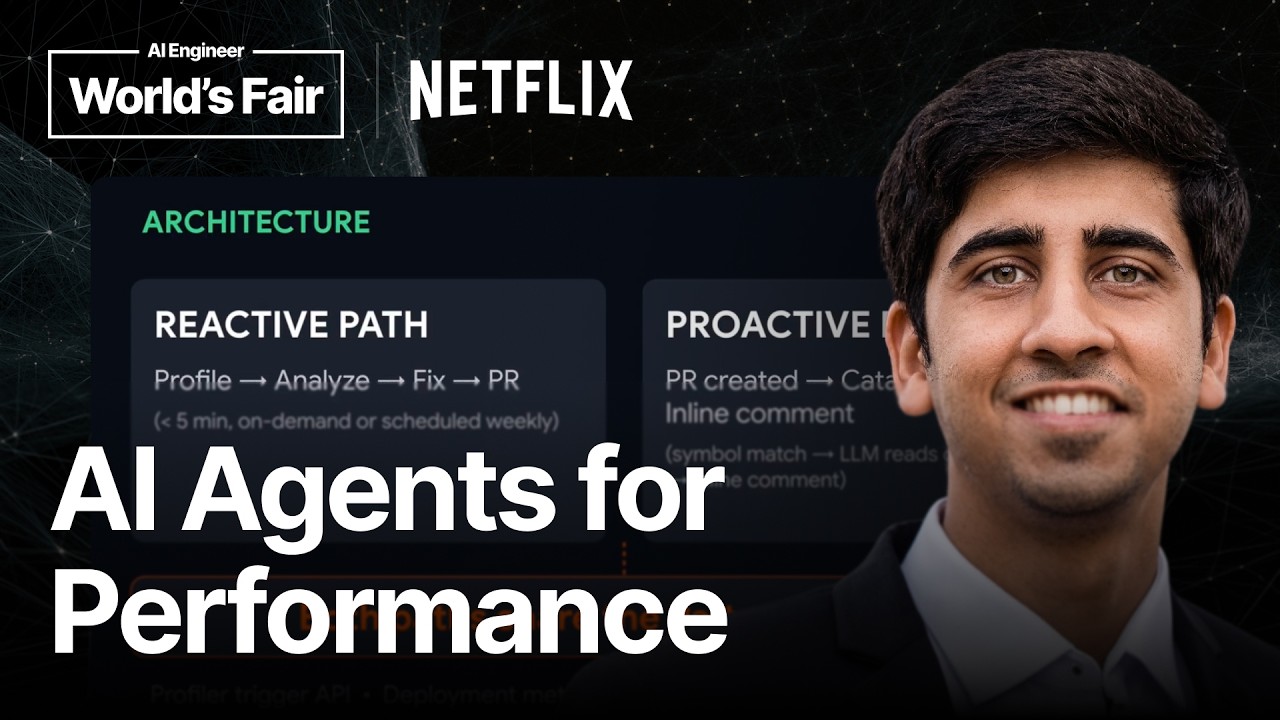
AI Agents for Performance: Ship Faster, Pay Less — Rajat Shah, Netflix

AI Agents for Performance: Ship Faster, Pay Less — Rajat Shah, Netflix

Rajat Shah details Netflix's approach to automating performance engineering using AI agents. He describes how an agent can read production profiling data, identify quadratic inefficiencies, propose code fixes, and validate them via canary deployments. The talk highlights the importance of a shared anti-pattern catalog and shifting from reactive bug fixing to proactive prevention by integrating AI early in the development cycle, emphasizing foundational automation and structured autonomy levels.

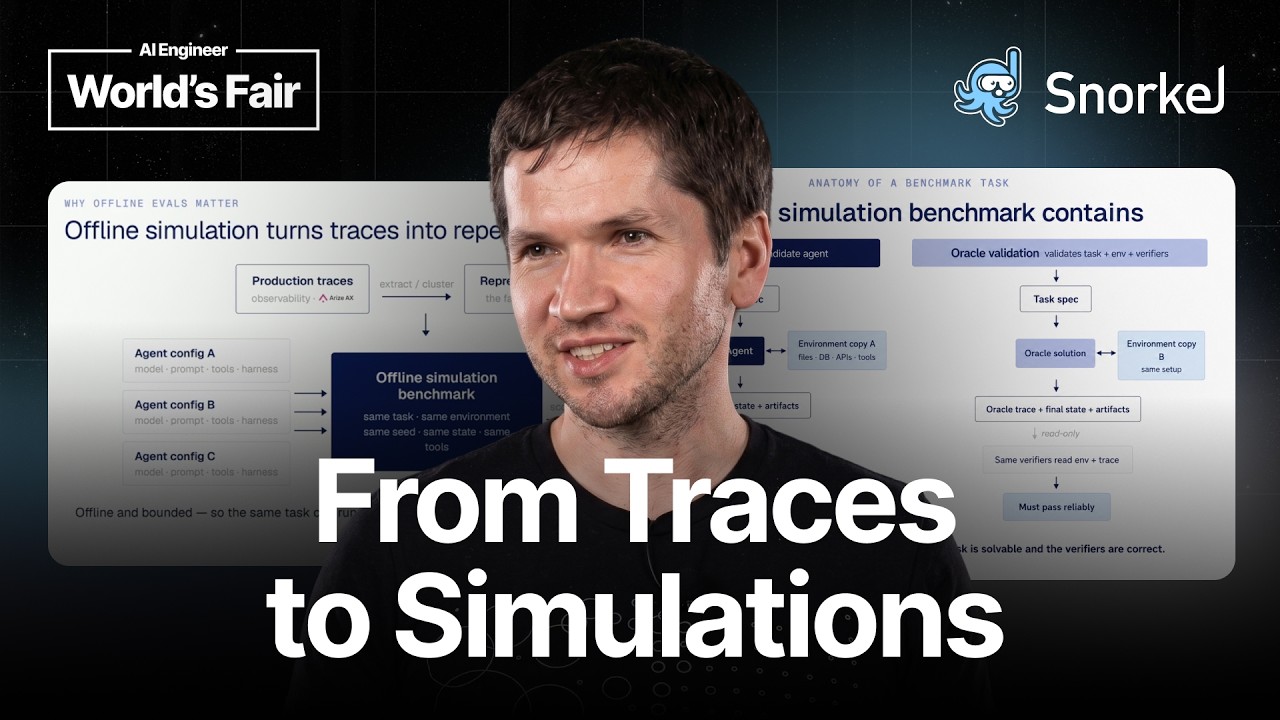
From Agent Traces to Agent Simulations — Rustem Feyzkhanov, Snorkel AI

From Agent Traces to Agent Simulations — Rustem Feyzkhanov, Snorkel AI

Rustem Feyzkhanov discusses the critical need for companies to build private, production-aligned benchmarks for AI agents. He explains how to turn agent traces into repeatable simulations, why public benchmarks are insufficient, and how a CI pipeline for agents, integrating observability and experimentation, can ensure reliable evaluation, continuous improvement, and effective release management, moving beyond simple pass rates to measure cost, latency, and policy adherence.

The Platform Engineer’s Handbook • Ajay Chankramath & Kaspar von Grünberg • GOTO 2026

The Platform Engineer’s Handbook • Ajay Chankramath & Kaspar von Grünberg • GOTO 2026

This conversation with Ajay Chankramath, author of 'The Platform Engineer’s Handbook,' delves into why practical, code-first guidance is essential for building Internal Developer Platforms. He argues that developer adoption failures stem from a "product discipline gap," not a technology one, emphasizing developer experience as a first-class outcome. The discussion covers the book's arc from foundations to enterprise-grade features and its focus on 100% open-source, vendor-agnostic tooling. Crucially, it highlights how agentic AI raises the stakes for platform engineering, requiring new IDP layers for agent context, memory, and guardrails, asserting that these must be built, owned, and operated internally for safe and productive AI adoption.