Databases for Agents
Luke Wroblewski of Sutter Hill Ventures discusses AgentDB, a database system designed for AI agents, and a paradigm shift in software development where building precedes designing, driven by the power of large language models.
Luke Wroblewski of Sutter Hill Ventures discusses AgentDB, a database system designed for AI agents, and a paradigm shift in software development where building precedes designing, driven by the power of large language models.
Reid Hoffman explores the future of AI, moving beyond obvious productivity applications to tackle grand challenges in science and industry. He discusses the current limitations of LLMs in reasoning, the distinction between augmenting and replacing human experts, the philosophical questions of consciousness, and the enduring power of human connection in the age of AI.

Sara Saab and Enzo Blindow from Prolific discuss the critical, and growing, need for high-quality human evaluation in the age of non-deterministic AI. They explore the limitations of current benchmarks, the dangers of agentic misalignment as revealed by Anthropic's research, and how Prolific is building a "science of evals" by treating human feedback as a robust infrastructure layer.
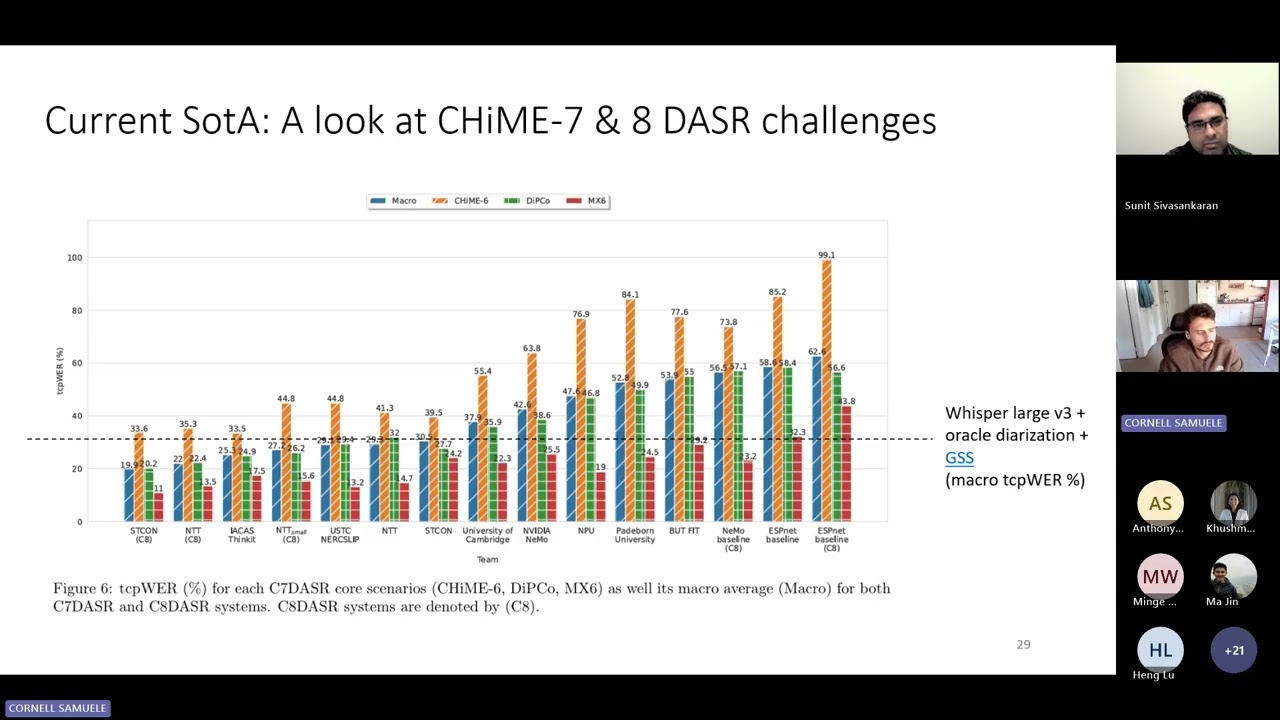
Dr. Samuele Cornell from Carnegie Mellon University discusses the persistent challenges in distant automatic speech recognition (DASR) for spontaneous, multi-party conversations. He explains why state-of-the-art systems falter in real-world scenarios and presents recent advancements through three key efforts: (1) insights from the CHiME-7/8 DASR challenges, which benchmark robust meeting transcription; (2) progress towards unified end-to-end models that jointly handle diarization and recognition; and (3) novel techniques for generating realistic, large-scale training data using a combination of large language models and multi-speaker text-to-speech systems.
Gurobi's Jerry Yurchisin explains the power of mathematical optimization, a prescriptive approach that complements AI's predictive capabilities. This summary covers how to get started with free resources, the use of GPUs and LLMs to enhance optimization, real-world applications at companies like Toyota, and its relationship with quantum computing.
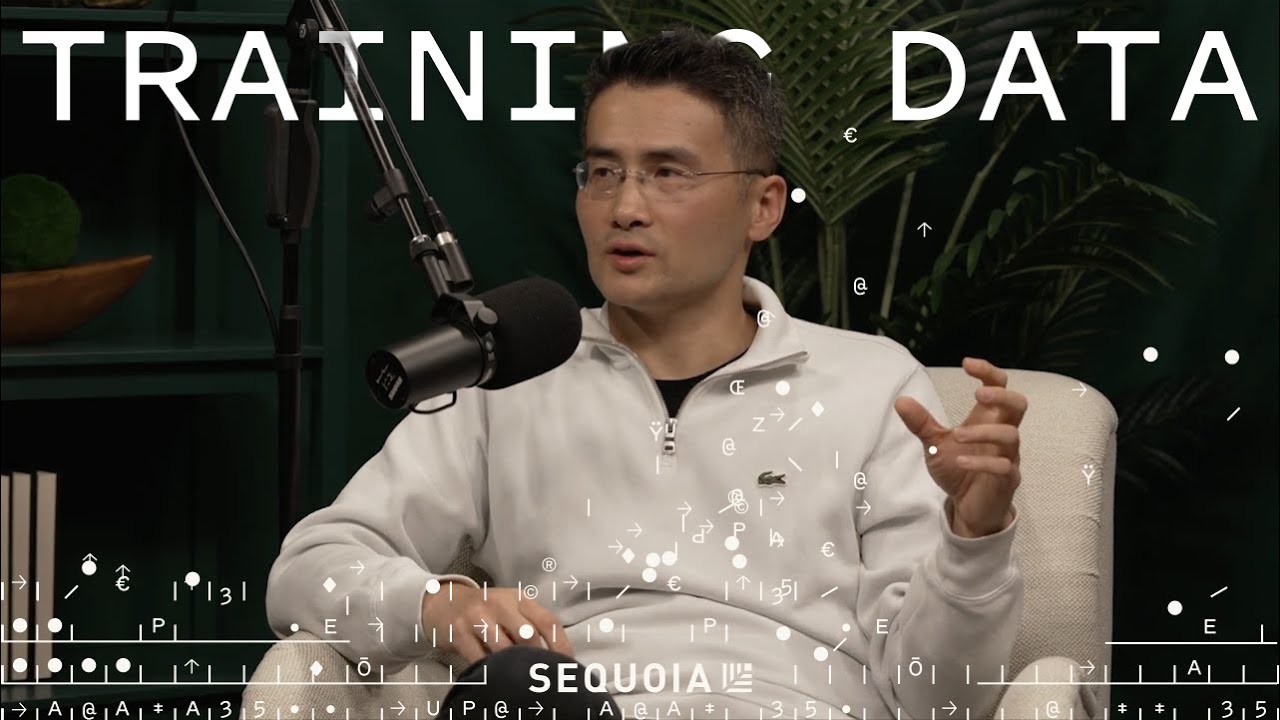
Ping Wu, CEO of Cresta, and Sequoia’s Doug Leone discuss the transformation of contact centers with AI. They explore a dual approach, blending AI-powered human agent assistance with full automation, to meet enterprises where they are. Wu details the immense technical challenges of deploying AI at scale, from orchestrating over 20 models in real-time with sub-800ms latency to solving for legacy on-premise systems. Leone provides a framework for building AI companies at speed, arguing that value will accrue in the application layer and that we are at the beginning of an "Industrial Revolution 2.0".