Why AI Will Create Abundance and Transform Customer Experience: Cresta CEO Ping Wu
Ping Wu, CEO of Cresta, and Sequoia’s Doug Leone discuss the transformation of contact centers with AI. They explore a dual approach, blending AI-powered human agent assistance with full automation, to meet enterprises where they are. Wu details the immense technical challenges of deploying AI at scale, from orchestrating over 20 models in real-time with sub-800ms latency to solving for legacy on-premise systems. Leone provides a framework for building AI companies at speed, arguing that value will accrue in the application layer and that we are at the beginning of an "Industrial Revolution 2.0".
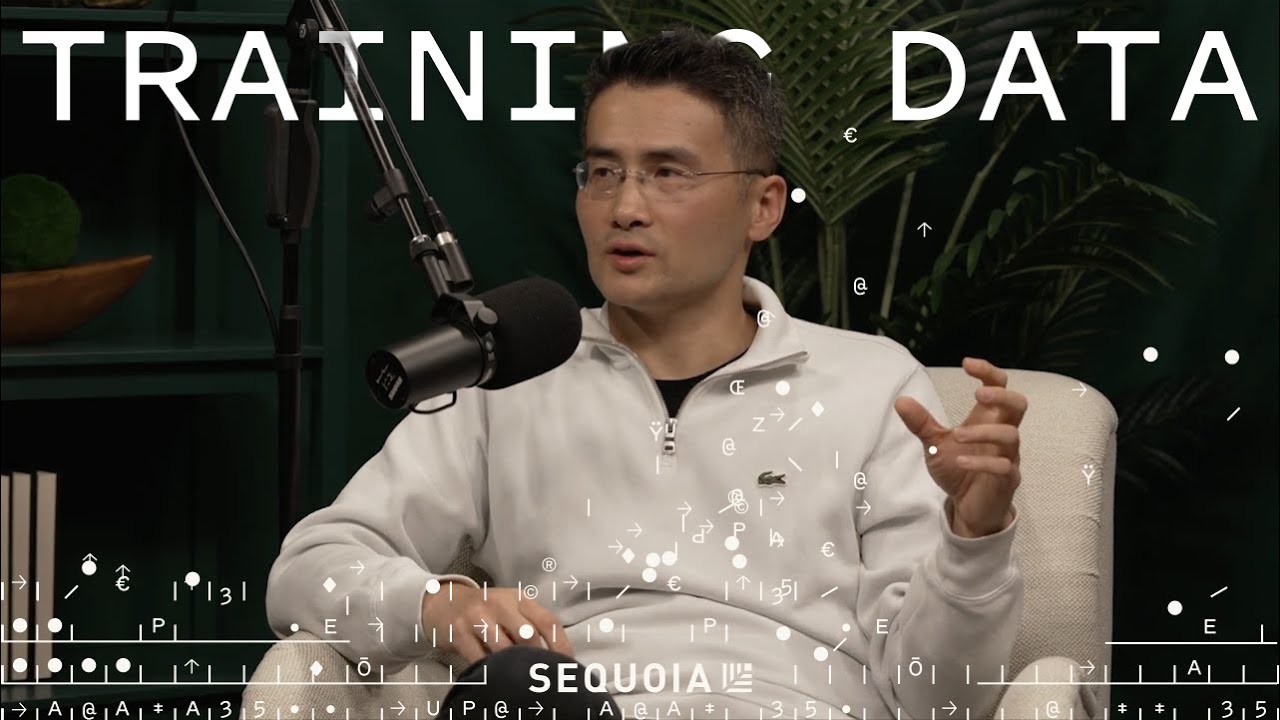
Ping Wu, CEO of Cresta, envisions a future where AI unifies the entire customer journey into a single, continuous conversation. Today, businesses often present a “multiple personality” experience—aggressive in sales, defensive in service. AI, and specifically LLMs, can create a seamless, personalized experience that was previously impossible, moving beyond the disconnected and transactional nature of customer interactions.
The Future of the Contact Center: Speed of Adoption and an Abundance Mindset
The central debate in the contact center space is the extent and pace of automation. While some predict the complete replacement of human agents, research suggests no Fortune 500 company will have a fully humanless contact center in the next five years.
Sequoia’s Doug Leone argues that the key metric isn’t the final percentage of automation but the speed of adoption. “Whether the answer is 30% or 60%, if it happens in 50 years, that means one thing for companies like Cresta. If it happens in 3 years, it means something else.”
Ping Wu suggests a shift in perspective is needed:
- Overhyped: The Scarcity Mindset. The immediate focus on job displacement is overhyped. The transformation, especially for large enterprises with complex legacy systems, will take longer than many think.
- Underhyped: The Abundance Mindset. The real opportunity lies in creating new experiences that are currently unaffordable. This includes enabling customers to talk directly to a website or app, turning synchronous calls into asynchronous tasks (“call me back when you get it done”), and providing multi-lingual support on demand. The focus should not just be on how many agents AI will replace, but on how many inbound calls can be preempted or transformed by AI assistants acting on behalf of the consumer.
Cresta’s Strategy: Agent Assist and Full Automation
Cresta’s strategy is to meet customers where they are by acknowledging that contact center work is highly divisible. This leads to a dual approach that doesn’t force a binary choice between human and AI.
- AI for Agent Assist: For conversations that are not yet ready for full automation, AI can significantly improve human agent productivity. This includes handling initial data intake, automating after-call work, and providing real-time knowledge retrieval and data entry assistance during the call.
- AI for Automation: For low-emotion, high-volume, and repetitive interactions, a fully autonomous AI agent is the solution.
This dual model is crucial because many enterprise systems are optimized for humans, lacking the real-time APIs necessary for full automation. By instrumenting the human-led conversations, Cresta gathers essential data on both the dialogue and the on-screen actions agents take across multiple systems. This data becomes the training ground for building superior automation, creating a virtuous cycle. As Doug Leone puts it, you need both the “steak” (the operational agent-assist system) and the “sizzle” (the autonomous AI agent) to win.
The Gnarly Last Mile: Technical Challenges of Production AI
Ping Wu emphasizes the massive gap between a flashy AI demo and a production-ready system deployed at enterprise scale. Building a commodity feature like “auto-summary” for a 20,000-seat global call center involves solving a long list of technical challenges:
- Real-Time Orchestration: Cresta’s voice AI agent orchestrates over 20 models in real-time, including speech-to-text, text-to-speech (using partners like ElevenLabs), noise cancellation, turn detection, interruption handling, guardrail checks, and the core foundation model.
- Latency: The entire end-to-end process must operate with a latency below 800 milliseconds to feel like a natural human conversation.
- Real-World Complexity: The system must handle on-premise audio streams (where over 50% of conversations still occur), multi-party calls, transfers, and extremely long conversations that exceed context windows.
- Reliability and Determinism: To ensure predictable behavior, Cresta uses large-scale simulations to stress-test the AI agent against edge cases and has a robust test case management component.
- Security and Compliance: The system must handle PII redaction and adhere to complex data residency requirements for multinational clients in sectors like finance and healthcare.
Company Building in the AI Era
Doug Leone states that while the fundamentals of company building remain, the AI era intensifies the need for extreme speed. His advice for founders is to constantly challenge their own plans, asking “why can’t we go 3x faster?” and systematically removing the “rocks in the river”—be it funding, management experience, or market perception—that impede acceleration.
He also stresses the importance of having a product-minded CEO at the helm, which was a key factor in appointing Ping Wu. A leader who deeply understands the product and the technical challenges of the “gnarly last mile” is essential for navigating the complexities of the application layer, which Leone believes is where the majority of value will accrue in the AI stack. He views the current AI wave not as just another tech cycle like the internet or mobile, but as an “Industrial Revolution 2.0” that will fundamentally reshape how humanity works and lives.