Llms

Omnigent: Composition, Control, and Collaboration for AI Agents

Omnigent: Composition, Control, and Collaboration for AI Agents

Denny Lee discusses the industry's shift to meta-harnesses like Omnigent, which enables hot-swappable AI models and agents, illustrated by his personal project of using debating agents to plan a matcha farm in Taiwan. He highlights how "tokenomics" is replaying the CapEx-to-OpEx cost shift, emphasizing the need for developer visibility, central governance, and auto-model selection to manage AI spend. The conversation also touches on the importance of databases for agent memory and accountability in AI-assisted workflows.
Anthropic's Katelyn Lesse & Angela Jiang: Building an Ecosystem, not a Walled Garden

Anthropic's Katelyn Lesse & Angela Jiang: Building an Ecosystem, not a Walled Garden

Katelyn Lesse and Angela Jiang, leaders of Anthropic's developer platform, outline their strategy built on a "three-layer cake": knowledge, execution, and coordination. They emphasize moving towards advanced "strategies" or meta-harnesses that assign distinct jobs to tokens, fostering a robust and open AI ecosystem. The discussion covers empowering builders, setting industry standards, and Anthropic's nuanced approach to an open platform versus a walled garden, focusing on architectural soundness over infrastructure ownership.

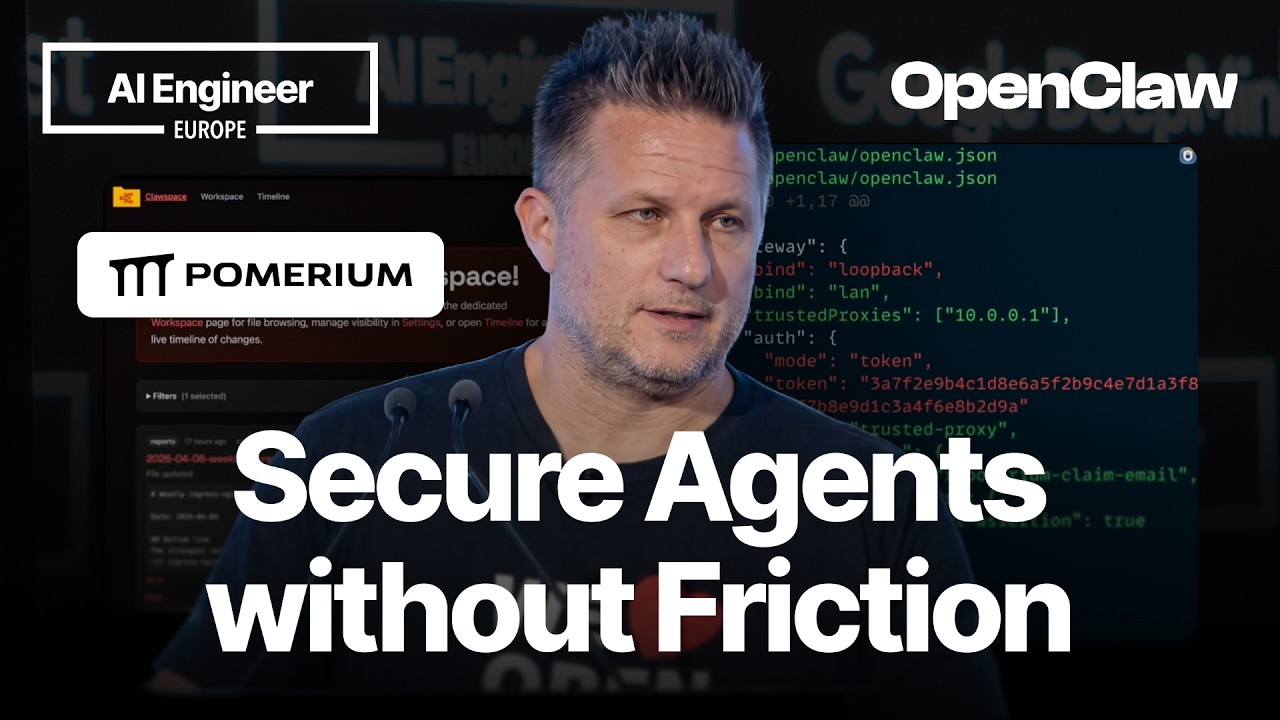
Claws Out: Securing and Building with OpenClaw - Nick Taylor, Pomerium

Claws Out: Securing and Building with OpenClaw - Nick Taylor, Pomerium

This talk details how the speaker contributed a "trusted-proxy auth mode" to the OpenClaw project to enhance security and user experience by eliminating the need for tokens and device pairing. It explains the technical implementation of this mode using Identity-Aware Proxies like Pomerium. The speaker also demonstrates a unique workflow, building and live-editing a Multi-Modal Chatbot Protocol (MCP) application directly within ChatGPT, controlled by their OpenClaw instance via Discord, showcasing the power of secure, natural language-driven web development.

Why Open Models Will Beat GPT and Claude

Why Open Models Will Beat GPT and Claude

This episode explores the strategic shift of enterprises towards open AI models driven by cost and data sovereignty, highlighting the evolving tooling and hybrid deployment strategies. It also delves into the "attenuation funnel" phenomenon, where increased code generation by AI tools doesn't proportionally translate to shipped software or end-user value, and introduces "neo-consulting"—a new business model challenging traditional consulting with outcomes-based pricing and AI-focused expertise.

Travel Through the Lens of AI with with Booking.com CEO Glenn Fogel

Travel Through the Lens of AI with with Booking.com CEO Glenn Fogel

Booking Holdings CEO Glenn Fogel discusses his journey from Priceline's early struggles to leading a global travel giant. He details Booking's strategic adoption of AI for agentic travel planning and customer service, exemplified by Priceline's 'Penny,' and its significant capital investment in technology. Fogel emphasizes continuous innovation over "moats" and shares insights on AI's impact on job displacement, advocating for proactive employee upskilling to navigate the rapidly changing technological landscape.

What do we build now? — Theo Browne, @t3dotgg

What do we build now? — Theo Browne, @t3dotgg

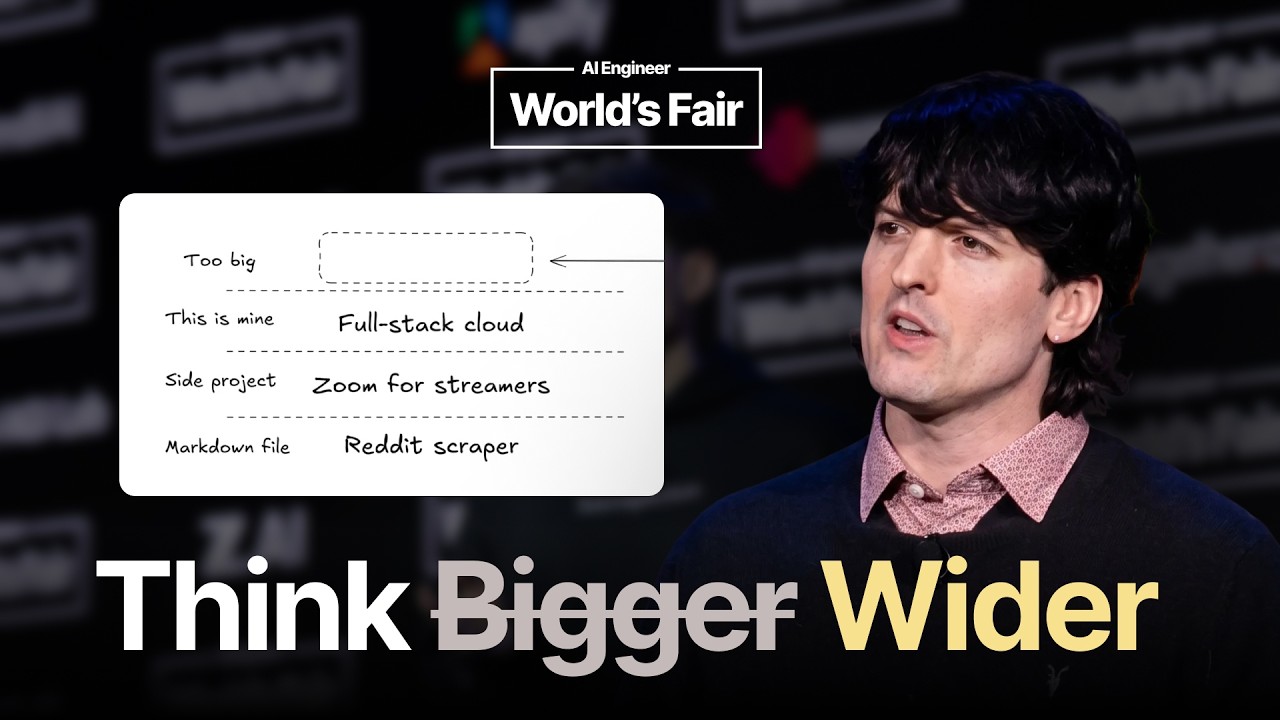
Theo Browne's keynote from AIEWF2026 urges software engineers to fundamentally change product development in response to rapidly evolving AI models (Sonnet 3.5 to Mythos). He advocates for rejecting legacy mental models and tools (skeuomorphism), embracing a new "Markdown tier" for projects, and thinking "wider" instead of just "deeper" by building extensible platforms that can challenge industry giants. The core message is to be more ambitious, as AI has drastically lowered the barrier to entry for complex, broad-reaching solutions.