Llm

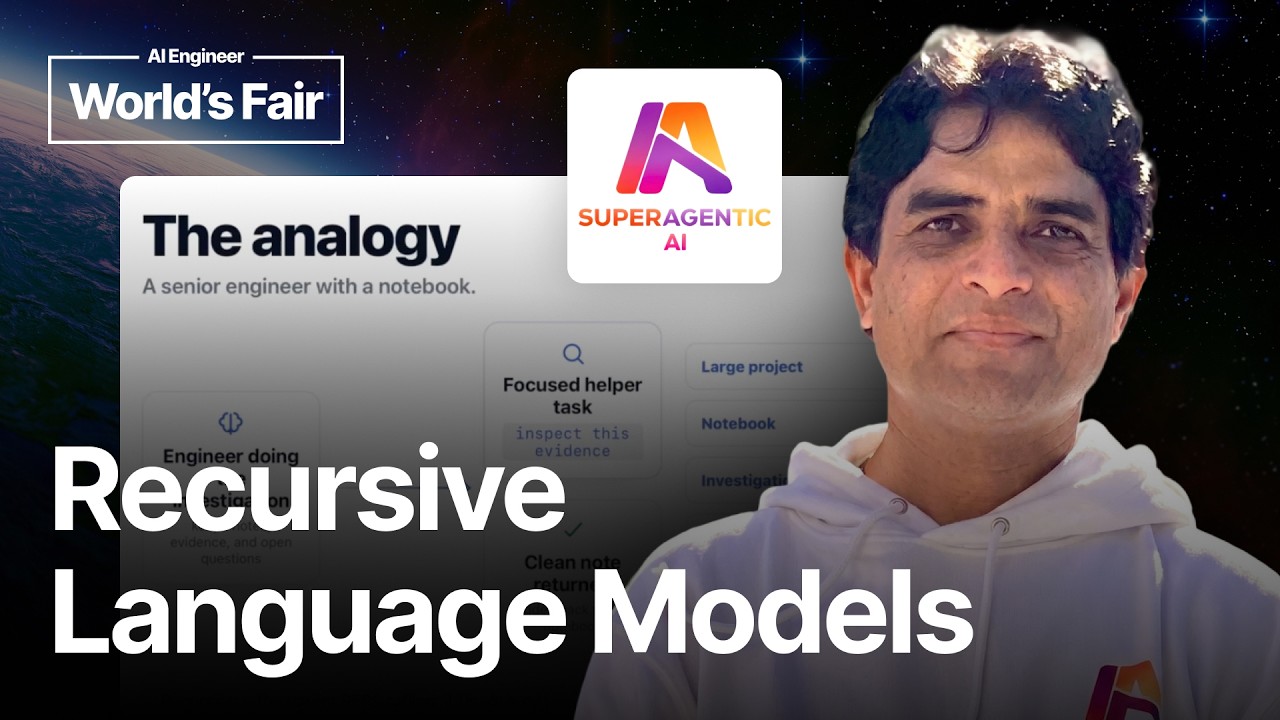
How Google DeepMind Runs Agents at Scale — KP Sawhney & Ian Ballantyne, Google DeepMind

How Google DeepMind Runs Agents at Scale — KP Sawhney & Ian Ballantyne, Google DeepMind

KP Sawhney from Google DeepMind discusses the internal strategies for scaling agentic AI, including managing token-hungry workflows, curating a 'Darwinian' skills library, and evolving the Deep Research pipeline from large context blobs to a collaborative file system.

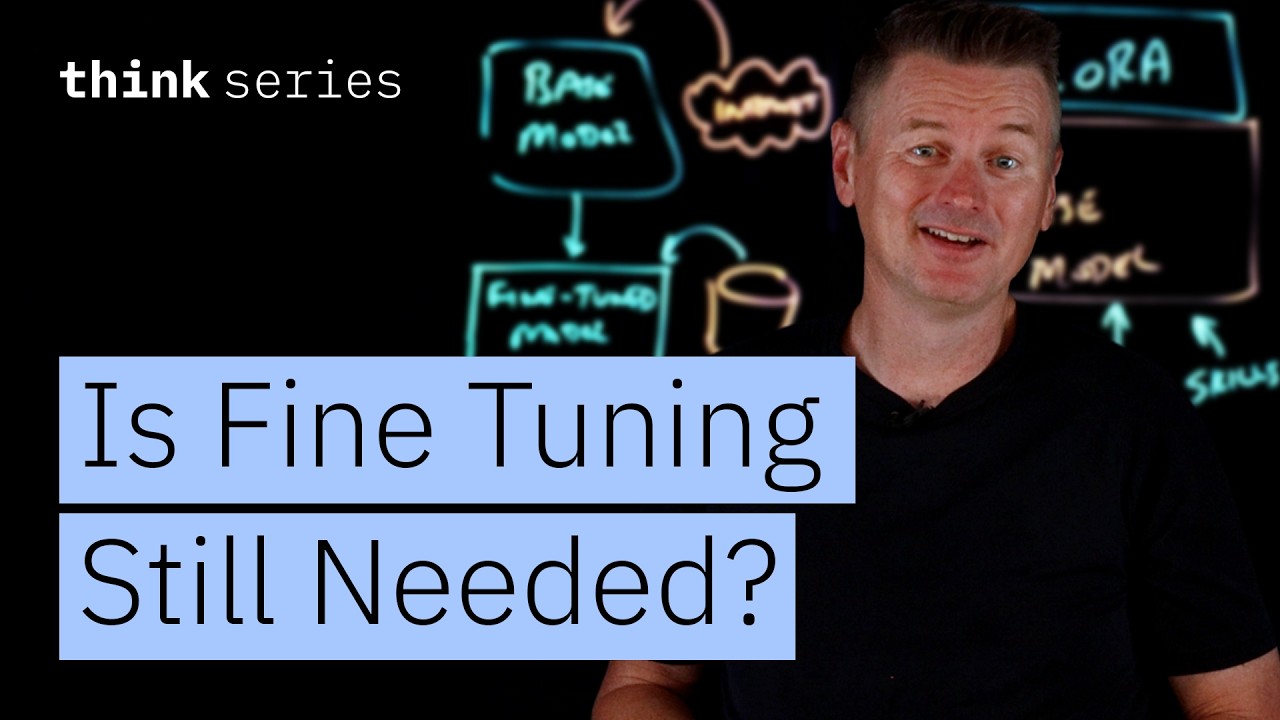
CAG vs Long Context: How AI Models Use and Remember Information

CAG vs Long Context: How AI Models Use and Remember Information

Martin Keen explains how Long Context and Cache Augmented Generation (CAG) serve as powerful alternatives to RAG for providing external knowledge to LLMs. This summary details the mechanics of each approach, the role of the KV cache, the practical application through prompt caching, and the trade-offs in performance, cost, and latency for real-world AI workloads.

The Latency Goldilocks Zone Explained

The Latency Goldilocks Zone Explained

Rafael Borger and Daniel Wolbert from iFood discuss the engineering and product strategy behind ILO-Agent, their conversational AI for 200 million users. They cover hyper-personalized recommendation systems, the "Latency Goldilocks Zone" where AI responses can be too fast for users to trust, and the architectural challenges of building multi-channel agents for text and voice.

Building MCP Before MCP Existed: Inside Despegar's Sofia Agent

Building MCP Before MCP Existed: Inside Despegar's Sofia Agent

A deep dive into Despegar's GenAI travel agent, Sofia. Explore its multi-agent architecture, the custom orchestration layer 'Chappi' built before MCP was a standard, and the strategy of decentralizing agent development across company squads to cover the entire five-phase travel arc.

Personalization in the Era of LLMs - Shivam Verma, Spotify

Personalization in the Era of LLMs - Shivam Verma, Spotify

Spotify is personalizing open-weight LLMs without full fine-tuning by combining three key components: foundational user embeddings from streaming history, 'Semantic IDs' that tokenize its 100M+ item catalog, and a 'soft tokenization' layer that projects a user's embedding directly into the LLM's context. This allows the model to autoregressively generate the next song or podcast as the next token in a sequence.

How to Build AI-First Organizations — with Jacob Miller and Jeremy Mumford

How to Build AI-First Organizations — with Jacob Miller and Jeremy Mumford

Jacob Miller and Jeremy Mumford, authors of 'Architected Intelligence', discuss the enduring principles for building successful AI products and organizations. They cover why velocity is the only durable moat, why hallucinations are a data curation issue, and the proper progression from skills to workflows to agents, emphasizing a shift from focusing on models to focusing on process and speed.