Infrastructure

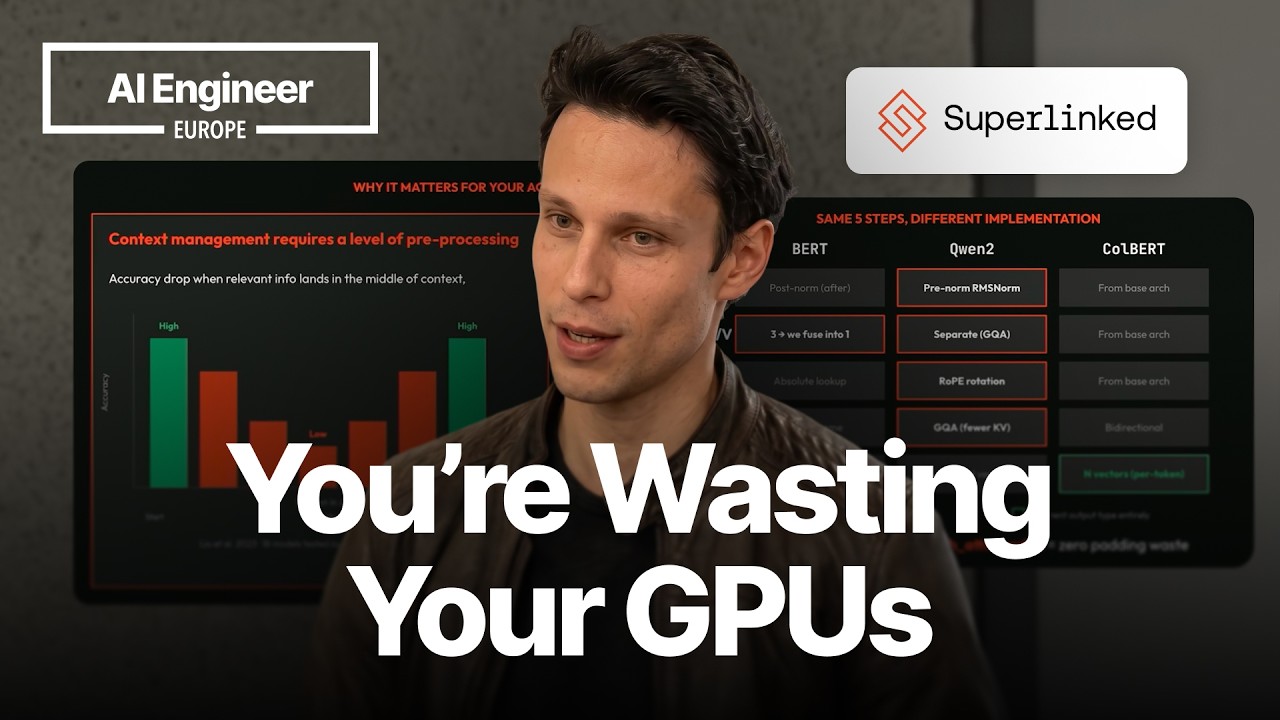
Large clusters for small models — Daniel Svonava, Superlinked

Large clusters for small models — Daniel Svonava, Superlinked

Daniel Svonava argues that small open-source models, when specialized and properly served, can achieve frontier performance for specific tasks, offering significant cost savings and latency improvements over large, generalized models or managed endpoints. He highlights challenges with existing serving infrastructure for a fleet of diverse small models and introduces Superlinked's open-source solution, which leverages a pull-based, centralized queuing system, a Rust sidecar for runtime abstraction, and an autoresearch loop for automated model tuning, enabling high throughput (e.g., half a million embedding tokens/sec on one GPU) and efficient deployment of specialized models and LoRAs.
Elon's Former Battery Chief on Making Transformers 100x Smaller | Drew Baglino, Heron Power

Elon's Former Battery Chief on Making Transformers 100x Smaller | Drew Baglino, Heron Power

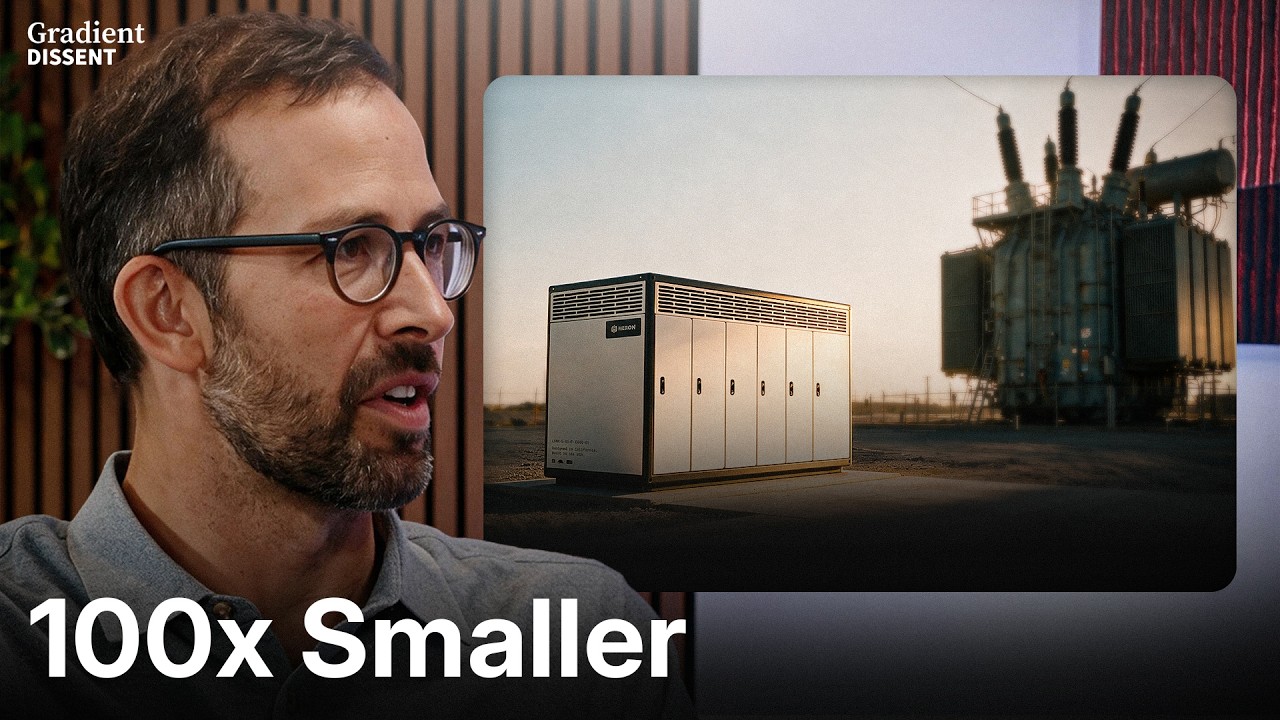
Drew Baglino, former Tesla Powertrain & Energy head and now CEO of Heron Power, reveals why the current electricity grid is inadequate for the explosive growth of AI data centers. He explains how Heron Power's wideband gap power semiconductors will revolutionize grid-to-chip infrastructure, cutting power losses by half, shrinking massive transformers by 100x, and transforming data centers into grid-positive assets for a more efficient and sustainable energy future.

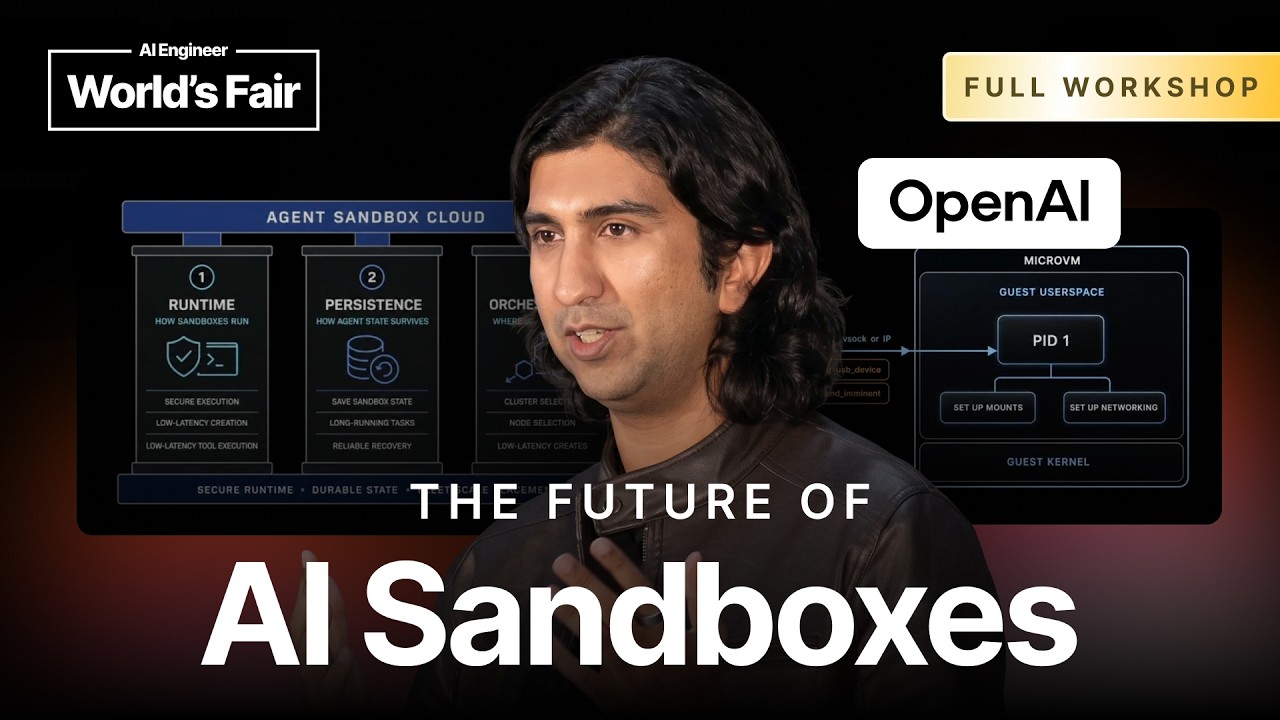
From fork() to Fleet: Designing an Agent Sandbox Cloud — Abhishek Bhardwaj, OpenAI

From fork() to Fleet: Designing an Agent Sandbox Cloud — Abhishek Bhardwaj, OpenAI

This talk by Abhishek Bhardwaj from OpenAI details the architectural considerations for building secure and scalable AI agent sandboxes in the cloud. It explores runtime isolation technologies (from basic process execution to containers, GVisor, and microVMs), emphasizing the superior security of hardware-virtualized microVMs. The speaker then highlights the critical need for persistent storage, outlining explicit (copy-on-write snapshots) and always-on (tiered block storage) solutions as the next major unlock for agent capabilities. Finally, it touches on orchestration challenges for fleet-level management, including low-latency sandbox creation and snapshot-driven scheduling.

AI Agents Need Computers: 74% MoM Growth, 850K/Day Runs, & New Agent Cloud — Ivan Burazin, Daytona

AI Agents Need Computers: 74% MoM Growth, 850K/Day Runs, & New Agent Cloud — Ivan Burazin, Daytona

Daytona CEO Ivan Burazin discusses the company's pivot from developer environments to composable computers for AI agents. He explains the unique infrastructure challenges posed by spiky RL and eval workloads, Daytona's bare-metal architecture with a custom scheduler for high performance, and the future need for stateful Windows and macOS sandboxes to automate knowledge work.

From Zapier for Devs to Powering 90% AI Agents

From Zapier for Devs to Powering 90% AI Agents

Co-founders of Trigger.dev discuss their journey through three product versions to find product-market fit, how their async infrastructure positioned them perfectly for the AI agent era, and their vision for the future of computing: programmatic checkpoint and restore.

The Small Model Infrastructure Nobody Built (So We Did) — Filip Makraduli, Superlinked

The Small Model Infrastructure Nobody Built (So We Did) — Filip Makraduli, Superlinked

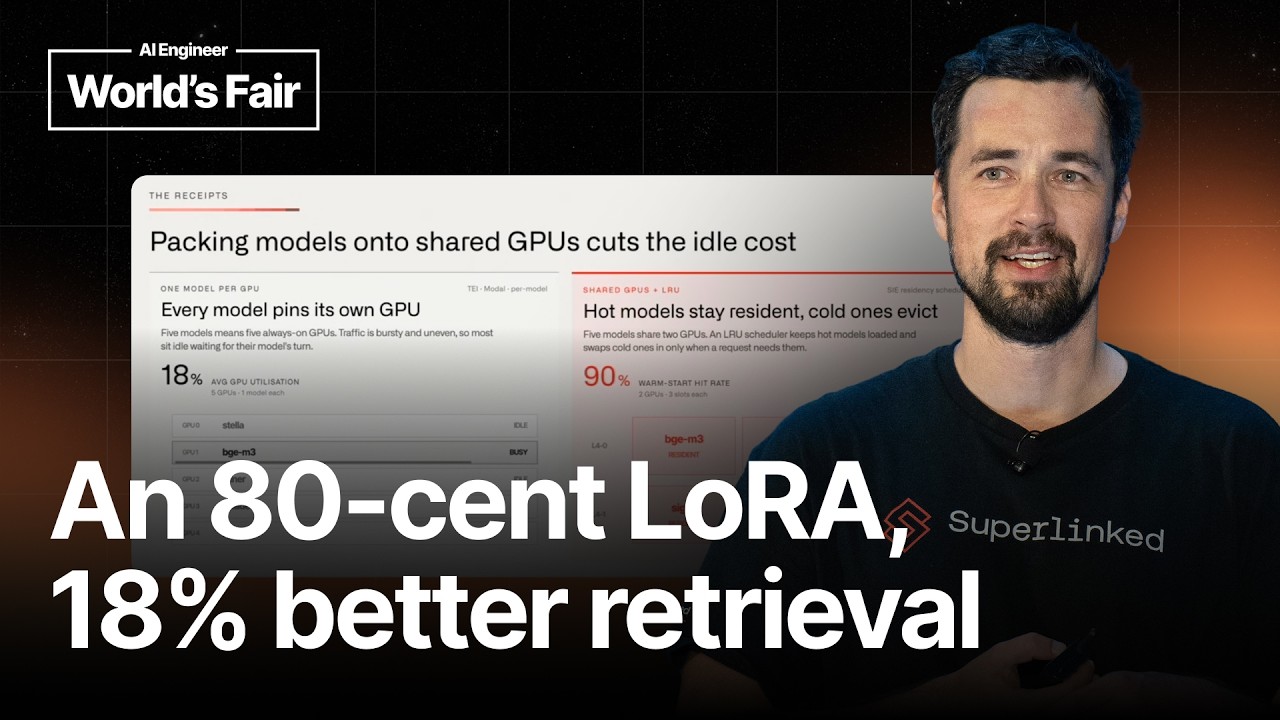
Filip Makraduli from Superlinked discusses the common infrastructure gaps and profiling mistakes encountered when deploying small embedding and transformer models. He introduces the Superlinked Inference Engine (SIE), an open-source solution designed for dynamic model loading, hot-swapping, and memory-aware eviction to maximize GPU utilization and streamline the path from development to production.