Human computer interaction

The next generation of ChatGPT Voice

The next generation of ChatGPT Voice

An in-depth look into GPT Live, the next generation of full-duplex voice models in ChatGPT, designed for natural, continuous interaction. It highlights breakthroughs in concurrent processing, intelligent delegation to advanced models like GPT 5.5, real-time semantic translation, and proactive language coaching, aiming to transform AI interactions into fluid, intelligent conversations akin to human dialogue.
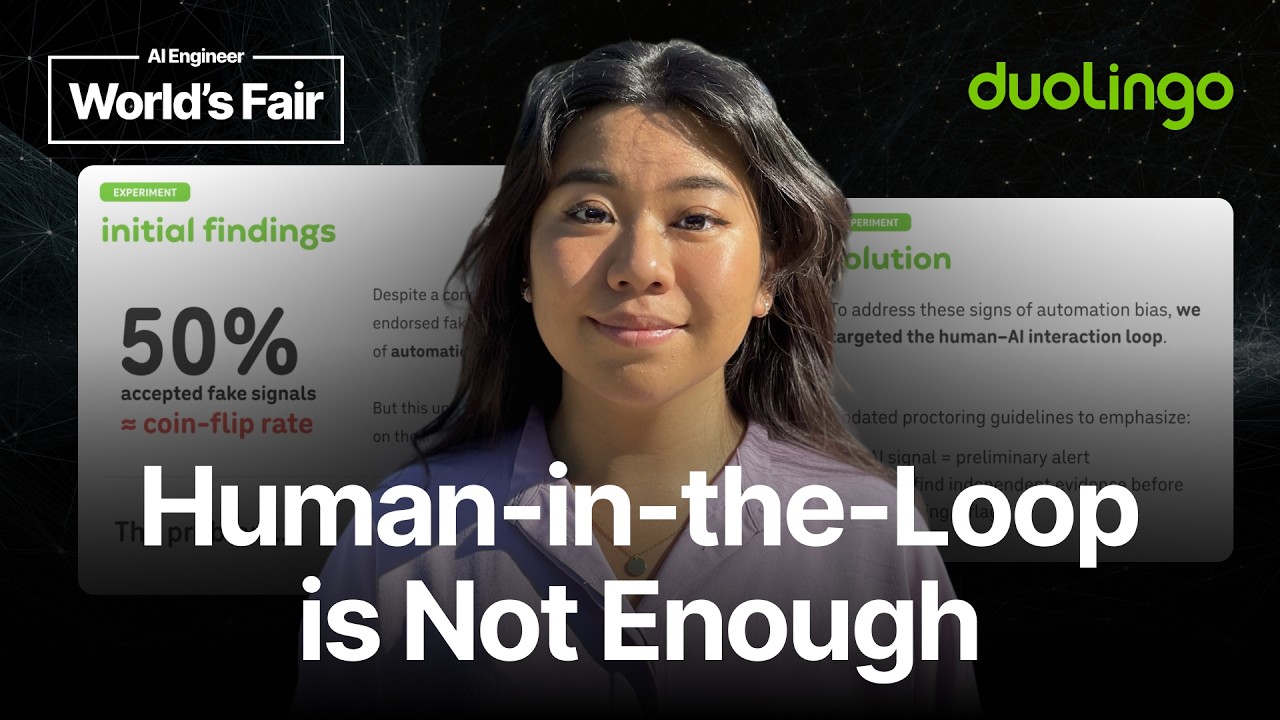
Build AI Systems for Discernment, Not Approval - Angel Ortmann Lee, Duolingo

Build AI Systems for Discernment, Not Approval - Angel Ortmann Lee, Duolingo

The talk addresses the critical flaw in human-in-the-loop AI: humans often surrender cognitive effort, leading to "automation bias" rather than true discernment. Through a Duolingo English Test case study and various interaction design examples, it demonstrates how engineering the human-AI interface—rather than just the model or oversight—can elicit critical thinking, generate high-quality data, and foster a virtuous cycle of AI improvement.

The Prompt Is Still a Punch Card - Ted Johnson, JoinIn AI

The Prompt Is Still a Punch Card - Ted Johnson, JoinIn AI

Ted Johnson argues that current AI interfaces, particularly prompting, operate on an outdated "batch processing" protocol akin to punch cards. Despite advanced LLM capabilities, this interface design forces humans to adapt to machines, hindering natural interaction. He advocates for a shift towards human-compatible interfaces where AI actively participates in real-time conversation, leveraging its intelligence to remove user burdens and amplify human potential.

Voice In, Visuals Out: The Agony and the Ecstasy - Allen Pike, Forestwalk Labs

Voice In, Visuals Out: The Agony and the Ecstasy - Allen Pike, Forestwalk Labs

Allen Pike (Forestwalk Labs) discusses the power of "voice-in, visuals-out" AI experiences, a paradigm championed by Andrej Karpathy. He highlights the critical challenge of latency in real-time AI interactions and shares three key techniques for achieving low-latency, delightful user experiences: utilizing fast models, employing short inference intervals, and implementing stable caching regimens.

The Evolution of User Interfaces • Ken Pfeuffer • GOTO 2025

The Evolution of User Interfaces • Ken Pfeuffer • GOTO 2025

Ken Pfeuffer discusses the evolution of user interfaces, from traditional hand-centric inputs to the emerging paradigm of eye-hand symbiosis. He traces the history of gaze interaction research, explains his decade-long work on "gaze and pinch," and shares how these concepts are now becoming reality with devices like Apple Vision Pro, outlining future directions for intuitive spatial computing.

Computer use in Codex

Computer use in Codex

Ari Weinstein discusses how Codex's 'computer use' feature allows the AI agent to operate local Mac applications in the background by combining multimodal vision with accessibility data, enabling non-intrusive, parallel task execution.