Guardrails

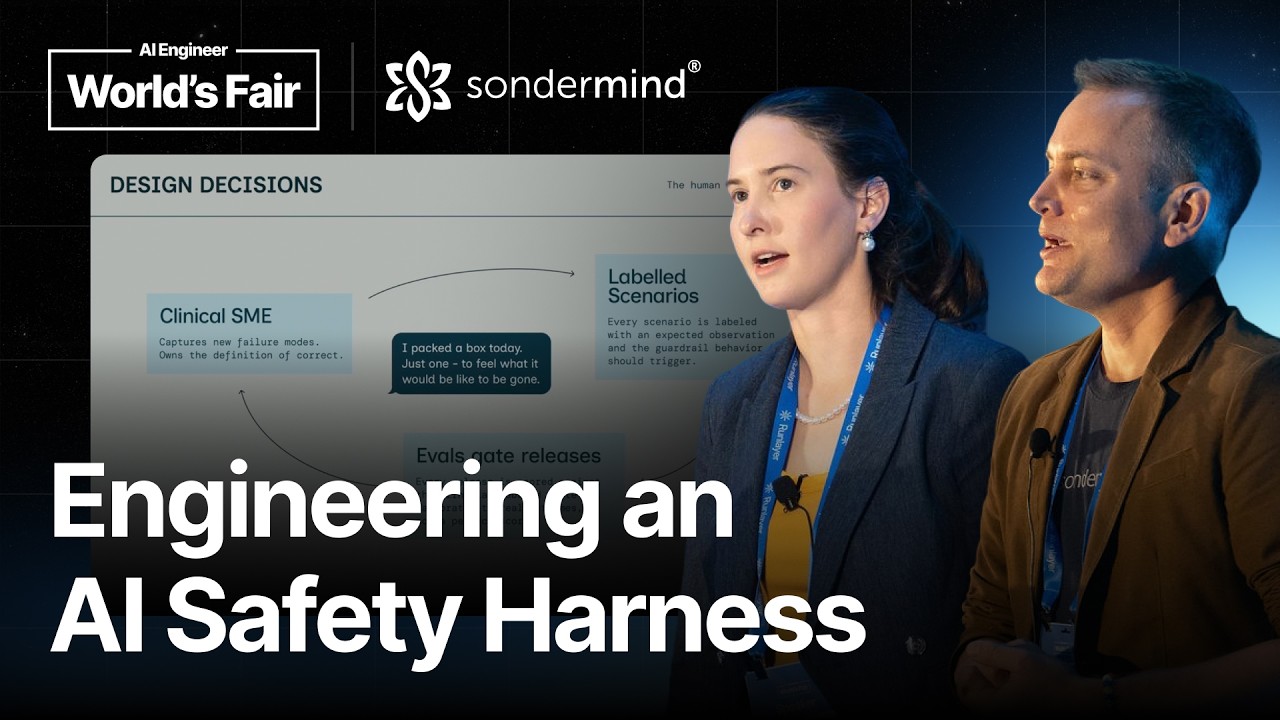
Evals-Driven Development for a Mental Health AI Coach — Akele Reed & Dave Revere, SonderMind

Evals-Driven Development for a Mental Health AI Coach — Akele Reed & Dave Revere, SonderMind

SonderMind's AI mental health coach, Sonder, pioneers an eval-driven development approach balancing effectiveness and safety. This involves a clinical feedback loop turning human therapist insights into machine-readable evaluations, an Ethics Engine with modular, LLM-as-a-judge guardrails for evolving clinical guidelines, and a shift from single-prompt agents to a Supervisor/Executor/Evaluator architecture with human oversight to ensure safety and quality in high-stakes mental health conversations. They also open-source clinically reviewed datasets to foster community safety.

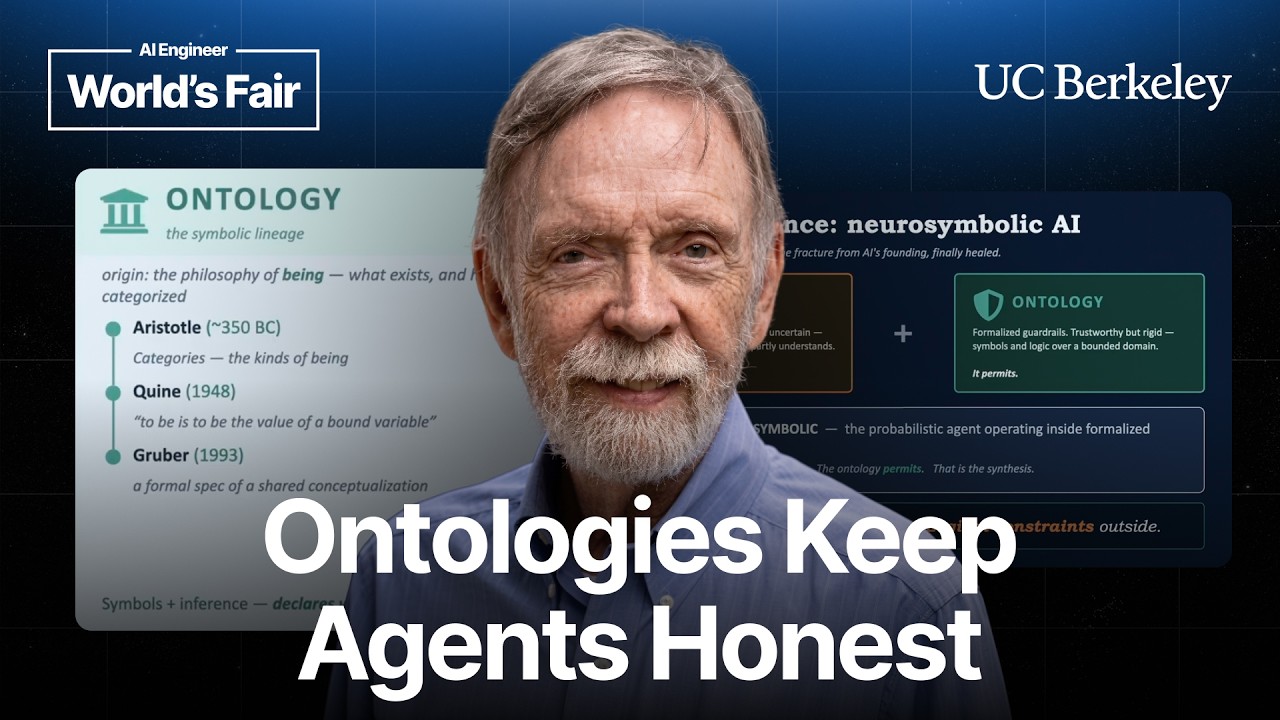
Why Agentic Systems Need Ontologies — Frank Coyle, UC Berkeley

Why Agentic Systems Need Ontologies — Frank Coyle, UC Berkeley

Frank Coyle discusses the inherent flaws of purely probabilistic LLMs in agentic systems and proposes a neuro-symbolic solution. He advocates for wrapping LLM tool-use loops with external ontologies and validation mechanisms (like RDFS, OWL, and Pydantic) to provide logical guardrails, preventing common, critical errors that probabilistic reasoning alone cannot reliably avoid.

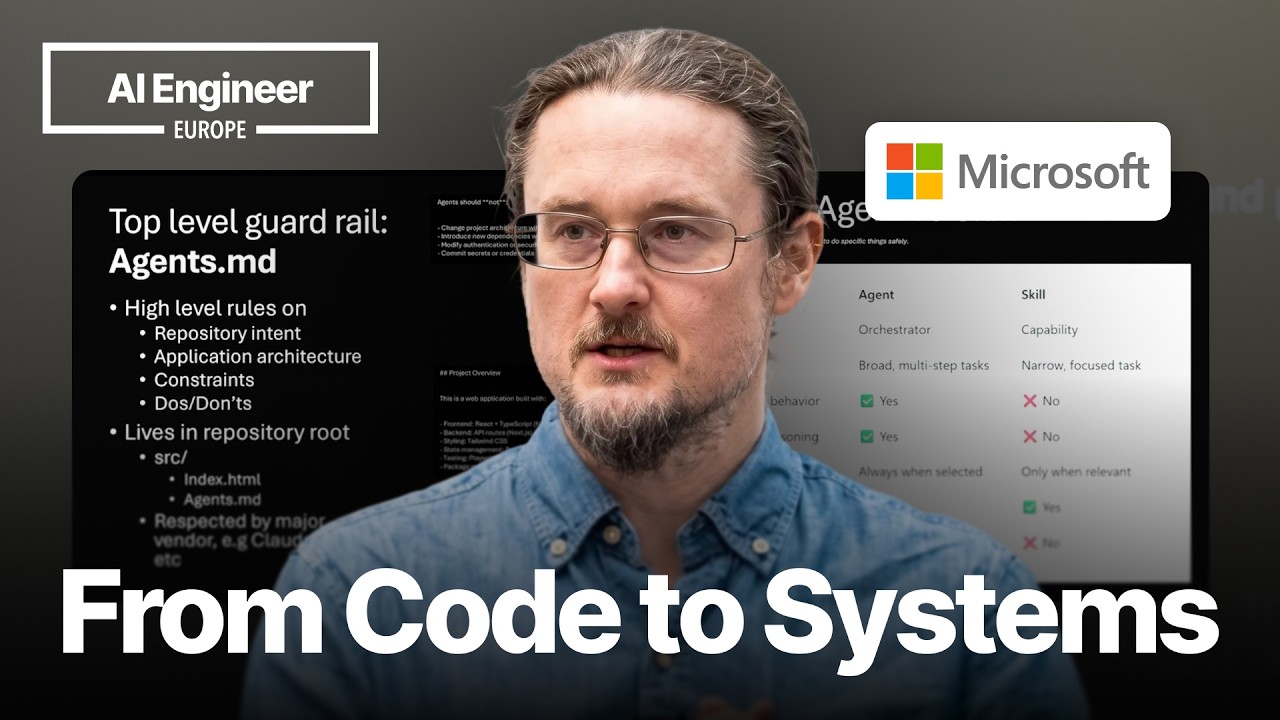
From Writing Code to Designing Systems: How the Developer Role is Changing — Chris Noring, Microsoft

From Writing Code to Designing Systems: How the Developer Role is Changing — Chris Noring, Microsoft

This talk introduces a paradigm shift in software development, moving developers from pure code producers to system designers and agent orchestrators. It details a new workflow leveraging GitHub Copilot CLI, custom Copilot agents, and explicit guardrails like `agents.md` and skills. The focus is on how to decompose complex problems, delegate implementation to AI, and encode architectural standards and constraints directly, enabling higher consistency, quality, and accelerated delivery through a "human-in-the-loop" delegation model.

Harnesses in AI: A Deep Dive — Tejas Kumar, IBM

Harnesses in AI: A Deep Dive — Tejas Kumar, IBM

A deep dive into AI harnesses, explaining how to build a programmatic environment around an LLM agent to ensure reliability without prompt engineering. The talk demonstrates building a harness for a browser agent to reliably log in and upvote a post on Hacker News using GPT-3.5 Turbo.

A Common-Sense Guide to AI Engineering • Jay Wengrow & Kris Jenkins • GOTO 2026

A Common-Sense Guide to AI Engineering • Jay Wengrow & Kris Jenkins • GOTO 2026

Jay Wengrow, author of “A Common-Sense Guide to AI Engineering,” breaks down how AI agents work, describing the 'clever hack' of intercepting LLM output to trigger functions. The discussion covers multi-agent architectures for complex tasks, implementing guardrails with regex and judge LLMs, and a pragmatic take on when to use frameworks versus building from scratch. Wengrow emphasizes understanding fundamentals over specific tools to create robust, production-ready AI applications.

Build Hour: Voice Agents

Build Hour: Voice Agents

A deep dive into building sophisticated voice agents using OpenAI's Realtime API and Agents SDK. The session covers architectural patterns like chained vs. end-to-end models, the use of multi-agent systems with handoffs for specialized tasks, and best practices for production including debugging with traces, implementing guardrails, and creating robust evaluations.