Generative models

Probabilistic Inference for Controlling Diffusion Models

Probabilistic Inference for Controlling Diffusion Models

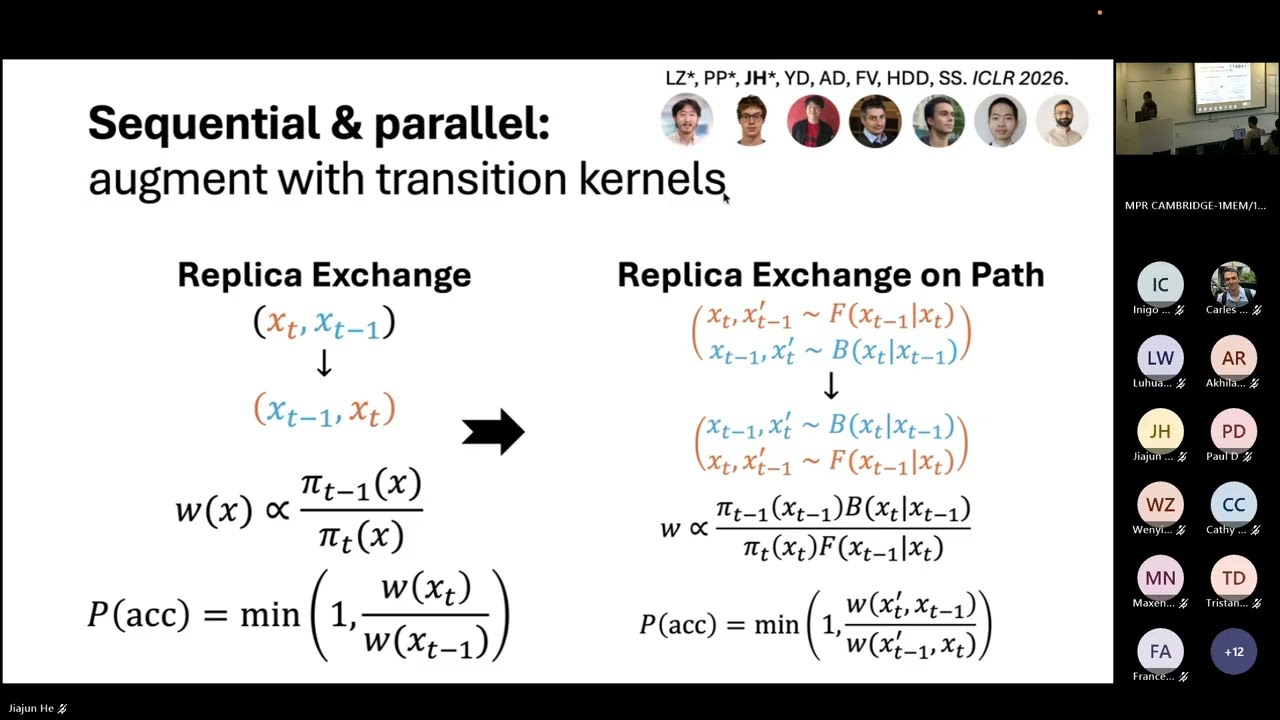
An in-depth presentation on controlling diffusion models during inference, categorizing techniques into sequential and parallel families. The talk explores both approximate and exact probabilistic inference methods, highlighting their underlying principles, computational trade-offs, and applications in areas like rare event sampling and protein design. A practical roadmap is provided for selecting the most suitable control strategy based on objective and computational resources.
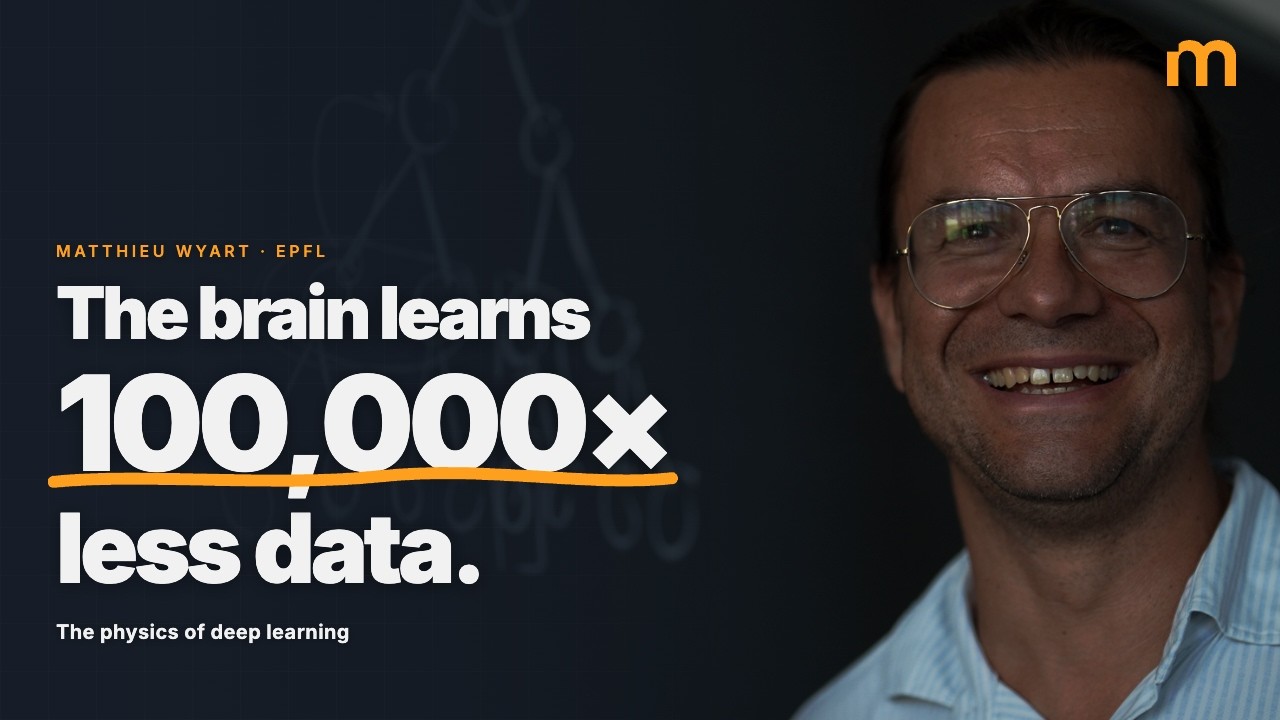
Why Deep Networks Don’t Need to Memorize Everything — Matthieu Wyart

Why Deep Networks Don’t Need to Memorize Everything — Matthieu Wyart

Matthieu Wyart, a statistical physicist, argues that deep networks discover abstractions by recovering hidden data hierarchies, allowing them to escape the curse of dimensionality. He explains how this mechanism, combined with predicting latent representations instead of raw tokens, can significantly improve sample efficiency. The discussion also covers the physics of rough loss landscapes, machine creativity, diffusion models, and a theoretical framework for neural scaling laws.

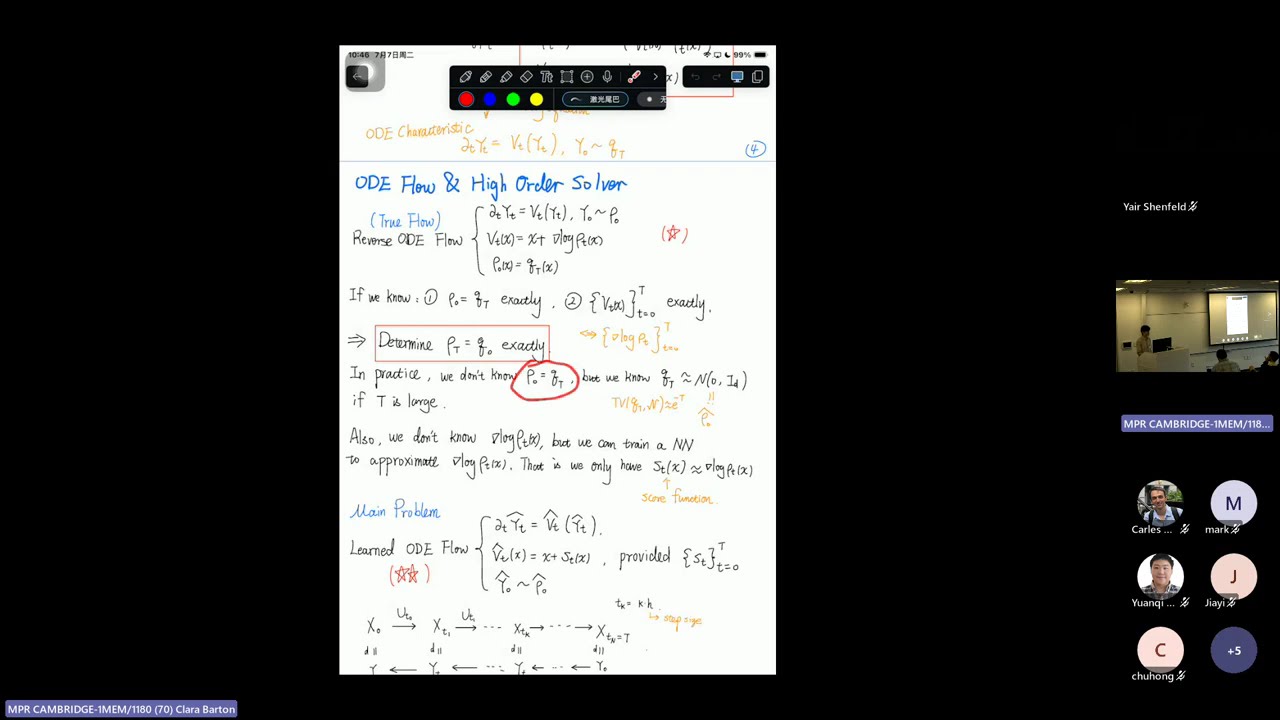
Convergence Analysis for Fast High-Order ODE Solvers in Diffusion Probabilistic Models

Convergence Analysis for Fast High-Order ODE Solvers in Diffusion Probabilistic Models

This talk presents a rigorous convergence analysis for fast, high-order ODE solvers in diffusion probabilistic models. It quantifies the interplay between the L2 score matching error (from neural network training) and the discretization error of Runge-Kutta integrators, establishing total variation distance bounds that only require C^2 regularity for the learned score functions. Numerical experiments validate the theoretical rates and the C^2 assumption on benchmark datasets. This work provides a solid theoretical foundation for designing efficient and accurate deterministic diffusion samplers.

Reinforce Adjoint Matching: Scaling Diffusion RL

Reinforce Adjoint Matching: Scaling Diffusion RL

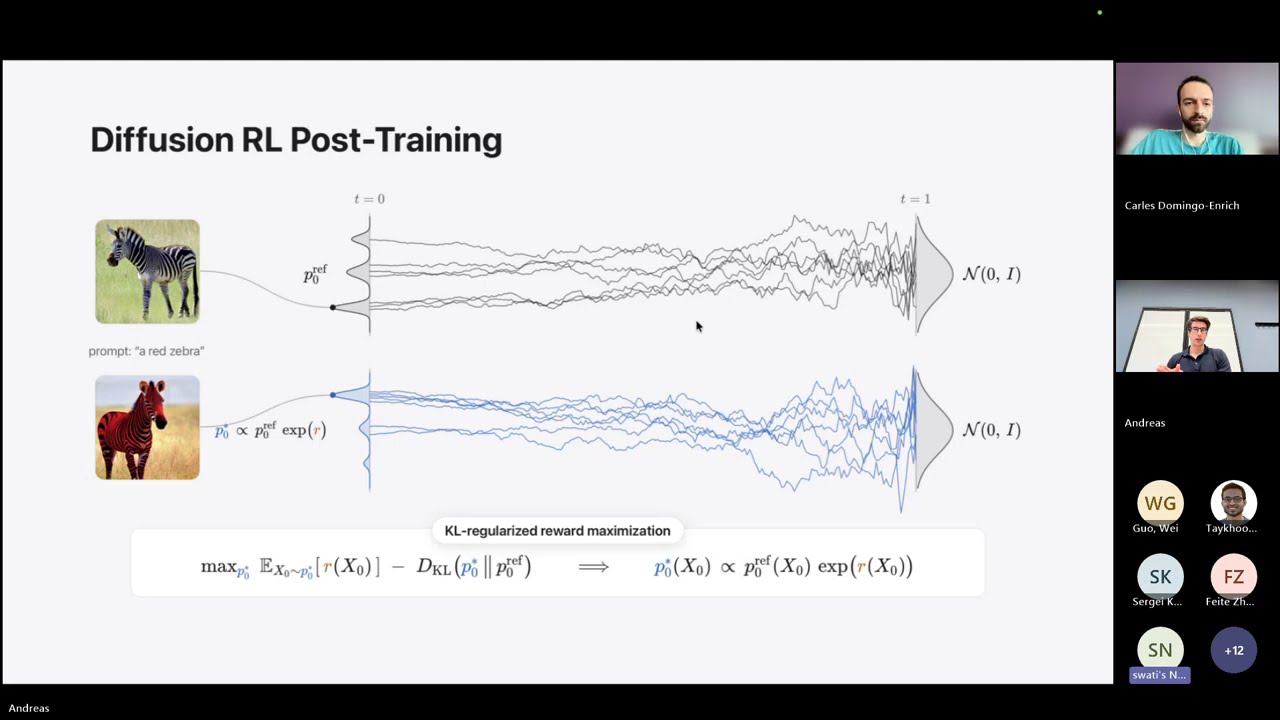
Andreas Bergmeister presents Reinforce Adjoint Matching (RAM), a novel method for scalable reinforcement learning post-training of diffusion models. RAM sidesteps the complexity of existing RL approaches by deriving a consistency loss that directly corrects the pre-training target with a reward signal, eliminating the need for costly SDE rollouts or reward gradients. This approach achieves superior performance and up to 50x faster convergence on challenging image generation tasks like complex composability, text rendering, and human preference alignment.

Wavefunction Flows: Efficient Quantum Simulation of Continuous Flow Models

Wavefunction Flows: Efficient Quantum Simulation of Continuous Flow Models

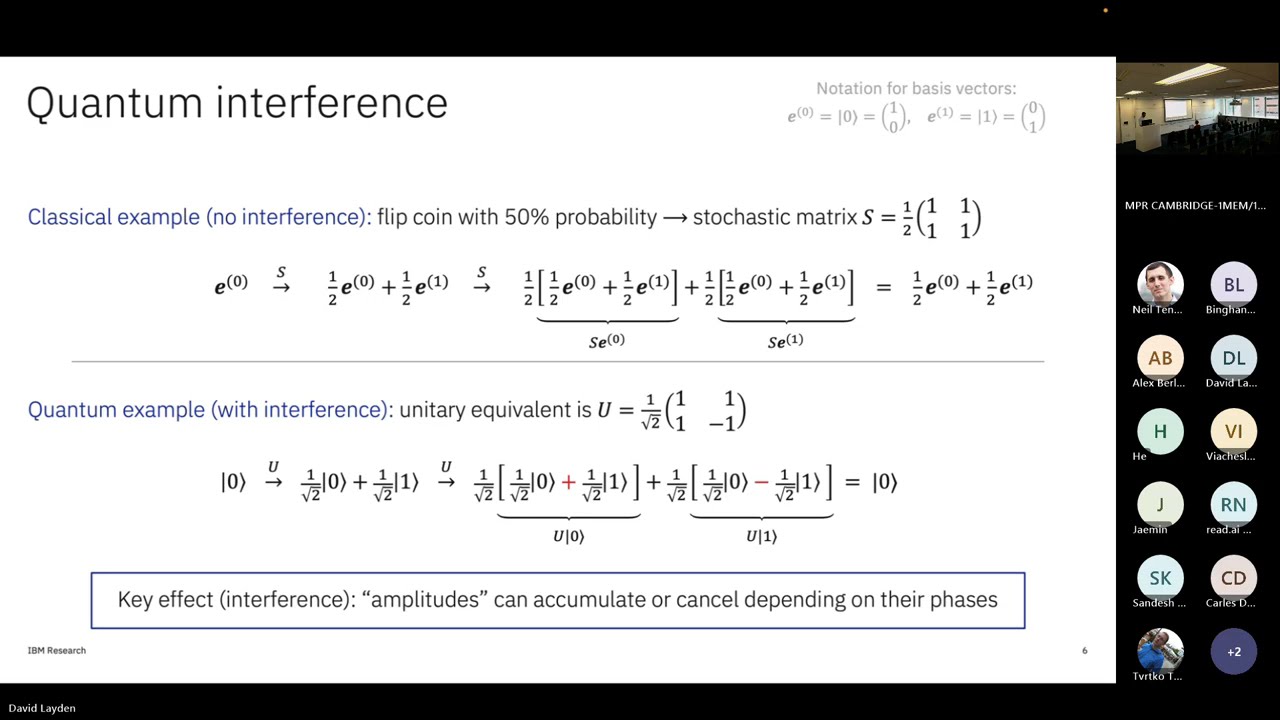
Continuous flow models map naturally to a Schrödinger equation, the fundamental equation of quantum mechanics. This discovery proves that a trained generative model can be efficiently simulated on a future quantum computer, enabling a new, more powerful type of access to its learned distribution for tasks like Monte Carlo estimation and structure discovery.

Will machines ever be intelligent?

Will machines ever be intelligent?

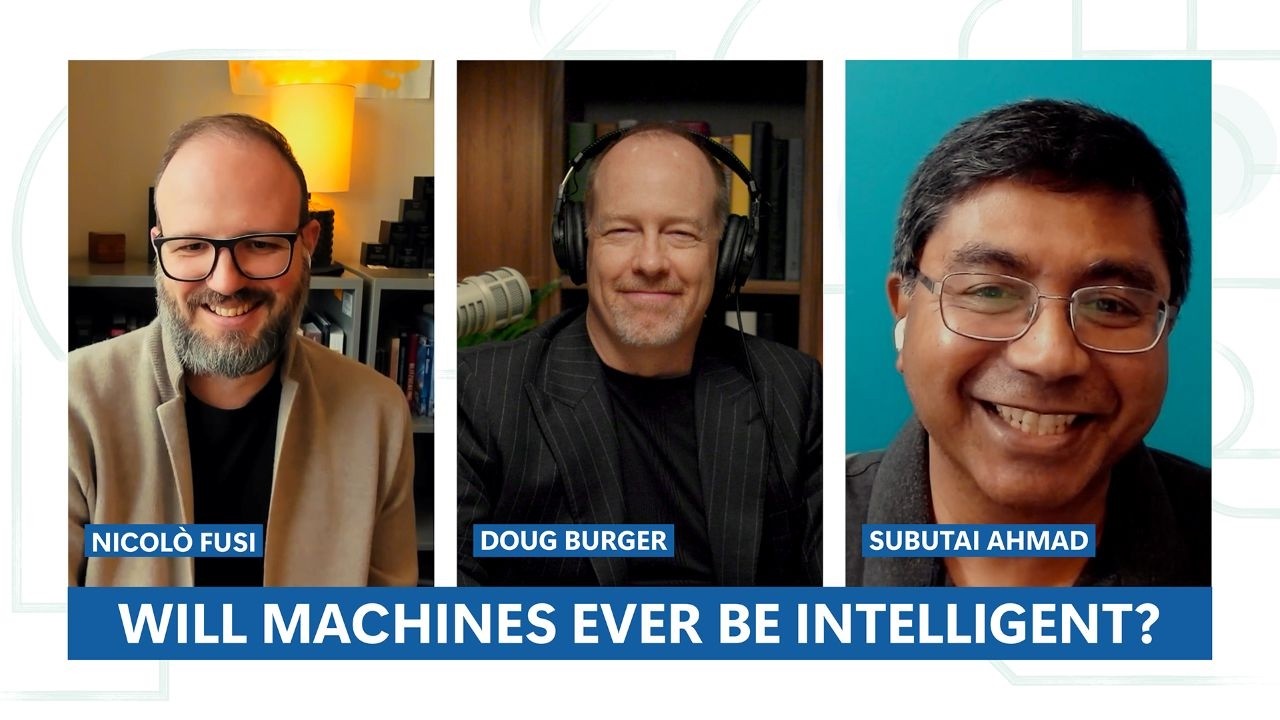
Doug Burger, Nicolò Fusi, and Subutai Ahmad explore the intelligence of AI, contrasting transformer-based LLMs with the human brain's distributed, continuously learning architecture. They delve into differences in efficiency, representation, and sensory-motor grounding, debating what intelligence truly means and how future AI might bridge the gap.