Feature

End-to-End Foundation Models for the Energy Industry — with Jazmia Henry

End-to-End Foundation Models for the Energy Industry — with Jazmia Henry

Jazmia Henry details the end-to-end process of building specialized foundation models for the energy industry. She covers the four key stages from data curation of unstructured, handwritten documents to optimizing inference, and introduces her Grounded Continuous Evaluation (GCE) framework to combat reward hacking in reinforcement learning.
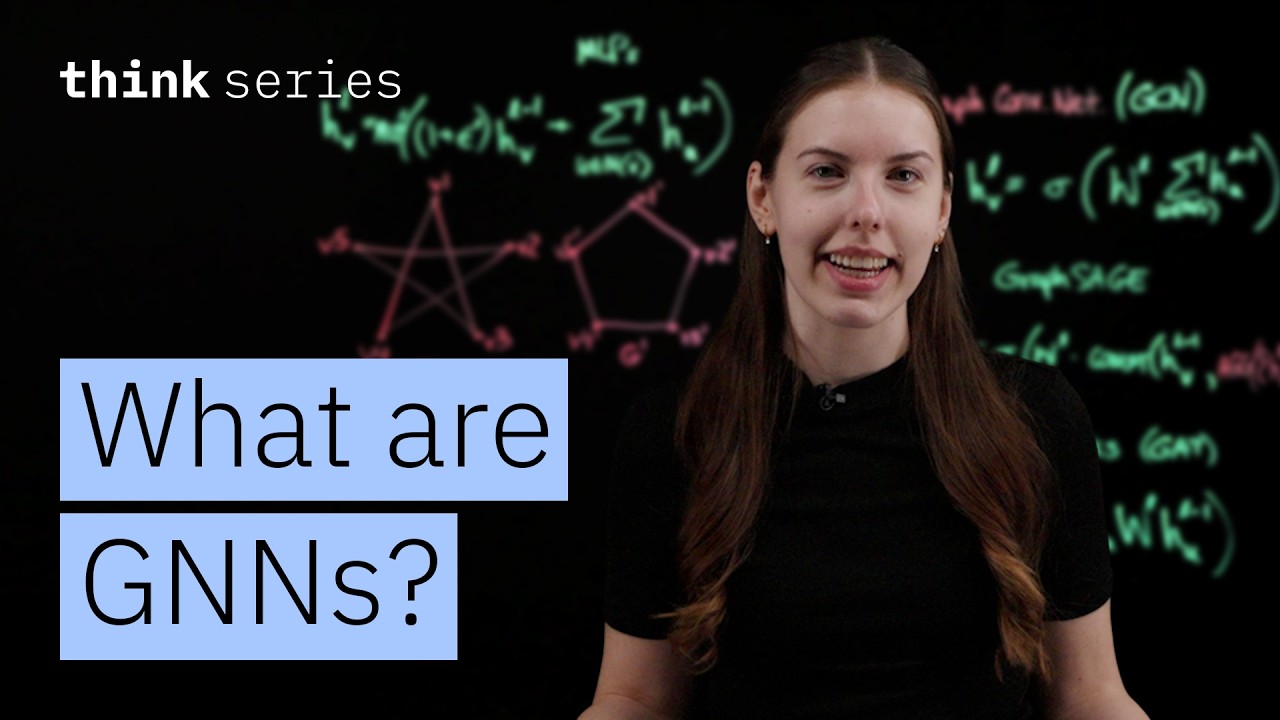
Graph Neural Networks Explained: A Clear Guide to GNN Basics & Models

Graph Neural Networks Explained: A Clear Guide to GNN Basics & Models

An introduction to Graph Neural Networks (GNNs), covering fundamental concepts like nodes, edges, and embeddings. This post delves into the core message-passing mechanism and provides a detailed overview of key architectures including GCN, GraphSAGE, GAT, GIN, and Graph Transformers, explaining their unique approaches and mathematical formulations.

How Google DeepMind Runs Agents at Scale — KP Sawhney & Ian Ballantyne, Google DeepMind

How Google DeepMind Runs Agents at Scale — KP Sawhney & Ian Ballantyne, Google DeepMind

KP Sawhney from Google DeepMind discusses the internal strategies for scaling agentic AI, including managing token-hungry workflows, curating a 'Darwinian' skills library, and evolving the Deep Research pipeline from large context blobs to a collaborative file system.

⚡️ Google's Open AI Strategy — Omar Sanseviero, Google DeepMind

⚡️ Google's Open AI Strategy — Omar Sanseviero, Google DeepMind

An in-depth look at Gemma 4's novel transformer architecture with per-layer embeddings, enabling efficient parameter offloading for on-device inference. The discussion also covers its native multimodality, the state of fine-tuning, text-based diffusion models, and the growing intersection of research and engineering.

Scaling the Next Paradigm of Heterogeneous Intelligence — Adrian Bertagnoli, Callosum

Scaling the Next Paradigm of Heterogeneous Intelligence — Adrian Bertagnoli, Callosum

Adrian Bertagnoli from Callosum argues that the era of scaling monolithic models on homogeneous GPU clusters is ending. He introduces "heterogeneous intelligence," a new paradigm where model architectures, chip types, and workflows are optimized together. By routing subtasks to the most efficient model and hardware, this approach achieves significant performance gains, as demonstrated by two key results: a 7x cost reduction in recursive reasoning tasks using Cerebras, and state-of-the-art performance on the Video Web Arena benchmark, outperforming leading GPT and Gemini models at a fraction of the cost and time.

Your Agent Is an Infinite Canvas — RL Nabors, Dressed for Space

Your Agent Is an Infinite Canvas — RL Nabors, Dressed for Space

RL Nabors makes a case against chat as the permanent UI for agents, arguing it's the "terminal" to the future "iPhone" of rich, interactive experiences. She demonstrates how to build these experiences using web technologies, introducing MCP Apps for in-agent UIs and WebMCP for making existing websites agent-callable, positioning the web platform as the ultimate "infinite canvas".