Feature

$450K TO TRAIN A FRONTIER AI MODEL?

$450K TO TRAIN A FRONTIER AI MODEL?

Thomson Reuters CTO Joel Hron explains why the company built Thomson, a domain-specific frontier model adapted from open-weight checkpoints like Qwen 3.5, using decades of proprietary legal and tax content and expert judgment. The conversation covers the training lifecycle from realignment and continual pre-training to agentic RL, the economics ($450K final run versus roughly $40M total), team structure, CoCounsel orchestration, verification challenges in legal and tax, and the future balance between open-weight and frontier models.
Rapidly Deploying Useful General-Purpose Robots at Walden Robotics

Rapidly Deploying Useful General-Purpose Robots at Walden Robotics

A talk from Walden on deployment-first physical AI: getting general-purpose robots into real manufacturing production, using remote assistance as a human-in-the-loop safety and learning mechanism, and building a data flywheel in which operational data drives continuous improvement of large behavior models.

Why Bigger Context Windows Won't Save Your Agent — Elizabeth Fuentes Leone, AWS

Why Bigger Context Windows Won't Save Your Agent — Elizabeth Fuentes Leone, AWS

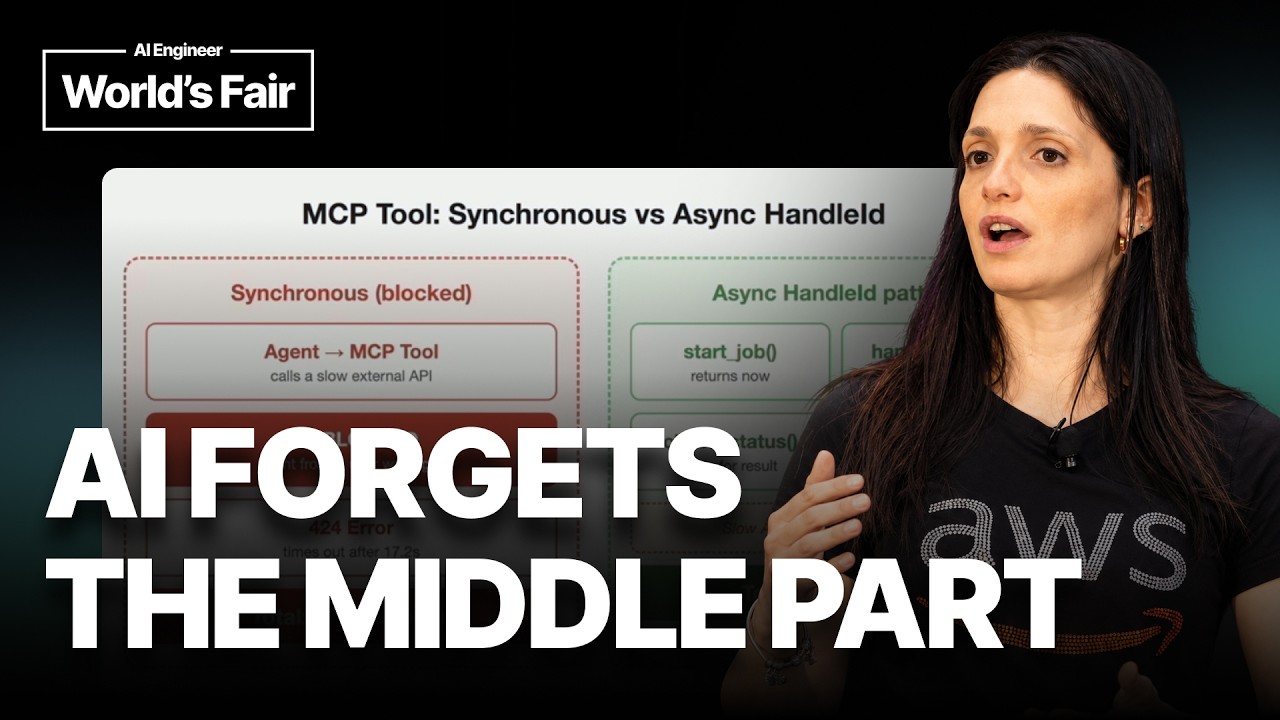
Elizabeth Fuentes Leone, developer advocate at AWS, explains why agents break when tools return huge outputs, why bigger context windows do not fix the problem because models lose the middle of long contexts, and how four context engineering strategies (externalize, select, compress, isolate) can be implemented with the open-source Strands Agents framework.

AI Hackers Are Faster Than Your Pen Test — Eli Cohen, Snyk

AI Hackers Are Faster Than Your Pen Test — Eli Cohen, Snyk

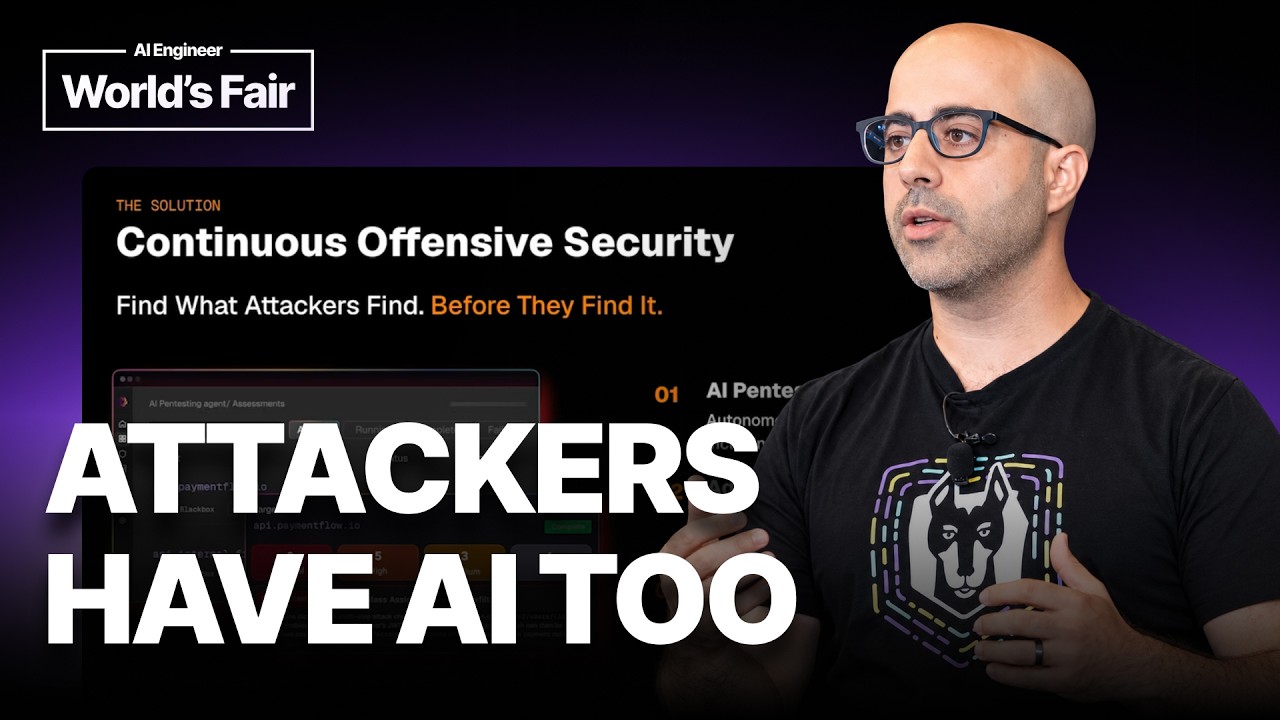
Eli Cohen of Snyk argues that AI-generated code and AI-powered attackers have broken the traditional security model. He calls for continuous offensive security built on AI pentesting on every code change, agent red teaming, and a multi-agent system that validates exploits. He compares SAST, DAST, and human pentesting, and closes with four questions to ask any AI pentesting vendor.

Stop Overpaying for Intelligence | DevDay 2026

Stop Overpaying for Intelligence | DevDay 2026

A practical session on cutting AI costs without sacrificing quality. The speakers argue for measuring cost per completed task rather than per-token list prices, show how to right-size models with accuracy-versus-cost Pareto analysis, and walk through four levers: prompt caching, programmatic tool calling, reasoning effort, and batch or flex processing. Customer case studies from Perplexity, Notion, Clio, and Blitzy ground the advice.

Higgsfield - Building Agents That Provision Their Own Compute | DevDay 2026

Higgsfield - Building Agents That Provision Their Own Compute | DevDay 2026

Alex Mashrabov, CEO of Higgsfield, explains how agentic systems choose among models and provision their own GPU infrastructure to deliver consistent, multi-step creative media. He covers the trade-offs between speed, controllability, and dedicated deployment, and shares the 10-hour AI-generated live stream as an example of what becomes possible for small teams.