Enterprise ai

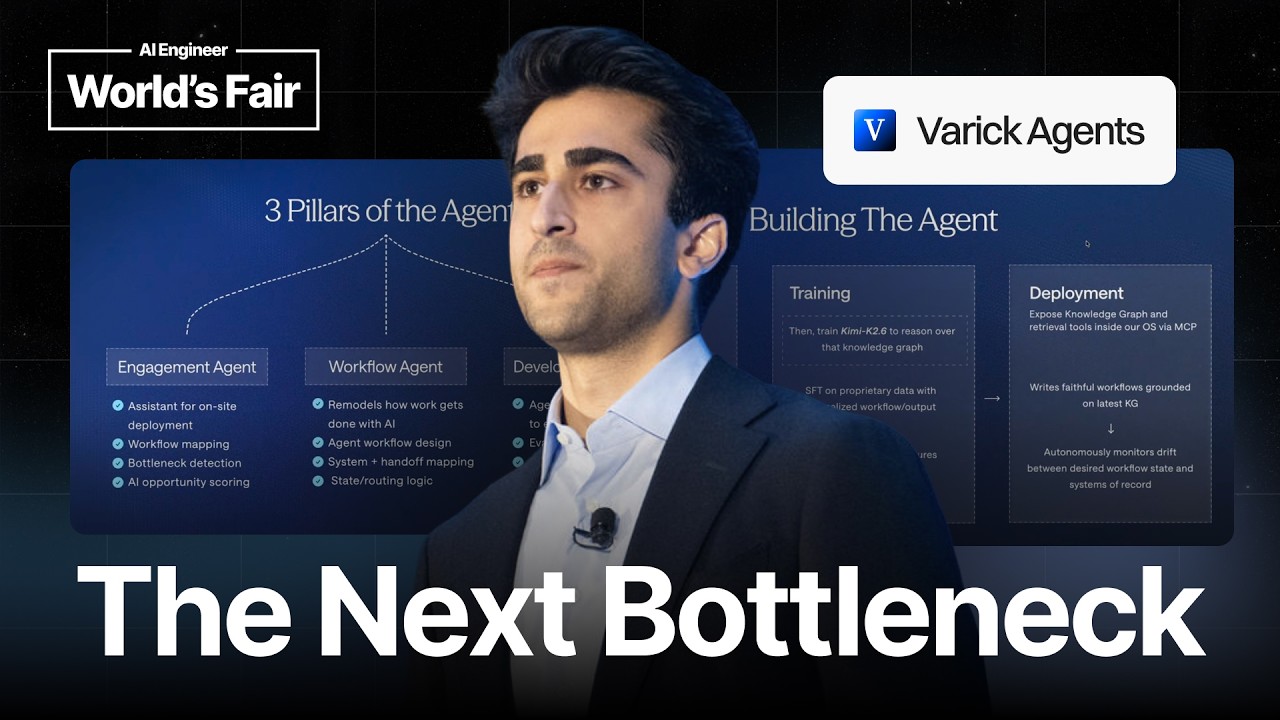
AI tools for Forward Deployed Engineering — Vasuman Moza, Varick Agents

AI tools for Forward Deployed Engineering — Vasuman Moza, Varick Agents

Varick Agents tackles the enterprise AI adoption challenge by deploying Forward Deployed Engineers (FDEs) who map, re-engineer, and automate complex workflows directly on top of existing systems, avoiding costly migrations. The company develops specialized internal AI tooling, including 'Engagement' and 'Workflow' agents, and employs custom model training with RL environments to overcome frontier model limitations in context extraction and clarity, enabling department-wide AI transformation.
How Forward Deployed Engineering is done at Decagon — Sunny Rekhi

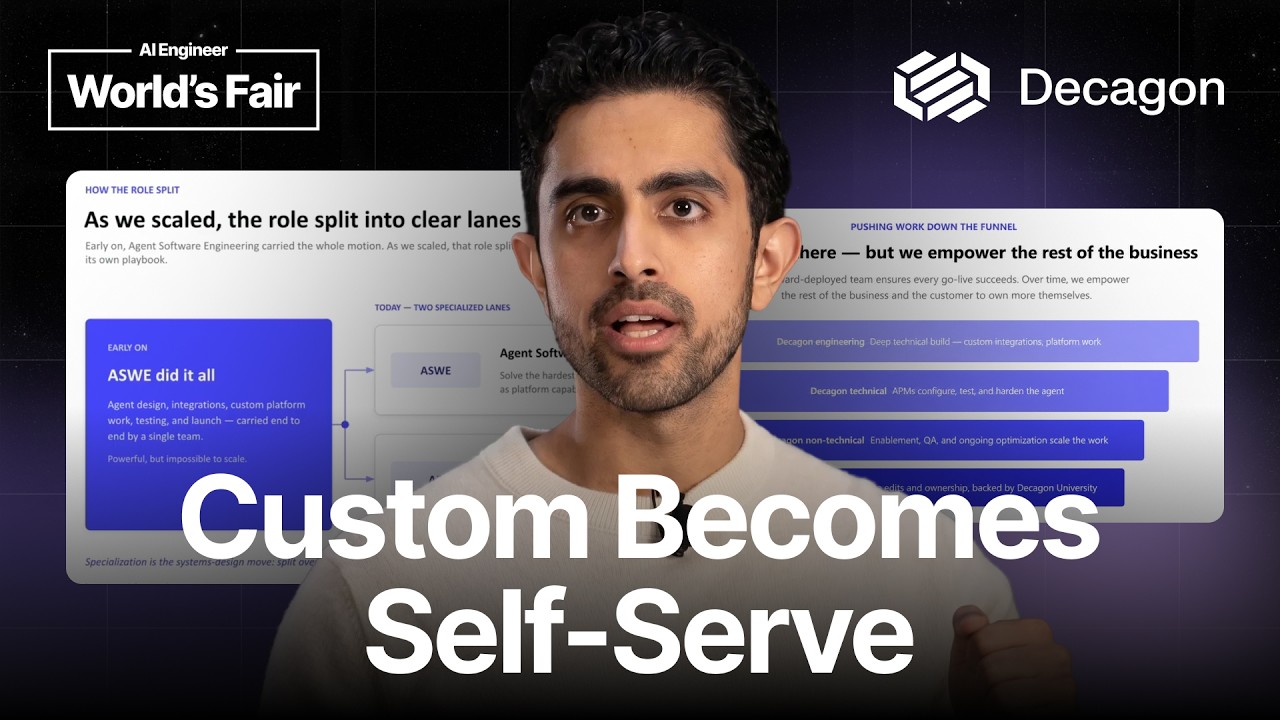
How Forward Deployed Engineering is done at Decagon — Sunny Rekhi

Sunny Rekhi, CTO of Forward Deployed Engineering at Decagon, explains how his company builds and scales AI customer service agents. He delves into the dual nature of forward-deployed work – agent configuration and product development driven by customer asks – and how this role blends with core product engineering. The discussion covers critical strategies for scaling from 50 to 500 employees, emphasizing restraint, early success definition, industry specialization, and the ethos of turning custom solutions into self-serve, reusable product features.

OpenAI’s Plan to Make ChatGPT the Everything App — Akshay Nathan, OpenAI

OpenAI’s Plan to Make ChatGPT the Everything App — Akshay Nathan, OpenAI

Akshay Nathan, head of Core Product Engineering at OpenAI, discusses the journey and rationale behind ChatGPT Work. He explains how Codex's unexpected adoption by non-developers led to a unified agent harness, blurring the lines between developer and knowledge worker tools. The conversation delves into model capabilities, the role of artifacts and interactive 'Sites' in replacing traditional documents, and how AI fosters a new era of 'T-shaped' generalists. Nathan emphasizes the shift in productivity bottlenecks to 'ideas and taste' and the importance of 'quality at-bats' over mere 'motion' in an AI-powered development landscape.

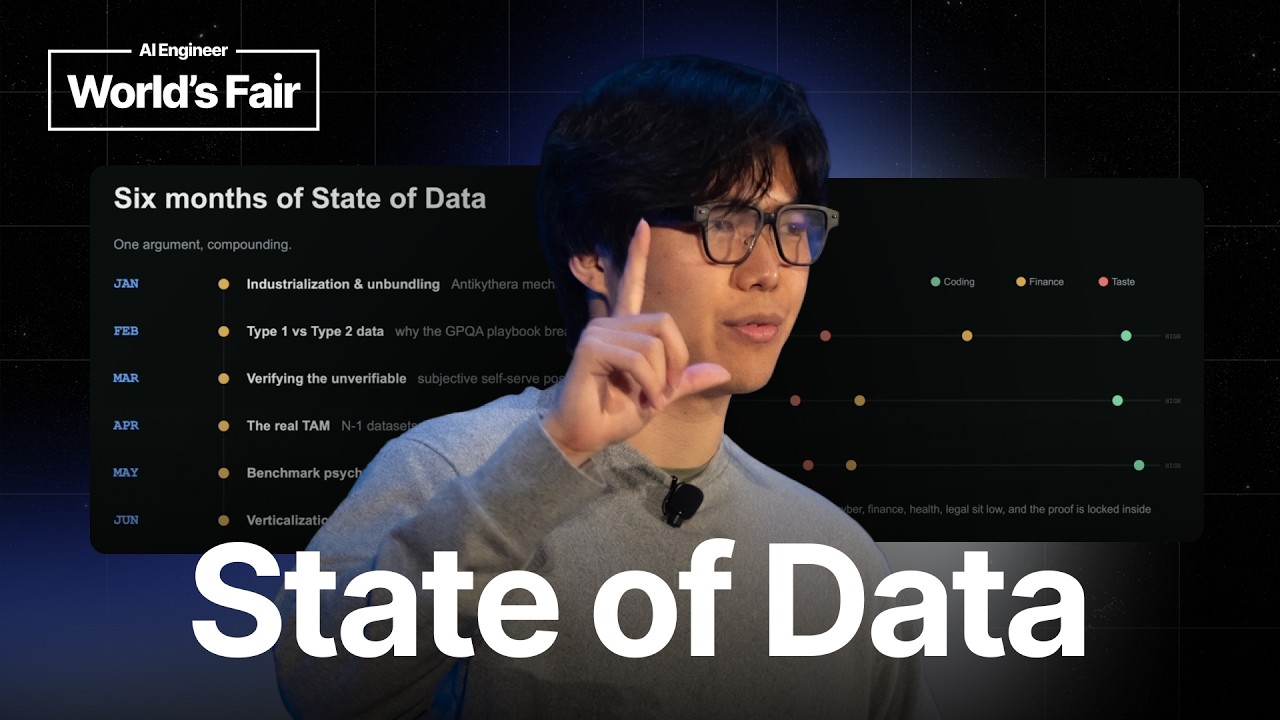
State of Data — Sean Cai, Independent / State of Data

State of Data — Sean Cai, Independent / State of Data

Sean Cai discusses the evolving landscape of AI data markets, highlighting the shift from raw annotation to high-quality, process-based data. He introduces "Verifier's Law" and its three axes to explain application layer maturity, critiques the shortcomings of current benchmarks, and predicts future AI trends by analyzing data market signals. Cai concludes by envisioning data companies transforming into "neo-labs" that provide enterprise-level reinforcement learning as a service and "Antikythera mechanisms" to manage and monetize real-world data assets.

Opencode CEO: Blocked, 20X Growth in 6 Months, Building the Coding Agent for the World

Opencode CEO: Blocked, 20X Growth in 6 Months, Building the Coding Agent for the World

Jay V, founder and CEO of Opencode, shares insights into the explosive growth of his platform, an open-source alternative to proprietary coding agents. He details Opencode's journey to 13 million monthly active users and 7 trillion tokens processed daily, attributing its rapid rise partly to an unexpected controversy with Anthropic and the maturing open-source model ecosystem. The discussion delves into global user adoption, the economic shift in AI token consumption, and how Opencode's strategic product design, rooted in 16 years of entrepreneurial persistence, positions it as a critical marketplace for diverse AI models, serving both individual developers and Fortune 500 companies.

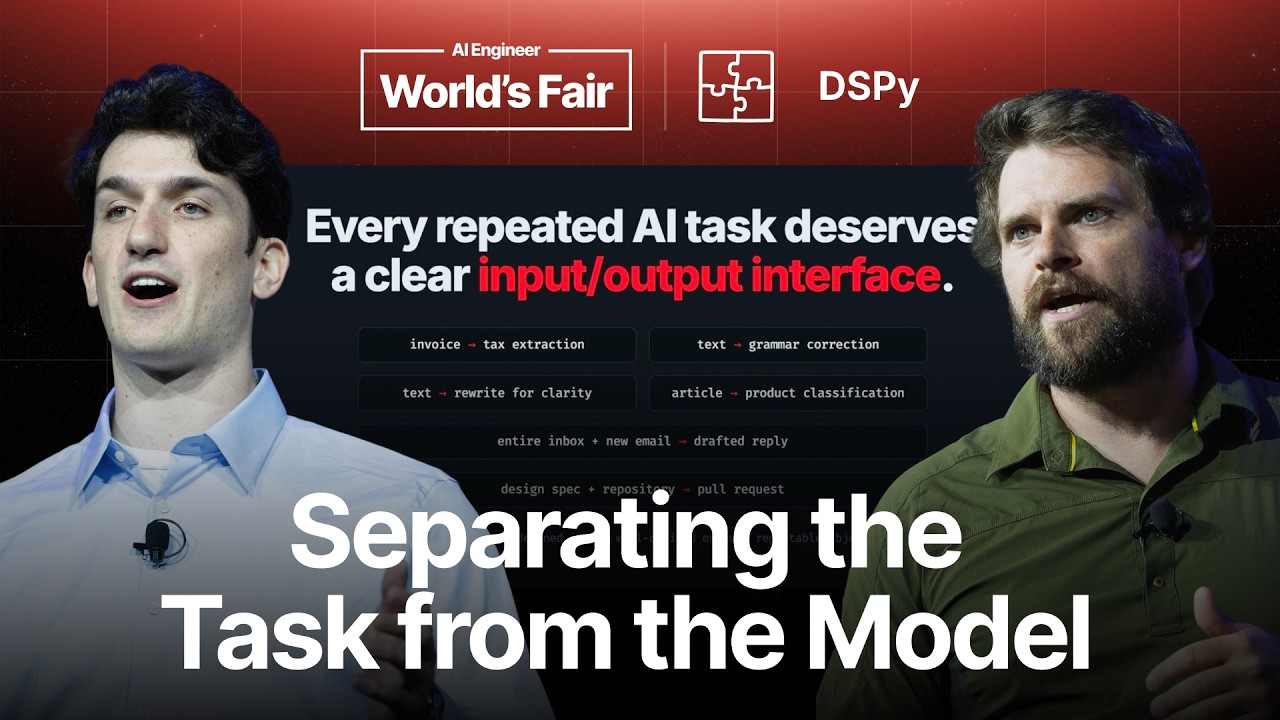
The Unreasonable Effectiveness of Separating the Task from the Model — Maxime Rivest, DSPy

The Unreasonable Effectiveness of Separating the Task from the Model — Maxime Rivest, DSPy

DSPy emphasizes separating task definition from model implementation using a "Signature" (inputs/outputs) to enable flexible, optimizable, and scalable AI programs. The framework relies on three pillars—instructions (specs), hard constraints (code), and examples (evals)—to fully specify tasks. DSPy 4.0 introduces DSPy Flex for learning program harnesses and Qualitative Learning for automated, feedback-driven evaluation refinement, offering significant benefits for enterprise applications and addressing "last-mile learning" for future AI systems.