Developer tools

The Golden Age of AI Engineering — Alexander Embiricos & Romain Huet & Peter Steinberger, OpenAI

The Golden Age of AI Engineering — Alexander Embiricos & Romain Huet & Peter Steinberger, OpenAI

OpenAI's Romain Huet and Alexander Embiricos, joined by Peter Steinberger, outline the explosive progress of Codex at Dev Day 2024. They highlight the shift from manual coding to managing autonomous agents, enabled by rapid model iteration (every 6 weeks), open-source developer tools, and optimizations for cost-effectiveness ($1/M input tokens) and blazing inference speed (750 tokens/sec). The discussion centers on empowering AI engineers, not replacing them, by evolving agent capabilities, fostering an open ecosystem, and addressing future challenges like seamless local/cloud task execution and human attention as the new bottleneck in agent orchestration.
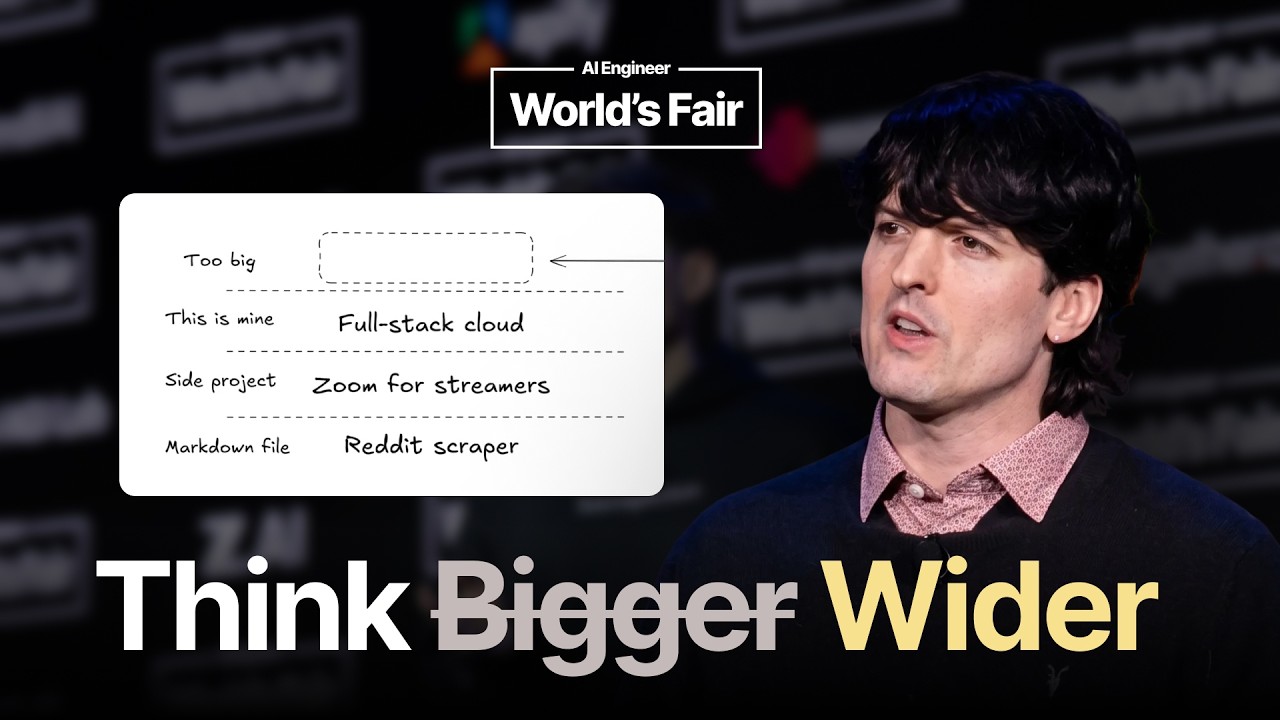

What do we build now? — Theo Browne, @t3dotgg

What do we build now? — Theo Browne, @t3dotgg

Theo Browne's keynote from AIEWF2026 urges software engineers to fundamentally change product development in response to rapidly evolving AI models (Sonnet 3.5 to Mythos). He advocates for rejecting legacy mental models and tools (skeuomorphism), embracing a new "Markdown tier" for projects, and thinking "wider" instead of just "deeper" by building extensible platforms that can challenge industry giants. The core message is to be more ambitious, as AI has drastically lowered the barrier to entry for complex, broad-reaching solutions.

GTM Is You - Victoria Melnikova, Evil Martians

GTM Is You - Victoria Melnikova, Evil Martians

Victoria Melnikova discusses optimal Go-To-Market strategies for developer tools and AI startups, asserting that a founder's personal brand is the most underrated competitive advantage in 2026. She covers foundational GTM hygiene, the strategic importance of San Francisco, effective advertising and event tactics, embracing unconventional marketing, and the critical role of authenticity and personal connection in building trust and cutting through digital noise.

What Is AI Code Refactoring? Agentic AI & Safe Code Changes

What Is AI Code Refactoring? Agentic AI & Safe Code Changes

This video explores AI code refactoring, differentiating between inline and autonomous agentic approaches. It highlights how AI can leverage pattern recognition for tasks like improving readability or reducing duplication, thereby addressing technical debt. A key focus is on the safety guardrails, detailing a multi-step, human-in-the-loop process involving planning, searching, reporting, human approval, patching, and verification through testing, ensuring AI-driven changes are safe for production and can integrate into CI/CD pipelines.

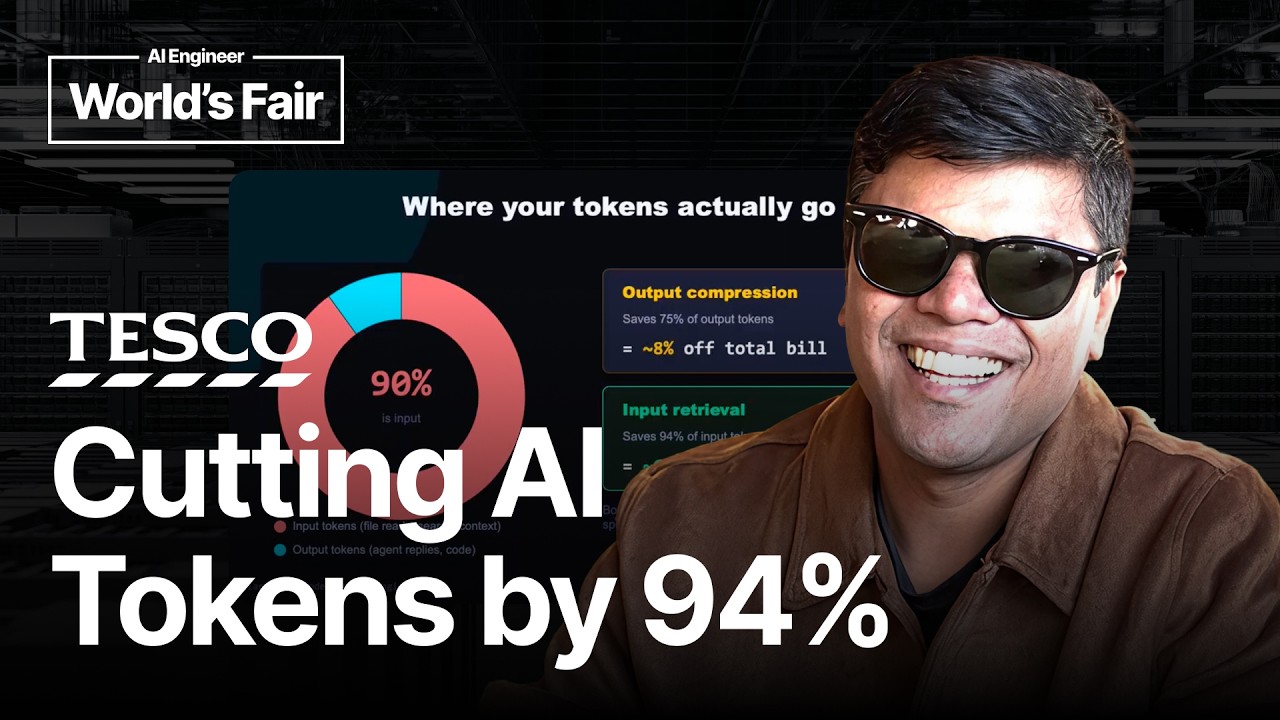
We Cut 94% of AI Coding Tokens With a Local Code Index - Rajkumar Sakthivel, Tesco

We Cut 94% of AI Coding Tokens With a Local Code Index - Rajkumar Sakthivel, Tesco

Rajkumar Sakthivel details how an unexpected surge in AI coding tool costs led to the discovery that sending excessive, irrelevant context was the primary culprit. He introduces the Code Context Engine (CCE), a local retrieval layer that intelligently prunes context using AST-aware chunks, hybrid search, and relevance scoring, resulting in up to 94% token reduction and significant cost savings. The talk emphasizes that optimizing input context, not just the AI model, is paramount for efficient and accurate AI-assisted coding.

Turn 10,994 Notes Into Memory - Paul Iusztin, Decoding AI & Louis-François Bouchard, Towards AI

Turn 10,994 Notes Into Memory - Paul Iusztin, Decoding AI & Louis-François Bouchard, Towards AI

Paul Iusztin and Louis-Francois Bouchard unveil their AI Research OS, a powerful system that transforms notes, documents, videos, and code repositories into a dynamic, personalized memory for AI agents. They detail a three-layered architecture (raw files, index, wiki) that efficiently manages context and enables continuous learning and evolution, addressing the limitations of static research and generic AI tools.