Data ownership

Why a $1M Startup Wasn’t Worth Building in the Age of AI

Why a $1M Startup Wasn’t Worth Building in the Age of AI

Jean-Denis Greze, Town's CEO and former Plaid CTO, explains why he shut down a nearly $1M-revenue AI tax business for SMBs and pivoted to Town, an AI assistant that works from email and calendar. The conversation with a16z's Alex Rampell covers founder decision-making under time pressure, product-market fit, the consumer-grade enterprise thesis, token allocation as a business model, neutrality versus frontier labs, horizontal versus vertical strategy, uneven AI diffusion, and how agents may reshape commerce and advertising.
Stop Renting Your AI's Memory — Dylan Couzon, Qdrant

Stop Renting Your AI's Memory — Dylan Couzon, Qdrant

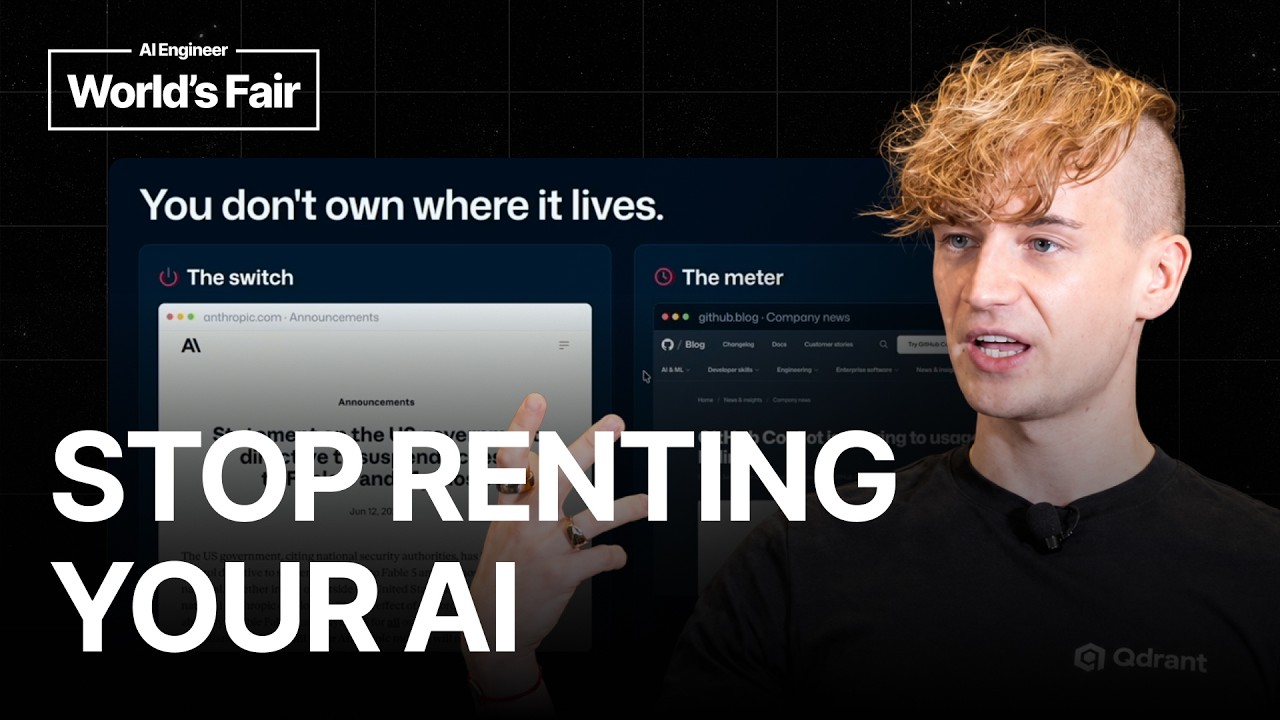
Dylan Couzon, developer relations engineer at Qdrant, argues that frontier-class models now run on hardware people can own, but the memory that makes an assistant personal still lives in someone else's cloud. He covers why owning inference gives autonomy while owning memory gives continuity, the CPU, RAM, and disk model for LLMs, why retrieval beats stuffing everything into the prompt, and a live offline demo of a drone building searchable memory with Qdrant Edge, plus opt-in shared memory.

Local Models: Trust, Control, Optimization — Carter Abdallah, NVIDIA

Local Models: Trust, Control, Optimization — Carter Abdallah, NVIDIA

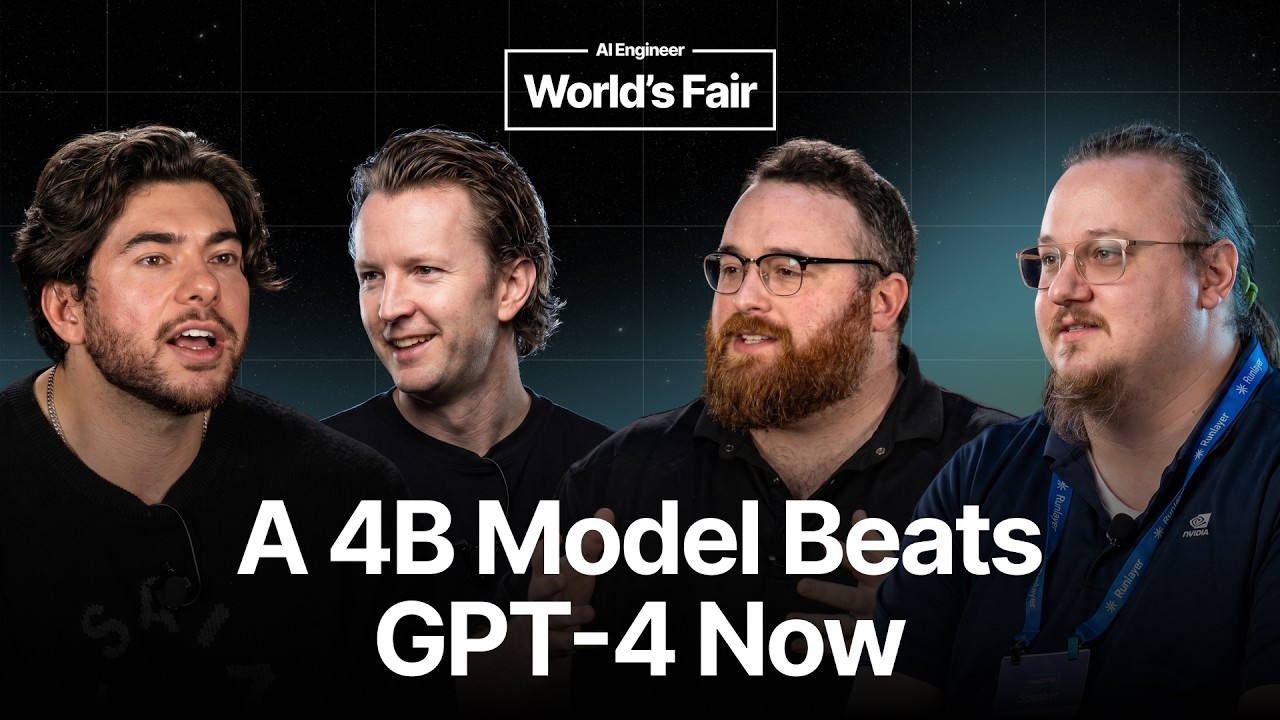
A panel with Vincent Weisser (Prime Intellect), Lucas Atkins (Arcee AI), and Chris Alexiuk (NVIDIA) on why open models matter for trust, control, cost predictability, and data ownership. The discussion covers the distinction between trust and safety, post-training open models for specific harnesses and use cases, the open MDW license, the Linux-like role of open infrastructure alongside closed models, and predictions for open model capabilities and local AI adoption over the next year.