Data center

The AI Frontier: from FLOPs to Megawatts — Anjney Midha, AMP

The AI Frontier: from FLOPs to Megawatts — Anjney Midha, AMP

Anjney Midha unpacks the critical bottlenecks in AI scaling beyond just GPU acquisition, advocating for responsible infrastructure, community-aligned data centers, and an independent system operator model for compute. He discusses the perils of research hoarding, the rise of researcher CEOs, and how Anthropic's culture of "preparedness" and "output maxing" led to its success, while also highlighting his personal mission to use AI for precise end-of-life prediction.
Why AI needs a new kind of supercomputer network — the OpenAI Podcast Ep. 18

Why AI needs a new kind of supercomputer network — the OpenAI Podcast Ep. 18

OpenAI's Mark Handley and Greg Steinbrecher detail Multipath Reliable Connection (MRC), a new networking protocol designed to overcome the unique challenges of large-scale AI model training. They explain how moving intelligence to the network's edge creates a resilient, efficient, and simple system that handles constant hardware failures without disrupting massive, synchronized GPU workloads.

What Engineers Get Wrong About Liquid Cooling - Wendy Luiten | Podcast #163

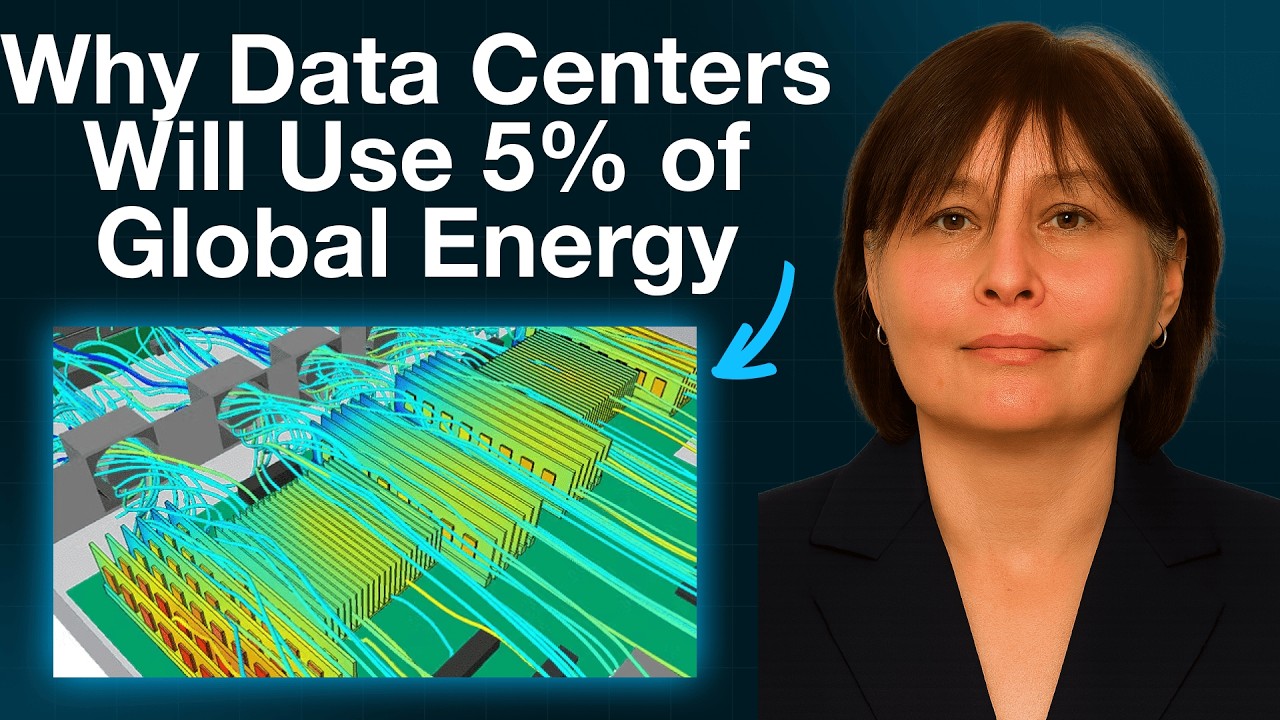
What Engineers Get Wrong About Liquid Cooling - Wendy Luiten | Podcast #163

Thermal engineer and 2024 Thermy Award winner Wendy Luiten discusses the impending energy and water crisis driven by AI data centers. She explores how computational fluid dynamics (CFD) and a shift to sustainable liquid immersion cooling, particularly with plant-based oils, can mitigate the environmental impact while ensuring performance.

Nvidia CTO Michael Kagan: Scaling Beyond Moore's Law to Million-GPU Clusters

Nvidia CTO Michael Kagan: Scaling Beyond Moore's Law to Million-GPU Clusters

Nvidia CTO Michael Kagan explains how the Mellanox acquisition was key to scaling AI infrastructure from single GPUs to million-GPU data centers. He covers the critical role of networking in system performance, the shift from training to inference workloads, and his vision for AI's future in scientific discovery.