Continual learning

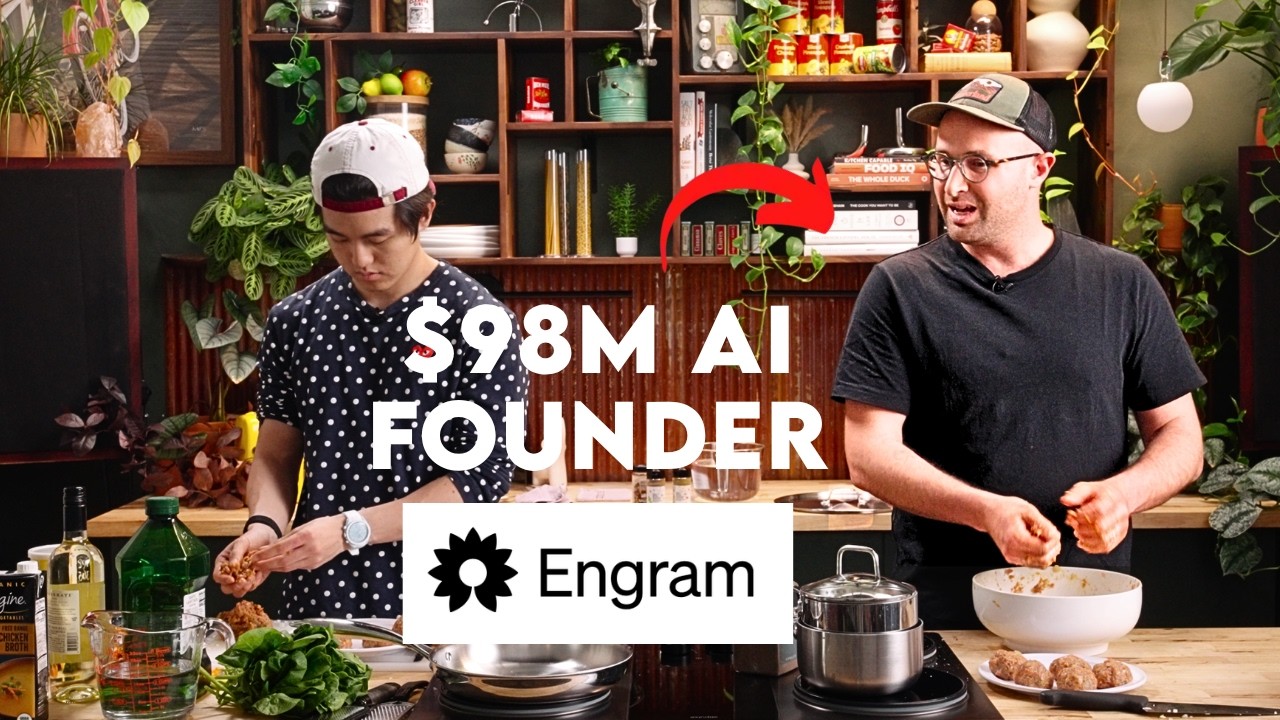
The AI Memory Problem: Why Long Context Isn’t Enough — Dan Biderman, Engram Co-founder & CEO

The AI Memory Problem: Why Long Context Isn’t Enough — Dan Biderman, Engram Co-founder & CEO

Engram co-founder Dan Biderman discusses building AI that learns from users, critiquing long context, RAG, and compaction's limitations. He introduces Engram's approach of compressing knowledge into "cartridges" and model weights via continual learning and gradient-based updates, aiming for "intuition" over retrieval. The vision extends to personal, "Tamagotchi" AI models and addresses the critical need for token efficiency and "doing more with less" in both enterprise and personal AI.

Memory and Continual Learning: Engram's Dan Biderman and Jessy Lin

Memory and Continual Learning: Engram's Dan Biderman and Jessy Lin

Dan Biderman and Jessy Lin of Engram introduce their "always training" paradigm, focusing on baking a team's knowledge directly into a model's weights to achieve true memory and continual learning. This contrarian approach, which they call a "RAG killer" for specific use cases, promises up to 100x token savings and superior performance by internalizing context rather than relying on ever-larger context windows or external retrieval, envisioning a future where everyone has their own continually learning, personalized AI model.

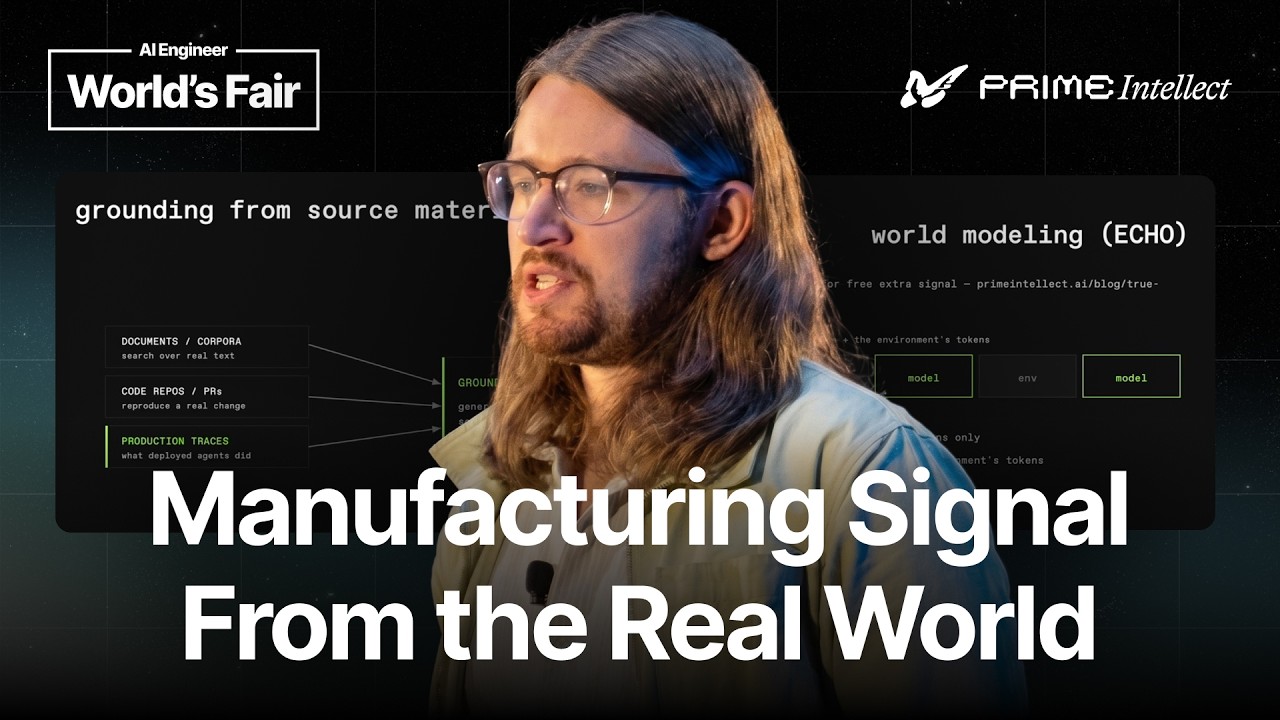
⚡️Every product of the future will be a living system  — Ronak Malde, Trajectory.ai

⚡️Every product of the future will be a living system — Ronak Malde, Trajectory.ai

Ronuk Malde, CEO of Trajectory.ai, discusses his journey from building AI coding agents at Windsurf to his current focus on continual learning for enterprise AI. He shares insights on leveraging real-world user data, the unique challenges of model acquisition, and how Trajectory.ai's platform, powered by innovations like scaled SDPO and a novel training stack, enables dynamic, always-learning AI models for diverse industries from legal to finance.

6 Things to Know about AIE World's Fair 2026

6 Things to Know about AIE World's Fair 2026

Discover the AI Engineering World's Fair 2026, the largest iteration yet, offering an unparalleled deep dive into AI engineering with expanded tracks on auto research, GPU specialization, and new verticals like finance and healthcare. Highlights include an innovative expo experience, exclusive leadership initiatives like the "Token Billionaires Program," and unique side events fostering community, including "Posters on AI" where attendees can defend their tweets. This event is designed to be a curated hub for practical, cutting-edge insights and networking in the AI/ML professional landscape.

How to Build the Future: Demis Hassabis

How to Build the Future: Demis Hassabis

Demis Hassabis, CEO of Google DeepMind, outlines the remaining challenges on the path to AGI, including memory, continual learning, and true reasoning. He discusses how learnings from AlphaGo are shaping agent development, the strategic importance of powerful small models like Gemma, and his vision for AI as the ultimate tool for scientific discovery, offering a framework for identifying breakthrough opportunities and advice for founders building in the age of AI.

The Algorithm That IS The Scientific Method [Dr. Jeff Beck]

The Algorithm That IS The Scientific Method [Dr. Jeff Beck]

Dr. Jeff Beck argues that the future of AI lies not in scaling up large language models, but in building systems that mirror the brain's approach to understanding the world. He posits that true intelligence is grounded in physics and object-centered models, not language. Beck's vision involves creating AI composed of numerous small, modular models—much like a video game engine—that can be dynamically combined, updated through continual learning, and understand the world through causal relationships and forces. This approach, he claims, will solve key challenges in generalization, robotics, and alignment by enabling machines to 'know what they don't know' and reason about the physical world in a way that is fundamentally similar to humans.