Ci cd

Inside the Team That Killed Mandatory Code Review — Quinn Slack, AMP

Inside the Team That Killed Mandatory Code Review — Quinn Slack, AMP

Quinn from AMP discusses a paradigm shift towards cloud-native AI agents and remote development, advocating for the end of local development and traditional code review. He details how AMP's 'Orbs' enable parallel, secure, and remote execution, and how agents are transforming internal tools ('jellyware'), diminishing the role of GitHub and traditional CI/CD, and fostering a lean, high-trust company structure.
How AI Is Changing Code Reviews & Software Development

How AI Is Changing Code Reviews & Software Development

This video explores the evolution of code reviews, tracing their history from manual Fagan inspections and pair programming to modern CI/CD automation. It highlights how AI is now transforming code review from a focus on implementation details to a validation of intent, business outcomes, and requirement fulfillment, emphasizing a collaborative model between AI for broad analysis and humans for context and judgment.

Give the Agent a Budget, Not a Token — Sachin Malhotra, Anthropic

Give the Agent a Budget, Not a Token — Sachin Malhotra, Anthropic

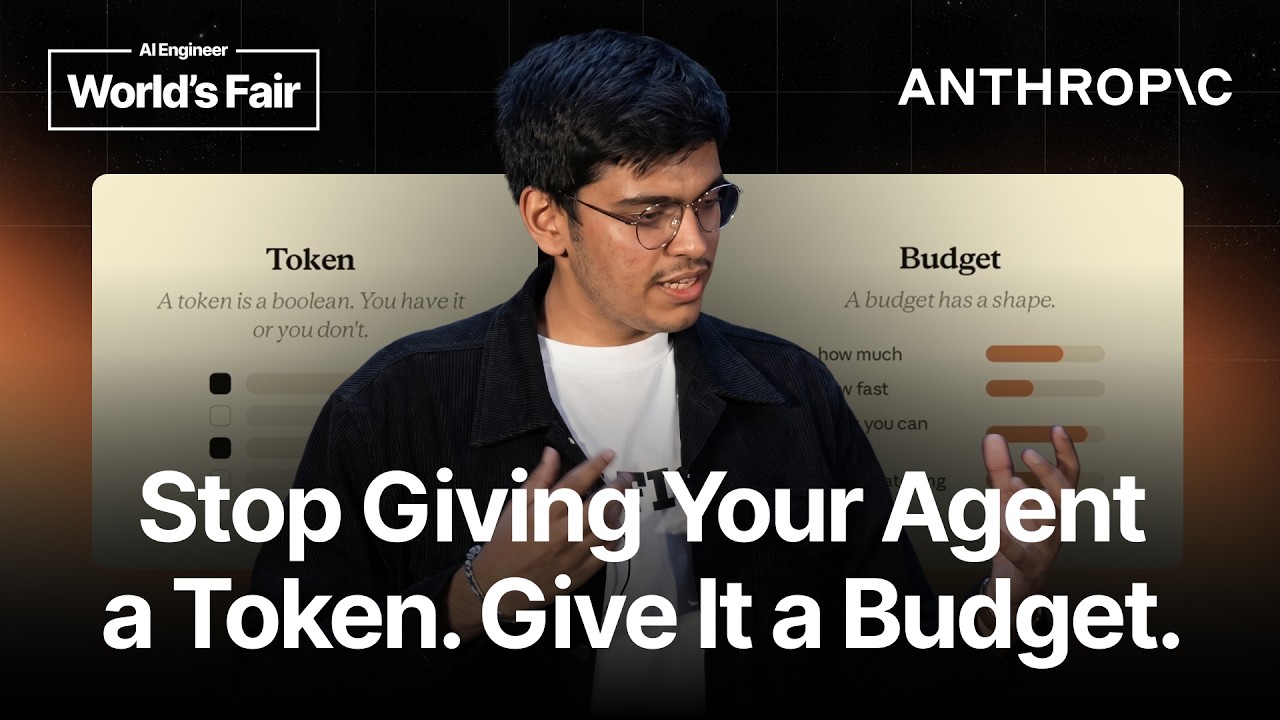
Sachin Malhotra's talk outlines a critical framework for safely deploying autonomous agents in production, moving beyond simple token-based access. He introduces 'asymmetric verbs,' refilling 'rate limits,' 'trip wires' for aggregate monitoring, and the 'undo test' as a lens. A central tenet is that infrastructure (via a proxy) must stamp an agent's identity, preventing agents from circumventing controls and ensuring accountability, thus providing a "budget" instead of an unbounded "token."

Agentic SDLC at Uber — Uday Kiran Medisetty & Adam Huda, Uber

Agentic SDLC at Uber — Uday Kiran Medisetty & Adam Huda, Uber

Uber has transformed its software development with an agentic AI-powered factory, leading to a dramatic increase in engineer productivity. The presentation details six key infrastructure components: a unified model gateway with strict PII and safety guardrails, an MCP gateway for streamlined agent tool access and token optimization, agentified dev pods for rapid execution, a managed skills marketplace, a comprehensive context graph, and the Cortana AI assistant. Adam Huda then demonstrates an end-to-end feature development workflow, highlighting a critical shift to inner-loop validation (stopping short of CI) and automated, managed maintenance loops. The ultimate takeaway is that the bottleneck has moved from technical execution to strategic decision-making: "should we build it?" rather than "can we build it?"

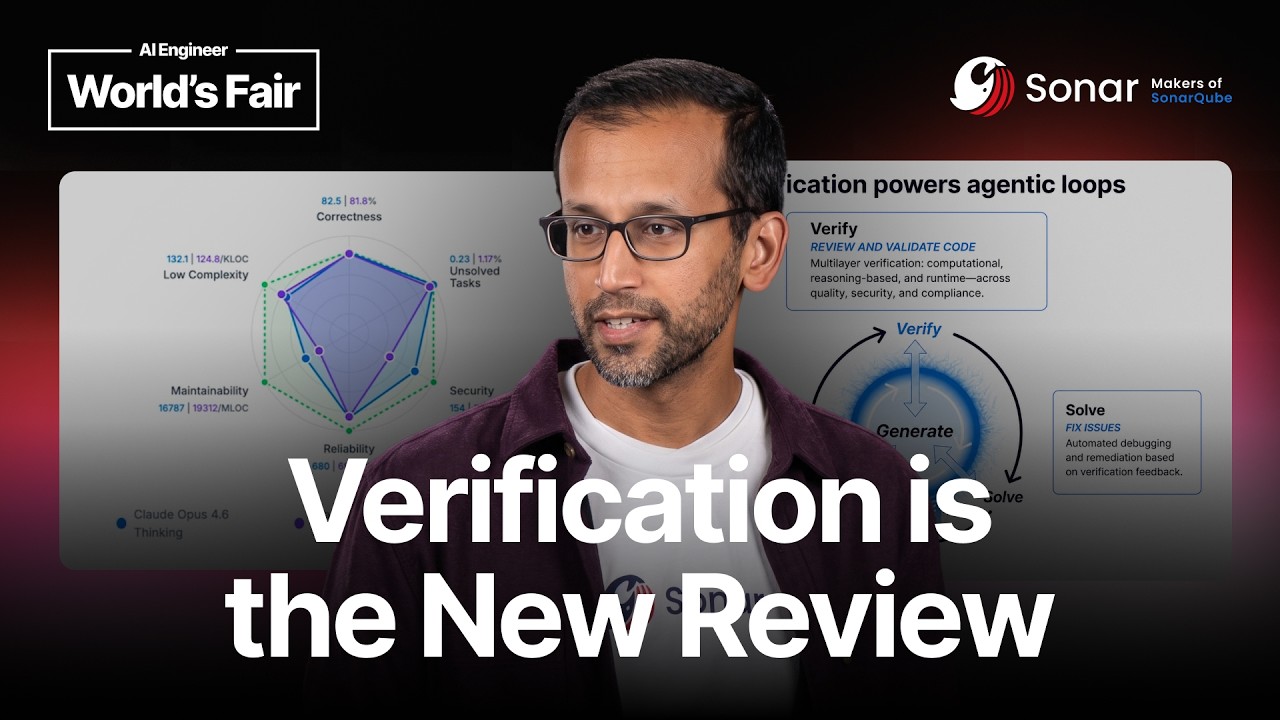
Guide, Verify, Solve — Anirban Chatterjee, Sonar

Guide, Verify, Solve — Anirban Chatterjee, Sonar

Anirban Chatterjee discusses the emergence of "verification debt" in AI-driven software development, where AI-generated code introduces persistent quality issues despite initial productivity gains. He proposes a **zero-trust, multi-layered verification** approach, integrating it into an "Agent-Centric Development Cycle" (ACDC) to ensure code quality, security, and compliance by empowering AI agents with real-time feedback and remediation capabilities through tools like SonarQube, Gitarr, and Sonar Vortex.

Front End Testing with GitHub Actions • Amy Kapernick • YOW! 2025

Front End Testing with GitHub Actions • Amy Kapernick • YOW! 2025

This presentation by Amy Kapernick at YOW! Australia 2025 details how to implement robust front-end testing using GitHub Actions. It covers the rationale for comprehensive front-end testing, the necessity of a live deployment preview, and practical steps for automating tests like Lighthouse for performance/accessibility and Playwright for UI validation. The talk also delves into continuous deployment workflows and explores GitHub Actions' broader utility for workflow automation beyond testing, such as generating issues from code comments.