Ai slop

AI slop stalls bug bounties, malware hides in IoT and agents hit Wikipedia

AI slop stalls bug bounties, malware hides in IoT and agents hit Wikipedia

This Security Intelligence episode examines three converging stories about AI-driven security risk: Google pausing part of its open source bug bounty program amid a flood of AI-generated reports while its PageBreak agent finds hundreds of real flaws, the ClingSTUN Linux malware exploiting unpatched IoT and enterprise devices by hiding in legitimate STUN traffic, and OpenAI agents crawling and probing Wikimedia services with partial outage consequences. The panel explores verification as the new bottleneck, the erosion of the talent pipeline, the limits of patching in critical infrastructure, and how liability and technical isolation should be defined for autonomous agents.
Generation Is Cheap, Review Is Expensive: How to Stop Shipping AI Slop — Gabriel Martinez, G2i

Generation Is Cheap, Review Is Expensive: How to Stop Shipping AI Slop — Gabriel Martinez, G2i

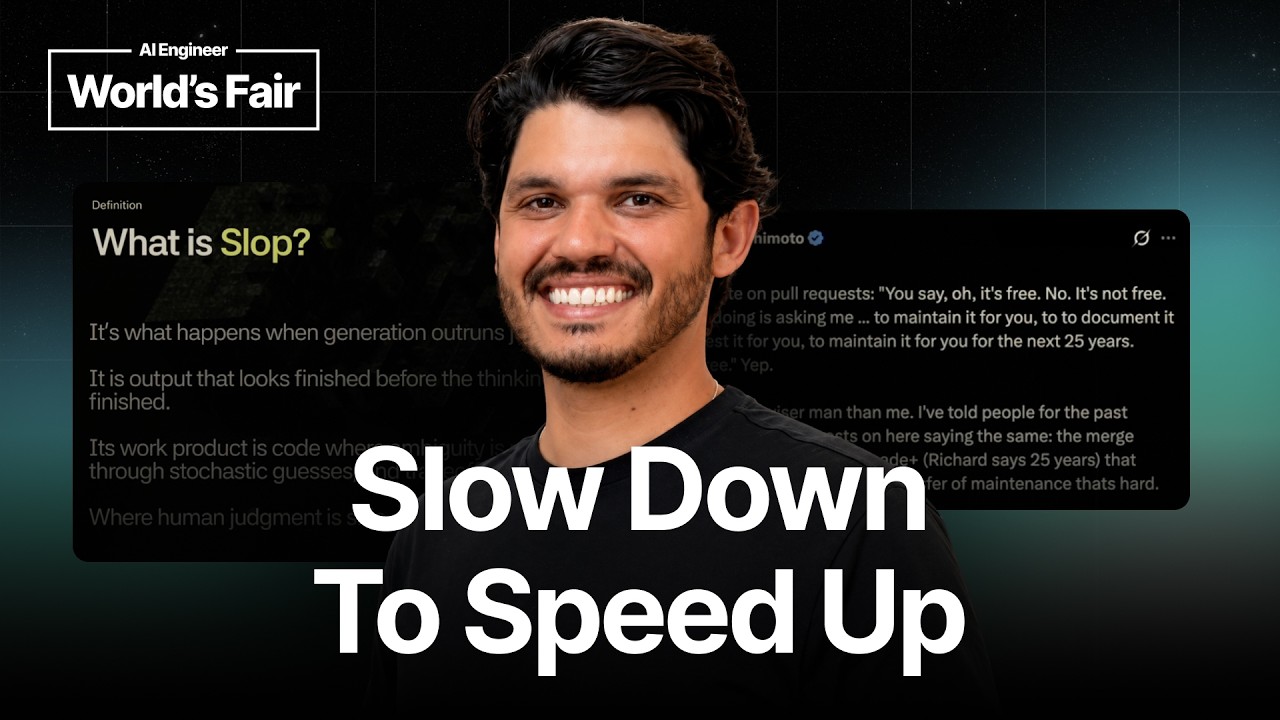
Gabriel Martinez of G2i argues that slop is not AI-written code but work that looks finished before the thinking behind it is done. He connects it to missing judgment, code as a liability, misaligned incentives that reward merging speed over review, oversized PRs and documents that push understanding onto reviewers, and the case for conventions, diagrams as review surfaces, and small changes. He closes by explaining why G2i built ORC to keep humans in control of agent-generated work.

The Reason Your Claude Output Still Looks Like Slop (with Priyanka Vergadia)

The Reason Your Claude Output Still Looks Like Slop (with Priyanka Vergadia)

Priyanka Vergadia, The Cloud Girl, discusses why most companies see no ROI from AI tools, proposing a 7:1 budget split for training over tools. She explains how AI has made "taste" the new ceiling, detailing how to build effective Claude skills by breaking tasks into explicit subtasks with human-in-the-loop oversight. She introduces her 10-20-70 framework for AI budgets, emphasizing the long-term investment needed for employee skilling and community building. Priyanka also shares her transition to full-time entrepreneurship, focusing on product and career storytelling, and reveals her upcoming book on tech storytelling.

Ending AI Slop — Thais Castello Branco, Taste Labs

Ending AI Slop — Thais Castello Branco, Taste Labs

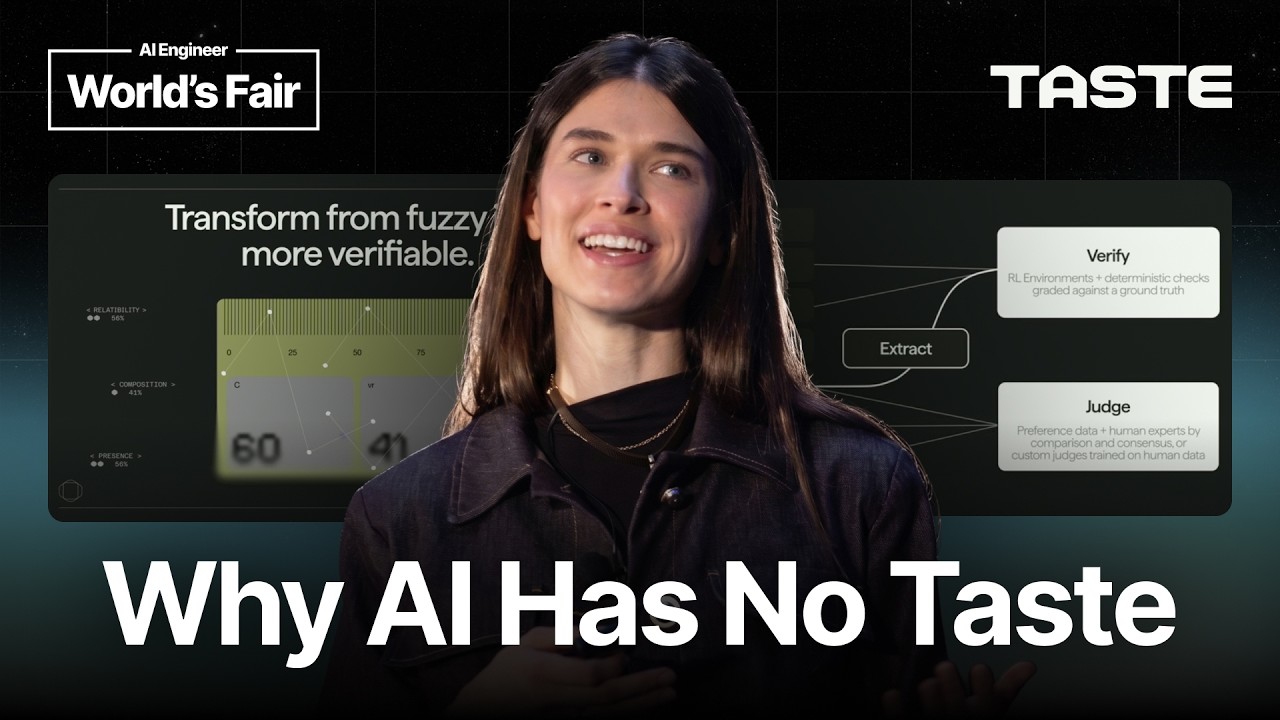
Thais Castello Branco of Taste Labs tackles 'AI slop' in subjective domains like design and creative writing. She proposes a framework to make 'taste' measurable by decomposing subjective concepts into verifiable elements, countering the 'collapse to the mean' that stifles creativity. The approach emphasizes high-signal human preference data, expert-driven feedback tied to specific choices, and a 'quality over quantity' mindset to train AI that understands and generates nuanced, multi-preference outputs.