Ai research

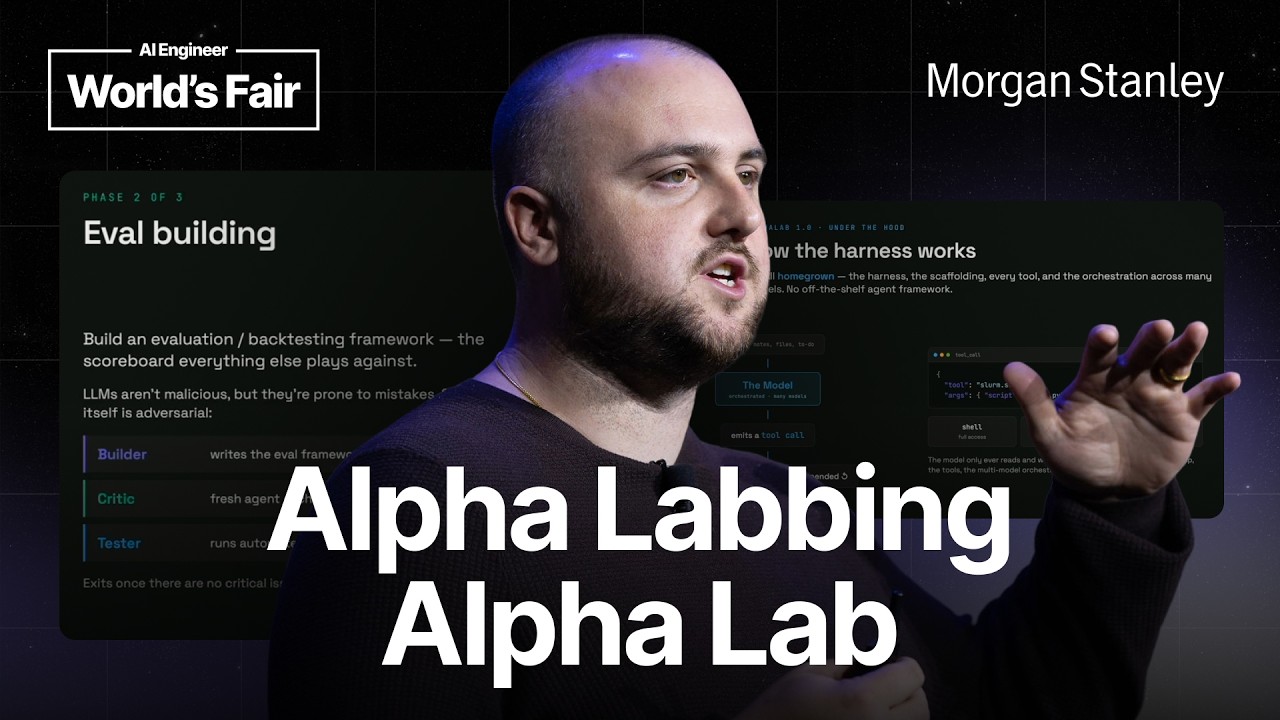
Morgan Stanley's ALPHALAB: Multi-Agent Research Across Optimization Domains — Brendan Rappazzo

Morgan Stanley's ALPHALAB: Multi-Agent Research Across Optimization Domains — Brendan Rappazzo

Morgan Stanley's AlphaLab is an open-sourced multi-agent system designed to automate quantitative research. Initially, AlphaLab 1.0 automated code generation, backtesting, and experimentation. Facing challenges, AlphaLab 2.0 evolves to prioritize building robust, verifiable environments, which serve as reinforcement learning signals, enabling the system to meta-optimize itself. This shift redefines the human role from performing research to designing these critical environments.

Anthropic’s first technical PM on token maxing, the jagged edge, and living in the future

Anthropic’s first technical PM on token maxing, the jagged edge, and living in the future

Dianne Penn, Head of Product for Anthropic’s AI Research and Labs teams, discusses Anthropic's journey, the evolving AI landscape, and the changing role of product management. She highlights the importance of adaptability, 'evals as the new PRDs,' and how Anthropic's focus on alignment and safety makes Claude a more effective 'thinking partner' by enabling it to push back on user ideas.

What Big Tech Missed And How Startups Can Still Win

What Big Tech Missed And How Startups Can Still Win

Alexandre LeBrun, CEO of AMI Labs, discusses his career building and selling AI companies, emphasizing his strategy of tackling problems "20 years too early." He delves into AMI Labs' contrarian bet on "world models" over traditional LLMs, highlighting their ability to learn directly from real-world sensory data, unlike LLMs which learn from human-written text. LeBrun explains how this approach is critical for developing intelligent robots and avoiding the pitfalls of Vision-Language Assistants (VLAs). He also touches upon the challenges of securing talent, data, and compute for such an ambitious project, the strategic choice of location, and the importance of holding an extremely large vision while solving a narrow problem for early founders.

Welcome Session - Microsoft Research India Academic Summit 2026

Welcome Session - Microsoft Research India Academic Summit 2026

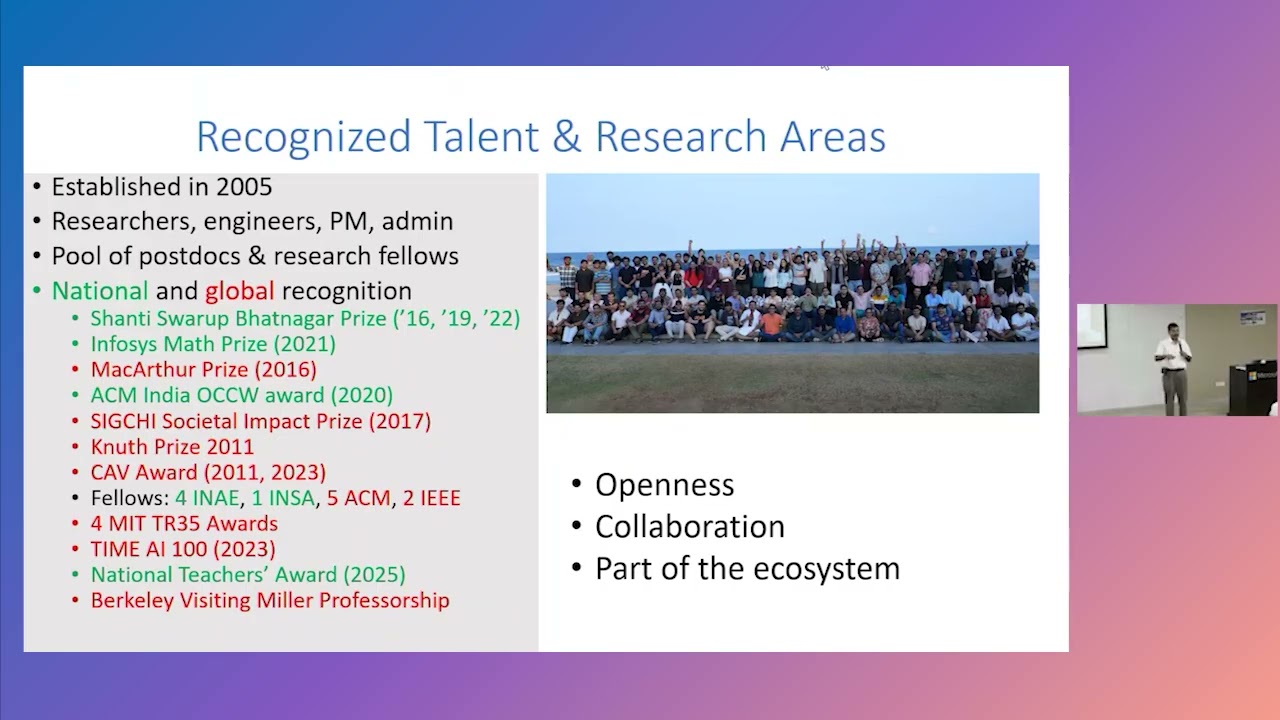
The Microsoft Research India Academic Summit 2026 opens with MSR India Lab Director Venkat Padmanabhan outlining the lab's collaborative research philosophy and Microsoft's evolution into an AI infrastructure powerhouse. He details MSR India's four core research pillars: fundamental AI advancements, specialized domain solutions, efficiency across the AI stack (including small language models), and the crucial diffusion of AI technologies for societal impact in India and the Global South, exemplified by diverse projects and collaborations.

The data black hole at the center of AI

The data black hole at the center of AI

AI progress is fundamentally driven by vast amounts of data and compute, rather than improvements in sample efficiency, creating a stark contrast with human learning. This essay explores the "black hole of data" powering AIs, quantifies the massive sample-efficiency gap between humans and machines, counters common objections, and discusses the implications for white-collar automation and future AI research.

The State of Frontier Post-Training Recipes | Conversation with Finbarr Timbers

The State of Frontier Post-Training Recipes | Conversation with Finbarr Timbers

This discussion with Finbarr Timbers reviews the evolution of frontier post-training recipes, highlighting the shift from simpler SFT-DPO-RL to complex multi-teacher on-policy distillation (MOPD). It covers the organizational challenges of building models like Olmo, the rise of synthetic data and reasoning-focused RL in DeepSeek, and the complexities of integrating expert teachers, while also exploring open questions on environments, specialized APIs, and career strategies in the rapidly changing AI landscape.