Ai governance

Podcast Crossover: AIE, AGI, frontier lab strategy with ​ ⁨@matthew_berman⁩  and @swyxtv

Podcast Crossover: AIE, AGI, frontier lab strategy with ​ ⁨@matthew_berman⁩ and @swyxtv

Matt, the organizer of the AI.engineer conference, shares insights into its origin, the challenges of early adoption, and its current value as a neutral ground for AI labs. He delves into AI hardware trends, discussing specialized chips like Etched, and gives a nuanced take on Anthropic's Fable, addressing performance concerns and compute limitations. The conversation then explores OpenAI's rumored equity offer to the US government, discussing implications for regulation and societal involvement. Matt shares his perspective on AI existential risk and alignment, emphasizing the need for pragmatic engineering solutions. Finally, he outlines the limitations of current LLMs, the critical need for data efficiency, and offers strategic advice for "Agent Labs" navigating the "model capability overhang" versus multi-model agnosticism.

The Production AI Playbook: Deploying Agents at Enterprise Scale — Sandipan Bhaumik, Databricks

The Production AI Playbook: Deploying Agents at Enterprise Scale — Sandipan Bhaumik, Databricks

Sandipan Bhaumik presents a five-pillar framework for successfully moving AI systems from demos to production, inspired by a retail bank's failed chatbot PoC. The framework covers defining numerical success (Evaluation), tracing every AI decision (Observability), building robust data pipelines (Data Foundation), managing multiple AI interactions (Multi-agent Orchestration), and ensuring accountability and security (Governance). He illustrates these concepts with a banking chatbot case study, emphasizing continuous evaluation, data quality, and a proactive incident playbook.

Five AI Risks That Can Get You Fired—And How to Avoid Them

Five AI Risks That Can Get You Fired—And How to Avoid Them

Martin Keen explains five real-world AI risks that can lead to job loss: shadow AI, data leakage, hallucinations, prompt injection, and unauthorized AI agents. He emphasizes the critical need for strong AI governance to ensure safe and productive AI adoption in the workplace.

Why AI Agents Need an Operating System

Why AI Agents Need an Operating System

Current AI agents are powerful but lack memory, context, and safety, behaving like "genius goldfish." This summary explains the necessity of an AI Agent Operating System (OS) to provide essential infrastructure for managing memory, tools, identity, and governance, making agents reliable, scalable, and trustworthy.

Agentic Consent Explained: How AI Agents Act Safely and Responsibly

Agentic Consent Explained: How AI Agents Act Safely and Responsibly

Grant Miller from IBM explains Agentic Consent, a dynamic framework for governing AI agents. The model moves beyond static permissions, using identity, context, and just-in-time user prompts to ensure AI agents act with, not instead of, their human counterparts, enabling trust and safety as autonomy scales.

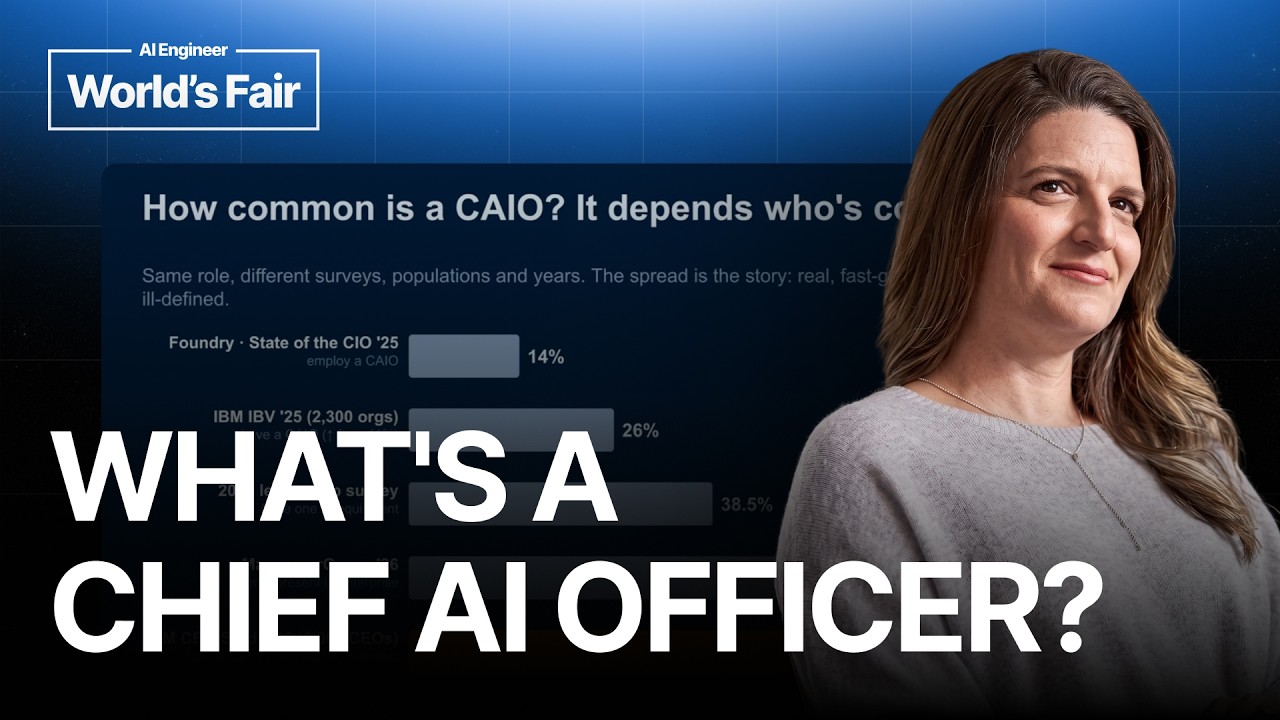
Live from Think 2026: AI operating model, VC funding & CAIO evolution

Live from Think 2026: AI operating model, VC funding & CAIO evolution

Live from IBM Think 2026, experts discuss the maturation of enterprise AI, moving from siloed applications to integrated, end-to-end solutions. The panel explores the rising trust in AI for strategic decisions, the evolving role of the Chief AI Officer (CAIO), and the state of AI investment, arguing that the field is broadening to solve specific business problems.