Ai agents

Is AI Slowing Down? Nathan Labenz Says We're Asking the Wrong Question

Is AI Slowing Down? Nathan Labenz Says We're Asking the Wrong Question

Nathan Labenz joins Erik Torenberg to challenge the narrative that AI progress is slowing down. He argues that despite perceptions around GPT-5, capabilities in reasoning and frontier science are advancing exponentially. They discuss the future of AI agents, the prospect of recursive self-improvement, the impact on jobs, and progress beyond language models into robotics and biology. The conversation culminates in a call for a more imaginative, positive vision to guide AI's trajectory.
Is AI Slowing Down? Nathan Labenz Says We're Asking the Wrong Question

Is AI Slowing Down? Nathan Labenz Says We're Asking the Wrong Question

Nathan Labenz argues that AI progress is not slowing down but is instead manifesting in less obvious but more powerful ways, such as advanced reasoning and multimodal capabilities. He deconstructs the debate around GPT-5's perceived impact, highlights the revolutionary potential of AI agents in science and engineering, and discusses the tangible effects on job automation. The conversation also explores the rise of robotics, the challenges of emergent AI behaviors like reward hacking, and concludes with a call for a collective, positive vision to steer this transformative technology.

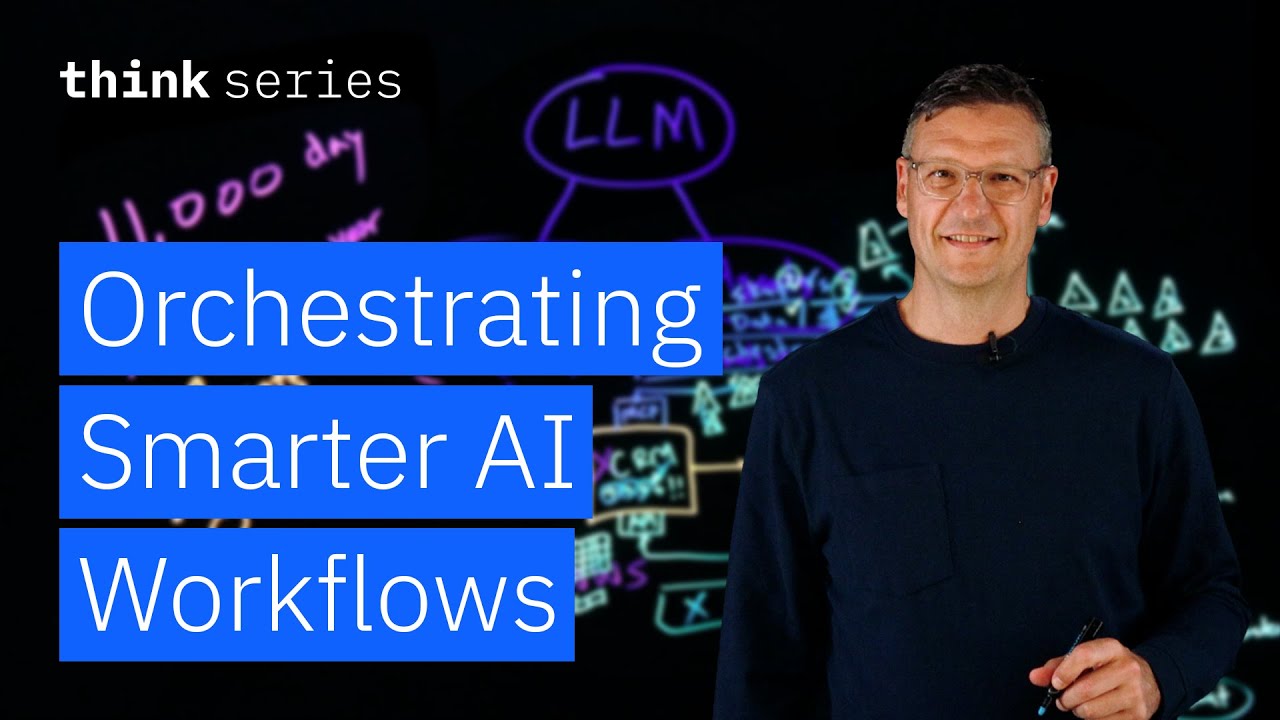
Orchestrating Complex AI Workflows with AI Agents & LLMs

Orchestrating Complex AI Workflows with AI Agents & LLMs

Eric Pritchett, President and COO of Terzo, explains the transformative impact of AI agents and LLMs on workflow orchestration. He contrasts the goal-oriented, flexible nature of AI agents with the limitations of traditional RPA, illustrating how a multi-agent system can automate complex processes like quote generation, marking a paradigm shift in automation capabilities.

How to build agents that take ACTION

How to build agents that take ACTION

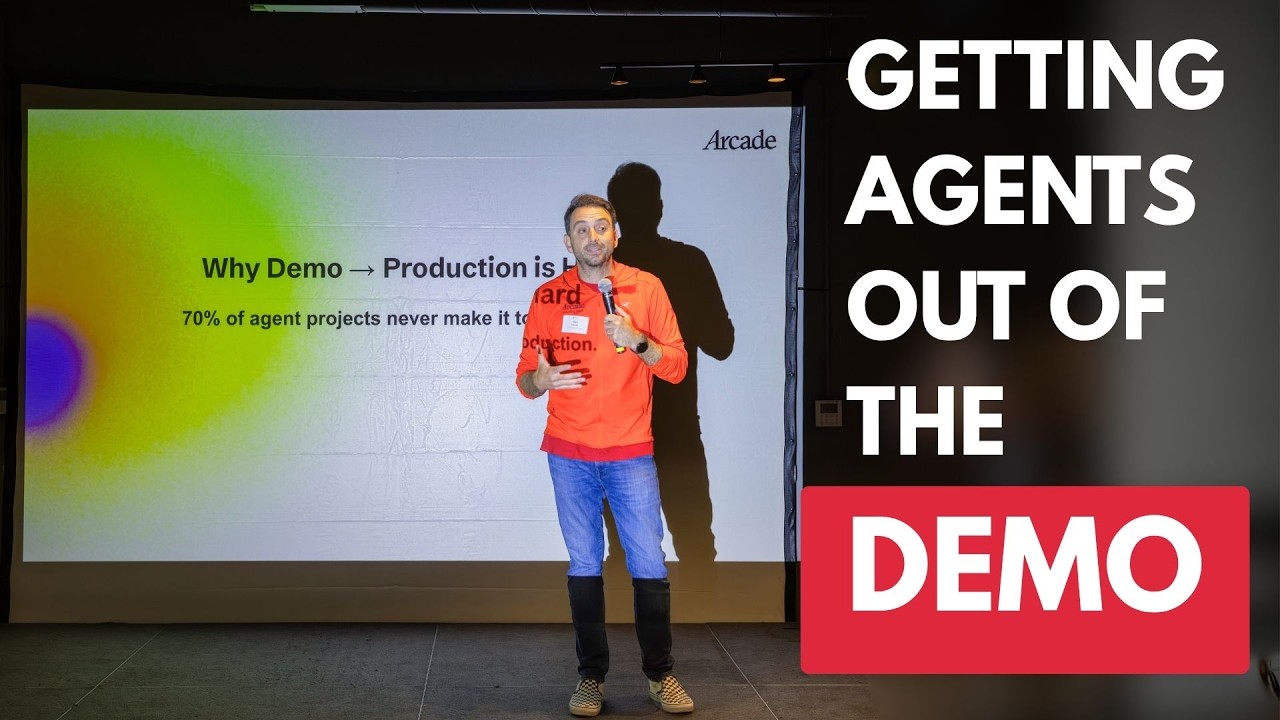
Alex Salazar, CEO of Arcade, argues that the true value of AI is not in chatbots but in agents that can take real-world actions. He details the primary reasons agents fail to reach production—security, cost, latency, and accuracy—and introduces an "Agent Hierarchy of Needs" as a framework for building robust, production-ready agents. The talk emphasizes a critical shift from exposing raw APIs to building intention-based tools and solving the complex challenge of agent authorization through a delegated model.

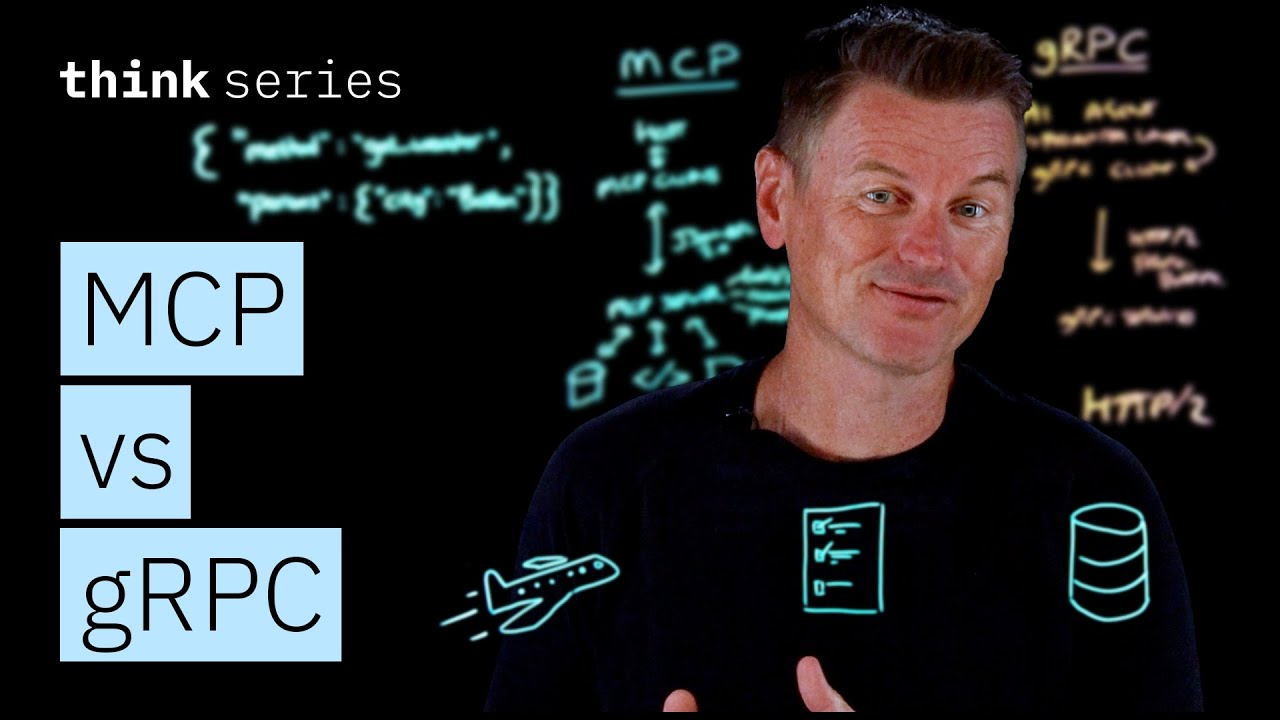
MCP vs gRPC: How AI Agents & LLMs Connect to Tools & Data

MCP vs gRPC: How AI Agents & LLMs Connect to Tools & Data

A deep dive into how AI agents connect to external tools, comparing the AI-native Model Context Protocol (MCP) with the high-performance gRPC framework. The summary explores their respective architectures, discovery mechanisms, and performance trade-offs, concluding with a vision for their complementary roles in future AI systems.

IBM partners with Anthropic, plus OpenAI drops AgentKit

IBM partners with Anthropic, plus OpenAI drops AgentKit

A deep dive into OpenAI's AgentKit, the IBM-Anthropic partnership focusing on the Agent Development Lifecycle (ADLC), the mathematical concept of modular manifolds for stabilizing model training, and a critical analysis of AI's real-world impact on professions like radiology.