Ai agents

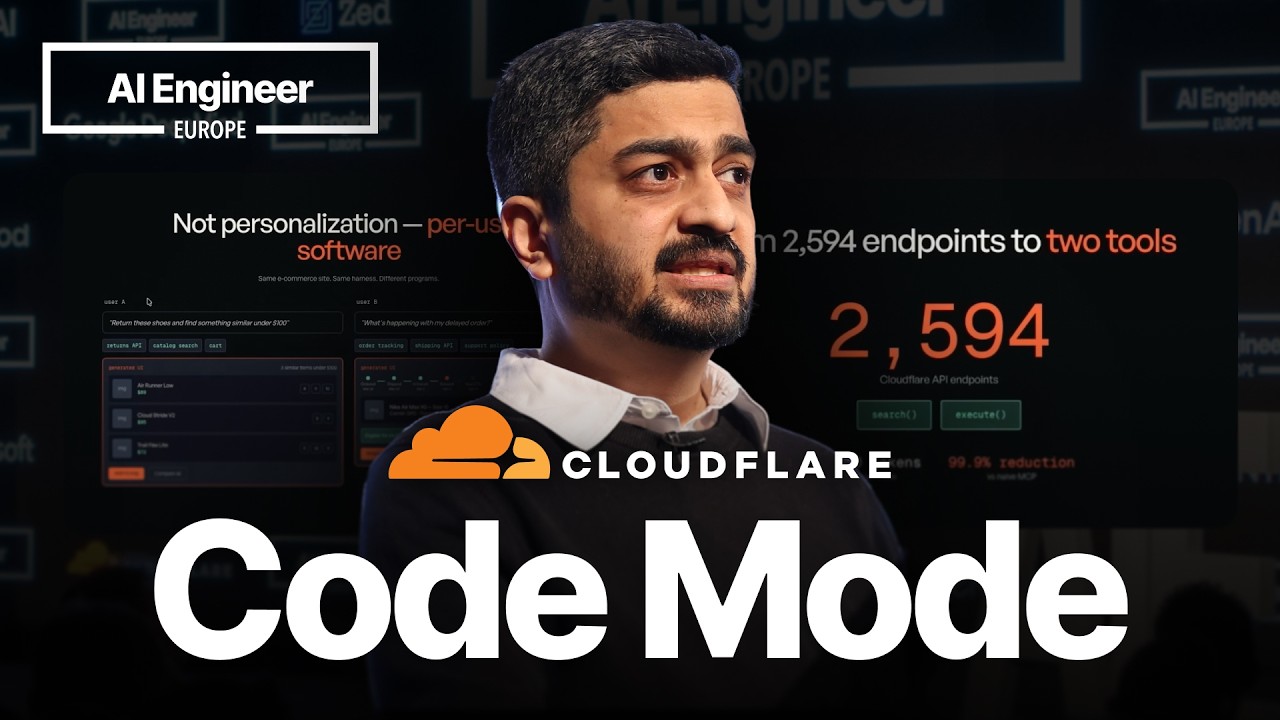
Code Mode - Sunil Pai, Cloudflare

Code Mode - Sunil Pai, Cloudflare

Sunil Pai from Cloudflare introduces "Code Mode," a paradigm where AI agents generate and execute code (like JavaScript) instead of using traditional JSON-based tool calling. This approach enables more efficient, stateful, and complex interactions with large-scale systems by leveraging the inherent capabilities of programming languages.
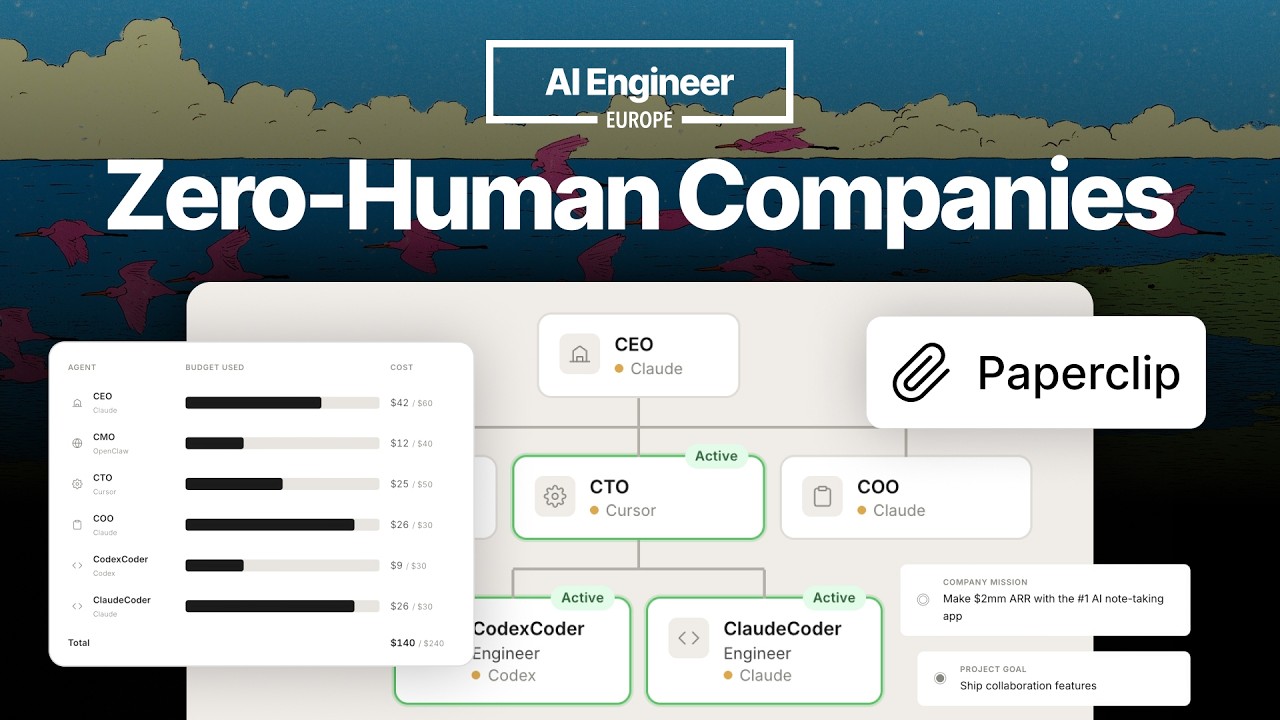
Paperclip: Open Source Human Control Plane for AI Labor — Dotta Bippa

Paperclip: Open Source Human Control Plane for AI Labor — Dotta Bippa

Dotta, the creator of Paperclip, introduces it as an open-source orchestrator for building "zero-human companies." This talk demonstrates how to set up an organization of AI agents, leverage skills and custom instructions for reliable work, and automate business processes. Through a live demo, Dotta showcases creating a company from scratch, managing agent workflows with QA and routines, and outlines the exciting future roadmap for the platform.

How AI Agents Will Transform the Financial System with Circle Co-Founder and CEO Jeremy Allaire

How AI Agents Will Transform the Financial System with Circle Co-Founder and CEO Jeremy Allaire

Circle CEO Jeremy Allaire delves into how programmable money and the Arc blockchain will power the emerging AI agentic economy. He explains how stablecoins like USDC offer an internet-native financial infrastructure for micro-transactions and large settlements, addressing the limitations of traditional banking for AI agents. The discussion covers the foundational principles of full-reserve banking, the unique attributes of Arc blockchain for machine-driven economic activity, the tokenization of real-world assets, and a bold vision for AI's potential to drive double-digit GDP growth and foster new on-chain organizational structures within the next decade.

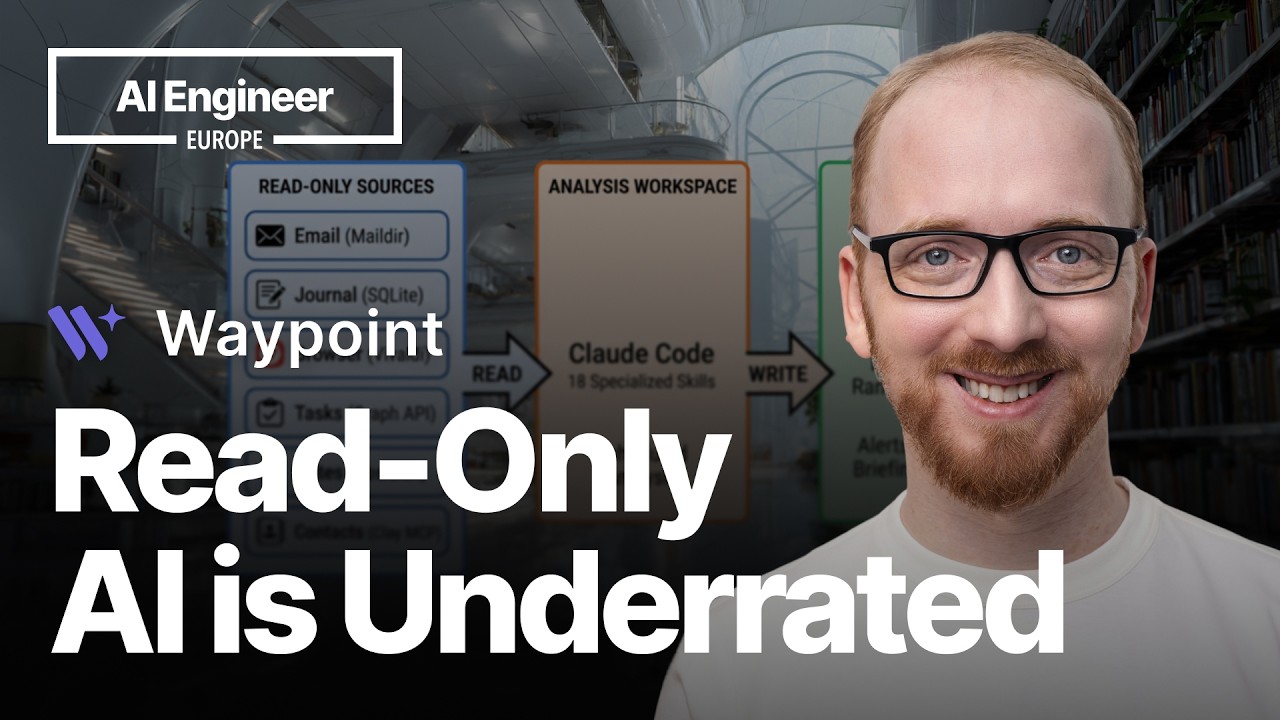
Cognitive Exhaust Fumes, or: Read-Only AI Is Underrated — Šimon Podhajský, Head of AI, Waypoint

Cognitive Exhaust Fumes, or: Read-Only AI Is Underrated — Šimon Podhajský, Head of AI, Waypoint

A deep dive into a "read-only" personal AI system that analyzes your digital footprint—or "cognitive exhaust fumes"—from sources like email, notes, and browsing history. The author argues that this observer approach provides more profound insights and is inherently safer than action-oriented AI agents, by preventing data contamination and mitigating the high-stakes risks of write-access errors.

Platforms for Humans and Machines: Engineering for the Age of Agents — Juan Herreros Elorza

Platforms for Humans and Machines: Engineering for the Age of Agents — Juan Herreros Elorza

This talk by Juan Herreros Elorza explores how to design internal developer platforms for a future where AI coding agents are first-class users. It argues that the same best practices that make platforms accessible to humans—self-service interfaces, well-defined APIs, local-first workflows, and rich observability—are now critical prerequisites for agents to autonomously build, debug, and ship software. The session provides concrete principles for platform design, discusses how to manage AI-assisted contributions, and emphasizes the need to measure the impact of these changes on developer productivity and system reliability.

Extreme Harness Engineering for the 1B token/day Dark Factory — Ryan Lopopolo, OpenAI Frontier

Extreme Harness Engineering for the 1B token/day Dark Factory — Ryan Lopopolo, OpenAI Frontier

Ryan Lopopolo of OpenAI's Frontier team discusses "Harness Engineering," a new paradigm where AI agents manage the entire software development lifecycle. He details an experiment building a 1M LOC product with zero human-written code, shifting the engineer's role from coding to designing systems and context for agents. The conversation covers the Symphony orchestration framework, the concept of "agent-legible" software, and the future of AI-driven development.