Ai agents

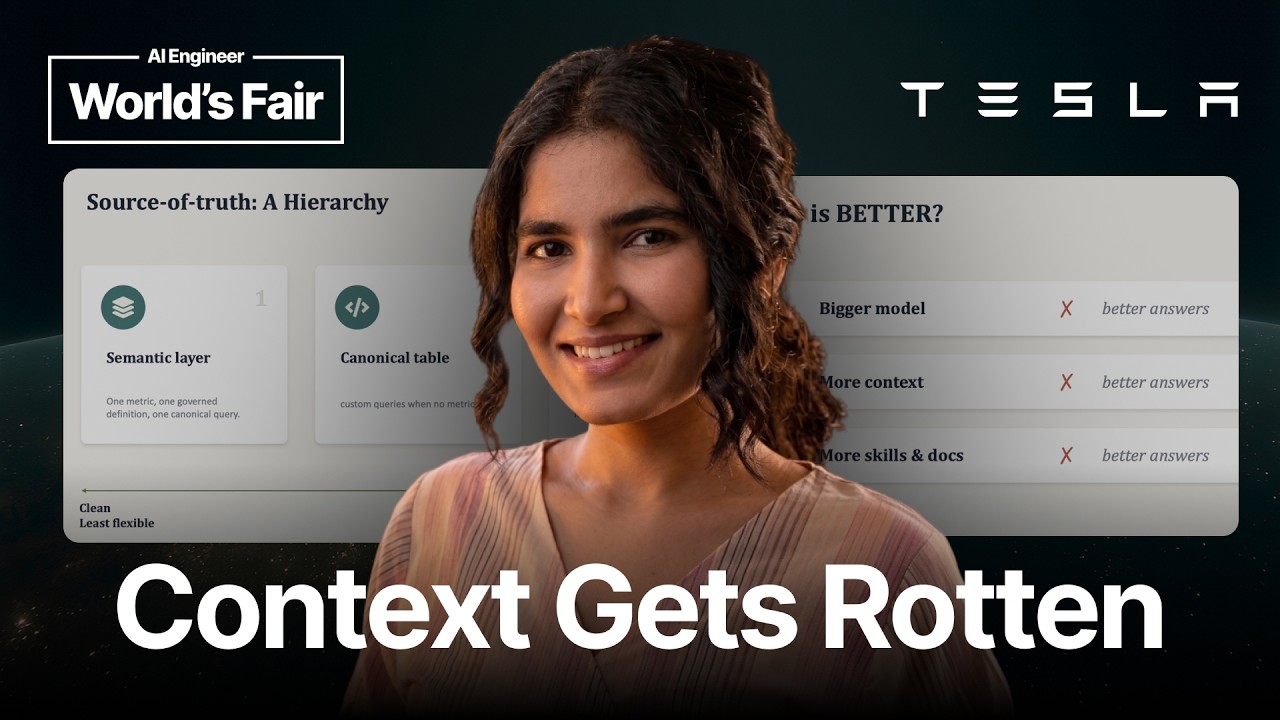
Enterprise Agents Have a Structure Problem - Ishita Daga, Tesla

Enterprise Agents Have a Structure Problem - Ishita Daga, Tesla

Ishita Daga, a Senior ML Engineer at Tesla, explains why enterprise AI agents fail, highlighting that current fixes like larger models or more RAG are insufficient. She identifies ambiguity, staleness, and user preference as key structural problems. Daga proposes a solution built on semantic retrieval infrastructure: a hierarchical approach to knowledge sources, including a curated semantic layer and metadata graphs. She also details a robust context life cycle with live data sources and continuous feedback loops to combat staleness. The challenge of integrating individual preferences, requiring agents to reason over business concepts rather than raw schemas, is also discussed.
From Blind Spots to Merged PRs: Continuous Agentic Performance Optimization - May Walter, Hud

From Blind Spots to Merged PRs: Continuous Agentic Performance Optimization - May Walter, Hud

May Walter, CTO of Hud, details a real-world case study on integrating AI agents into the SDLC for continuous performance optimization. The talk covers Hud's runtime intelligence layer, which uses production context to identify and fix high-ROI performance issues like N+1 queries and missing database indexes. It highlights the technical approach, challenges, and the development of a human-friendly reporting system that delivers measurable P90 latency improvements, enabling proactive optimization in mature codebases.

Your Agents Need a Save Button - Hamza Tahir, ZenML

Your Agents Need a Save Button - Hamza Tahir, ZenML

Most AI agents lack a "save button" for persistent state, making debugging and optimization challenging. This talk introduces the concept of a durable runtime with checkpointing, allowing developers to replay agent executions, perform "what-if" analyses (e.g., swapping models, mocking tools), and conduct cohort-based evaluations using production data. The open-source tool Kitaru is demonstrated as a solution to build, debug, and improve agents at scale by capturing full execution state, not just traces.

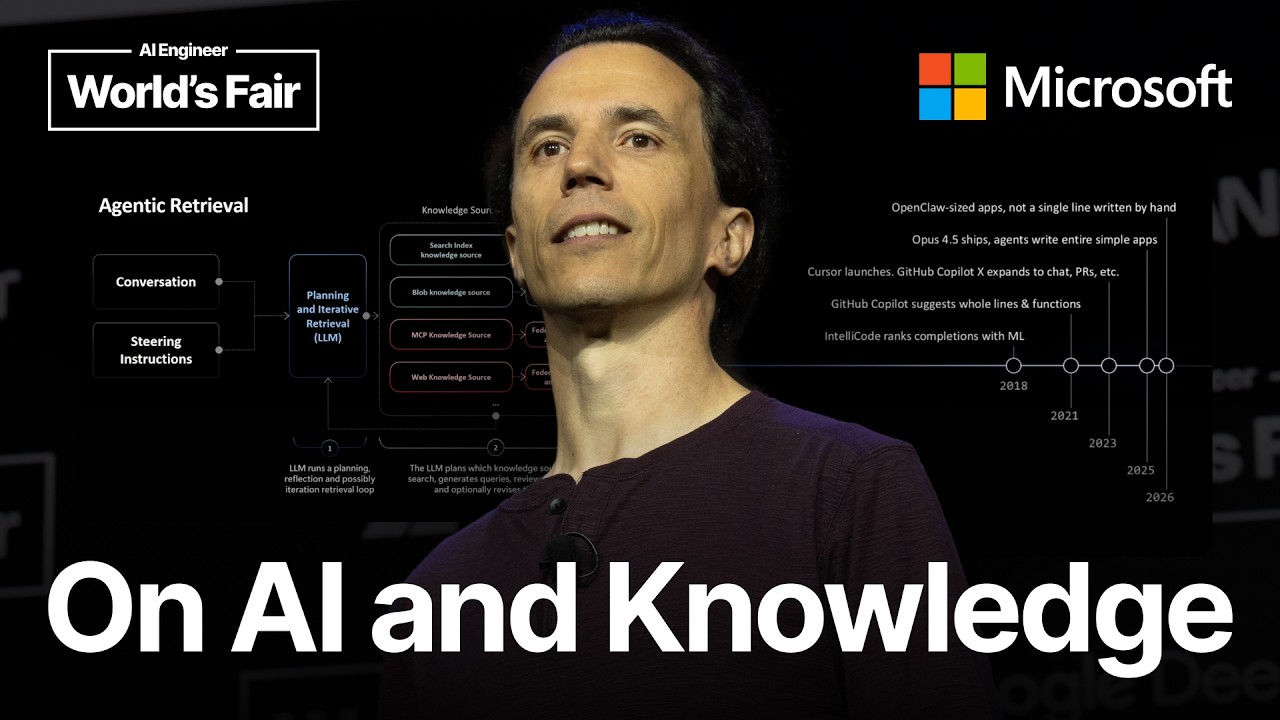
On AI and Knowledge — Pablo Castro, Distinguished Engineer & CVP for AI Knowledge, Microsoft

On AI and Knowledge — Pablo Castro, Distinguished Engineer & CVP for AI Knowledge, Microsoft

Pablo Castro explores the three pillars of AI knowledge—intrinsic, extrinsic, and learned—explaining how models leverage parametric memory, agents integrate with enterprise data through sophisticated RAG systems like Foundry IQ, and how continuous learning loops, facilitated by tools like the Agent Optimizer, enable self-improving agents, driving the next wave of AI applications.

Closing Keynote: Garry Tan, Y Combinator

Closing Keynote: Garry Tan, Y Combinator

Garry Tan, President of Y Combinator, details how AI-native companies are achieving unprecedented productivity and scale with lean teams. He introduces the concept of "wiring the work" by treating AI as a workforce where organizational components are encoded into markdown "skill files." Tan explains how "company brains" act as a library and librarian, managing institutional knowledge to overcome human memory limits. He emphasizes the discipline of "skillifying" every task to ensure continuous learning and calls on founders to build these new AI-native infrastructures to "boil the ocean"—tackling previously insurmountable problems.

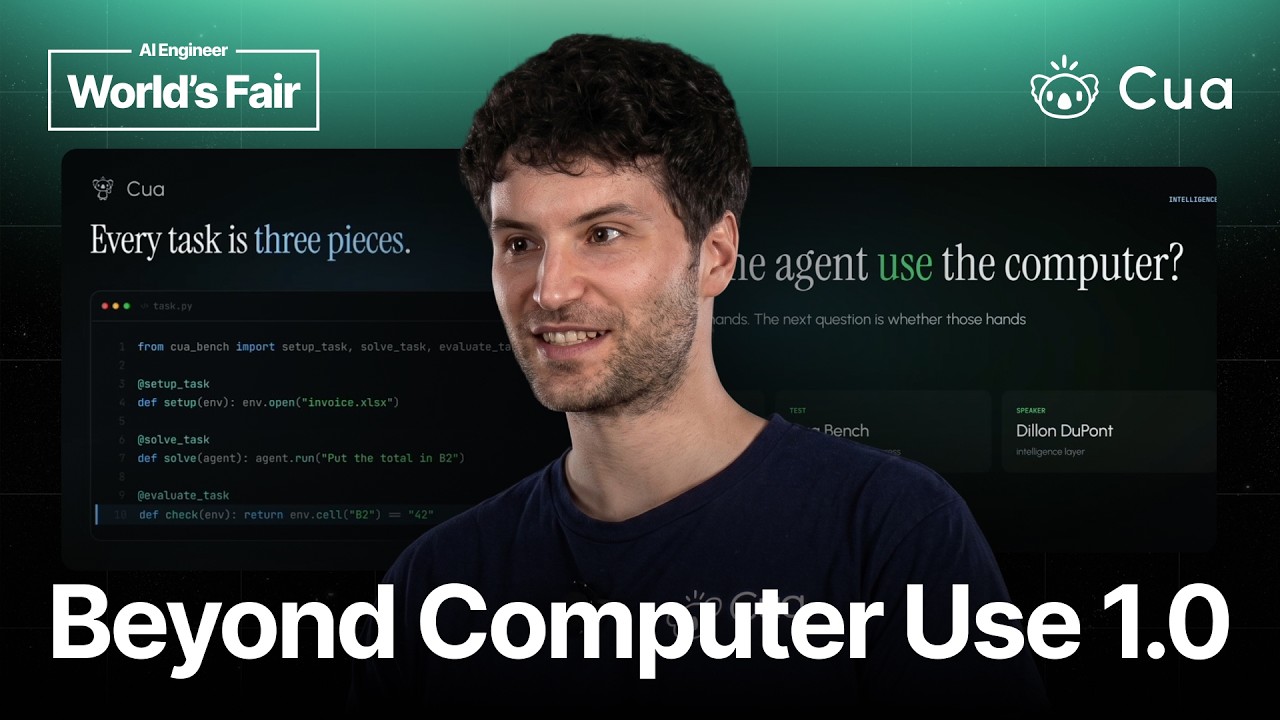
Computer-Use 2.0: Agents Just Got Multi-Cursor — Francesco Bonacci, Cua

Computer-Use 2.0: Agents Just Got Multi-Cursor — Francesco Bonacci, Cua

This talk introduces cua driver, an open-source tool enabling AI agents to interact with computer GUIs in the background across macOS, Windows, and Linux by leveraging accessibility APIs. It details CUABench, a robust evaluation framework with over 130 verifiable tasks designed to benchmark and ensure the trustworthiness of computer-using agents, revealing current limitations in complex tasks like circuit design. Finally, it presents cua fleet, an infrastructure solution that optimizes GPU utilization and reduces costs for RL training of these agents by dynamically managing sandbox environments.