Ai agents

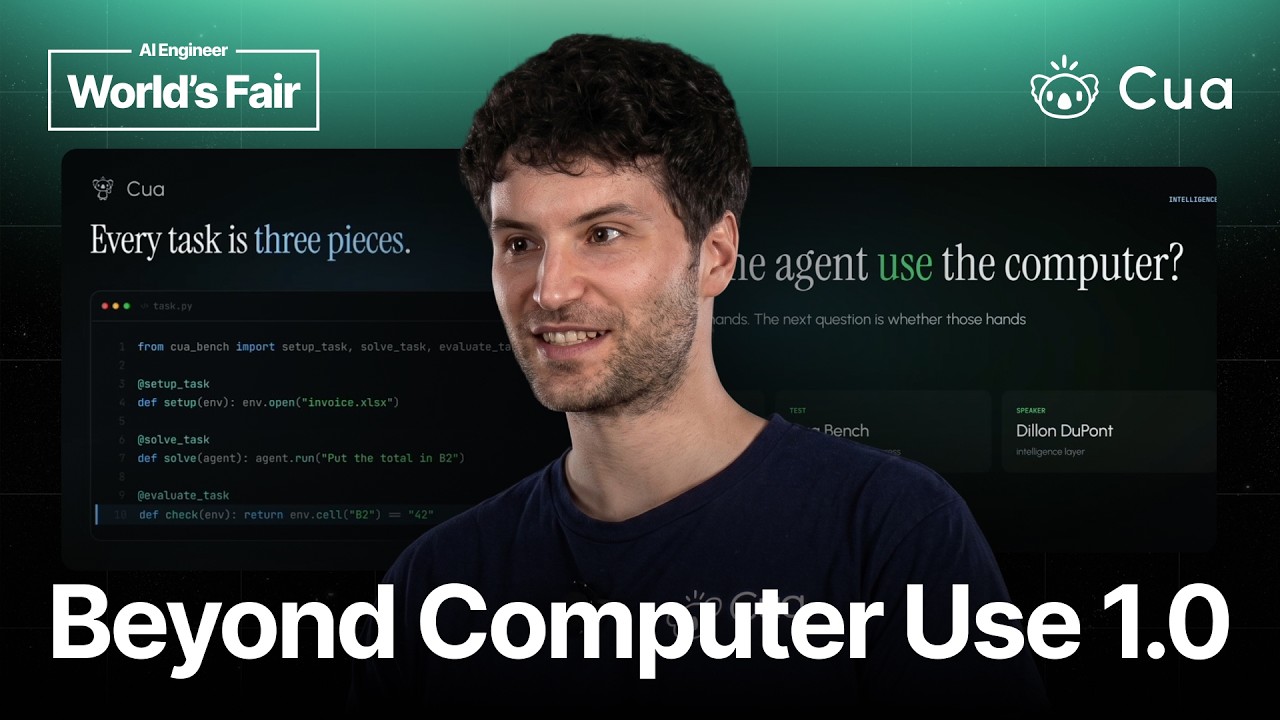
Computer-Use 2.0: Agents Just Got Multi-Cursor — Francesco Bonacci, Cua

Computer-Use 2.0: Agents Just Got Multi-Cursor — Francesco Bonacci, Cua

This talk introduces cua driver, an open-source tool enabling AI agents to interact with computer GUIs in the background across macOS, Windows, and Linux by leveraging accessibility APIs. It details CUABench, a robust evaluation framework with over 130 verifiable tasks designed to benchmark and ensure the trustworthiness of computer-using agents, revealing current limitations in complex tasks like circuit design. Finally, it presents cua fleet, an infrastructure solution that optimizes GPU utilization and reduces costs for RL training of these agents by dynamically managing sandbox environments.
Omnigent: Composition, Control, and Collaboration for AI Agents

Omnigent: Composition, Control, and Collaboration for AI Agents

Denny Lee discusses the industry's shift to meta-harnesses like Omnigent, which enables hot-swappable AI models and agents, illustrated by his personal project of using debating agents to plan a matcha farm in Taiwan. He highlights how "tokenomics" is replaying the CapEx-to-OpEx cost shift, emphasizing the need for developer visibility, central governance, and auto-model selection to manage AI spend. The conversation also touches on the importance of databases for agent memory and accountability in AI-assisted workflows.

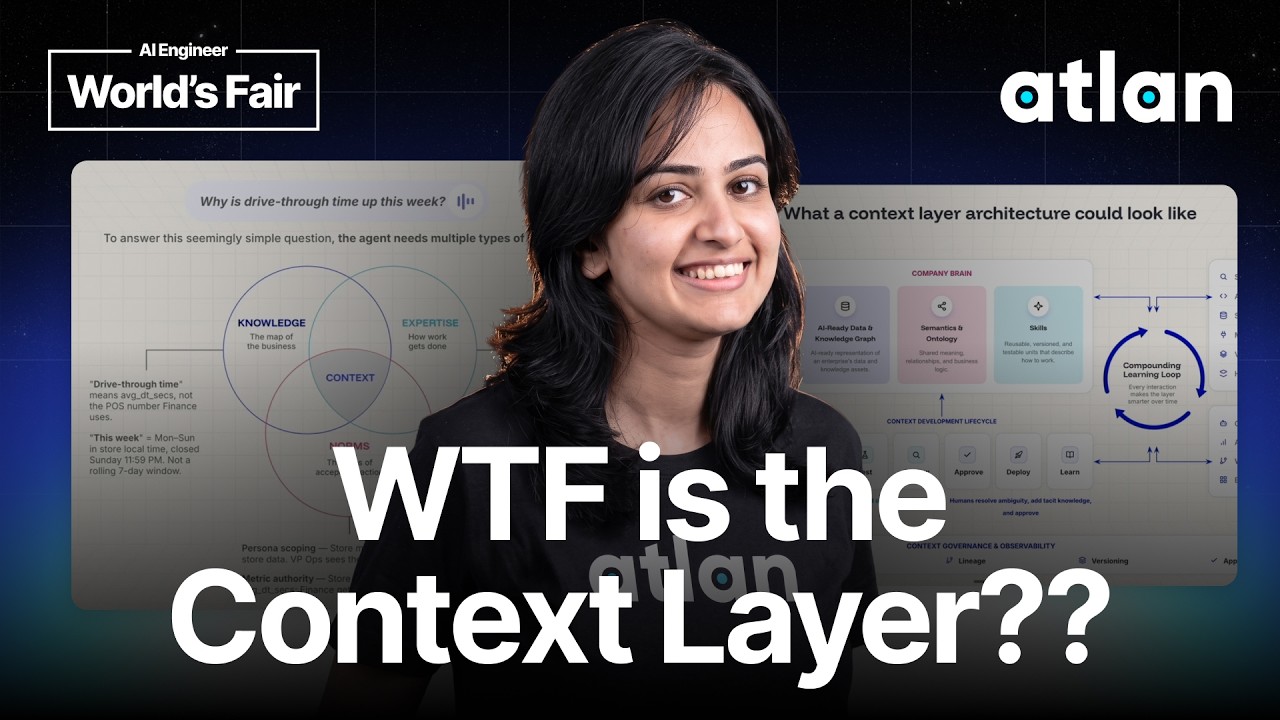
WTF Is the Context Layer? The Missing Infrastructure for Production Agents — Prukalpa Sankar

WTF Is the Context Layer? The Missing Infrastructure for Production Agents — Prukalpa Sankar

Prukalpa Sankar argues that while AI models are increasingly intelligent, their practical business utility is limited by a lack of contextual intelligence. She proposes a "context layer" as a crucial solution, akin to a "GitHub for context," to centralize and manage business knowledge, expertise, and norms. This system aims to provide AI agents with the shared, versioned, and continuously learning context necessary to overcome the challenges of isolated systems and context sprawl, ultimately differentiating companies in an AI-driven world.

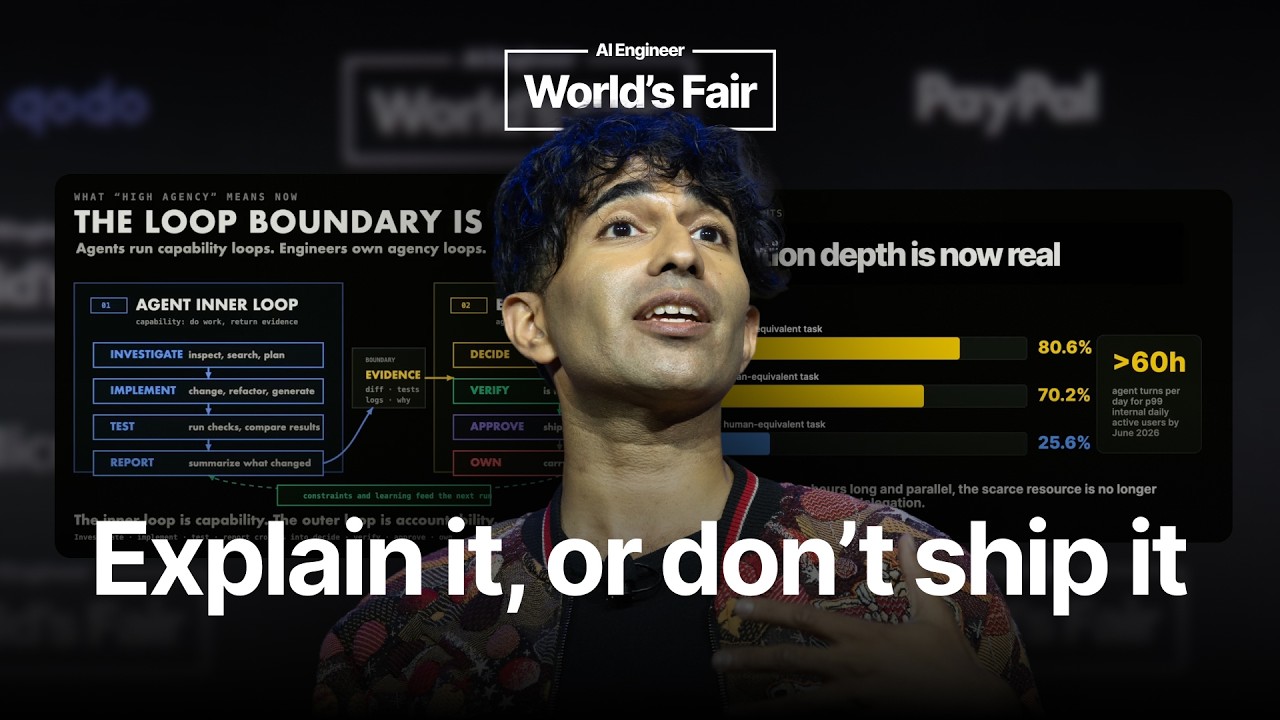
Don't Build Agents You Can't Answer For — Addy Osmani

Don't Build Agents You Can't Answer For — Addy Osmani

Addy Osmani discusses the evolving role of software engineers in the age of AI agents, emphasizing a shift from code production to human judgment, accountability, and system ownership. He highlights new challenges like cognitive debt and the "orchestration tax," proposing that the modern engineer's value lies in "answerability," taste, and discerning which paths warrant human investment and responsibility.

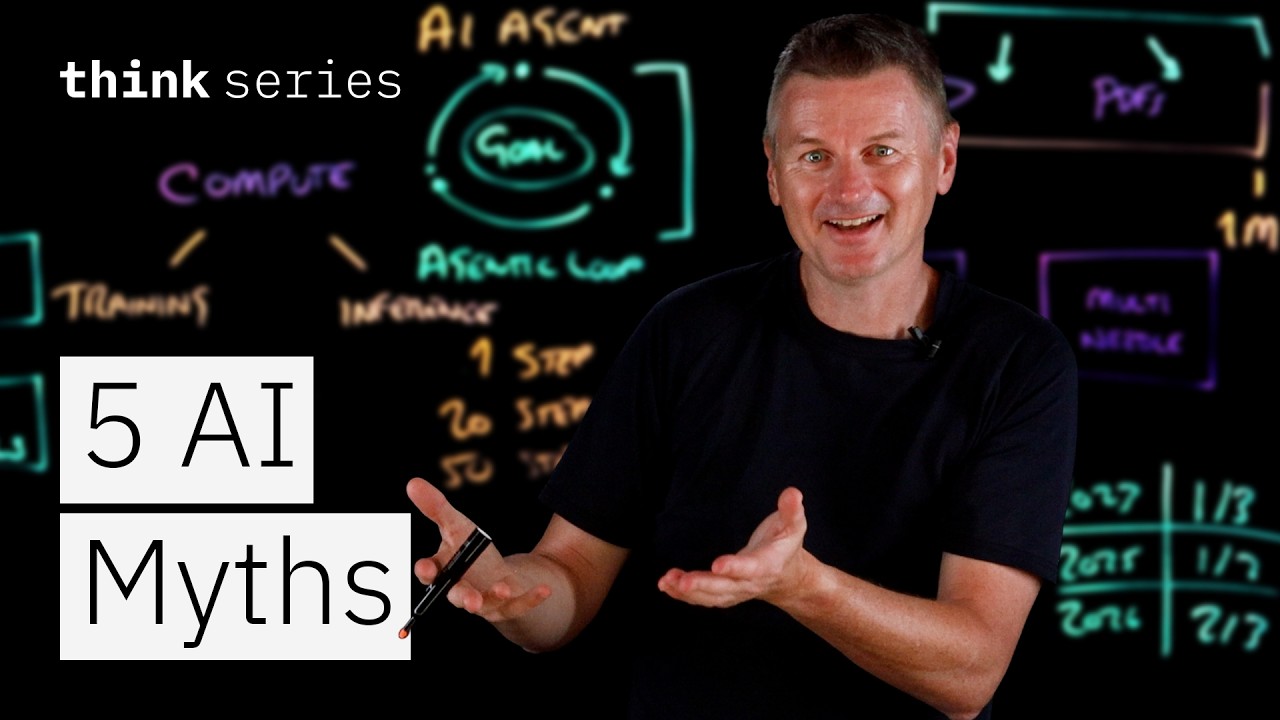
5 More AI Myths & The Truth Behind Them: ML, Context, Agents & More

5 More AI Myths & The Truth Behind Them: ML, Context, Agents & More

Martin Keen debunks five common AI myths, covering topics from reduced AI hallucinations and the misinterpretation of AI's "thinking" process, to the rising costs of AI inference, the limitations of large context windows, and the current challenges to fully autonomous AI agents.

Anthropic's Katelyn Lesse & Angela Jiang: Building an Ecosystem, not a Walled Garden

Anthropic's Katelyn Lesse & Angela Jiang: Building an Ecosystem, not a Walled Garden

Katelyn Lesse and Angela Jiang, leaders of Anthropic's developer platform, outline their strategy built on a "three-layer cake": knowledge, execution, and coordination. They emphasize moving towards advanced "strategies" or meta-harnesses that assign distinct jobs to tokens, fostering a robust and open AI ecosystem. The discussion covers empowering builders, setting industry standards, and Anthropic's nuanced approach to an open platform versus a walled garden, focusing on architectural soundness over infrastructure ownership.