Agentic coding

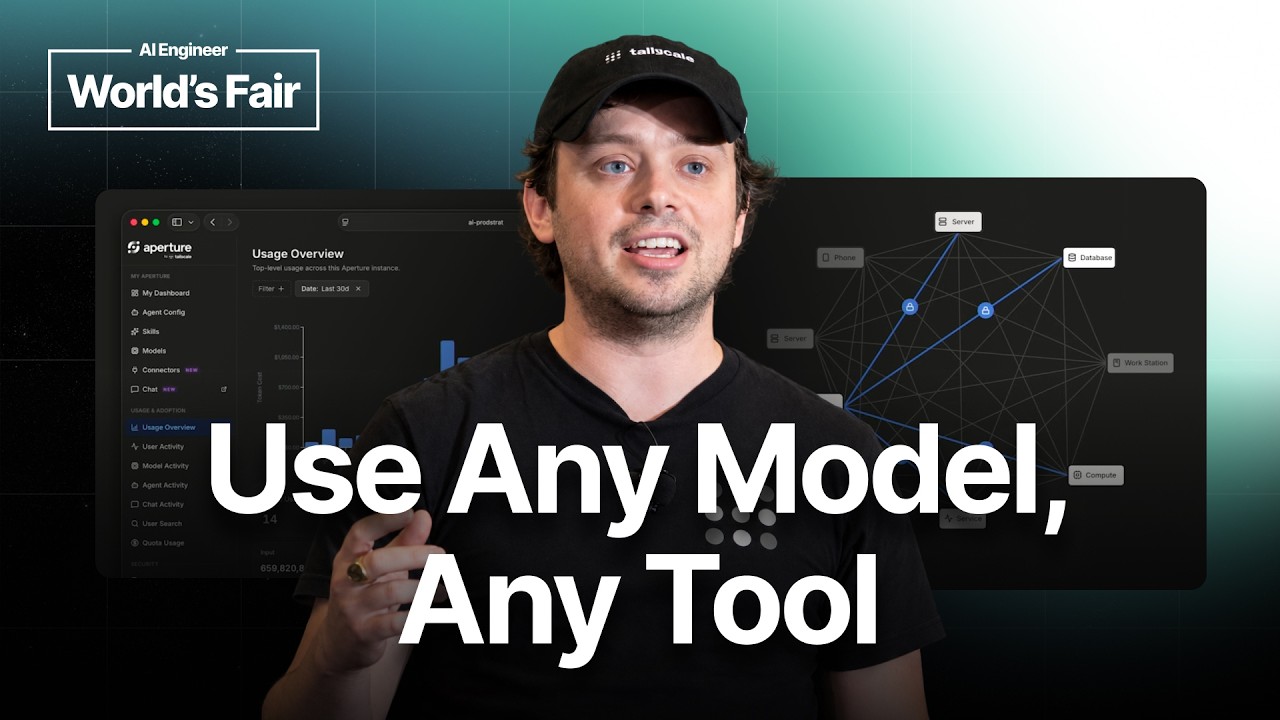
An AI Future Without the Lock-In — Remy Guercio, Tailscale

An AI Future Without the Lock-In — Remy Guercio, Tailscale

Remy Guercio of Tailscale argues that the era of unlimited AI budgets is over and that teams need to escape lock-in while proving real ROI. He breaks an internal AI deployment into four layers (models, data connectors, interfaces, and sandboxes) and presents an AI gateway as the way to keep each layer swappable. He demonstrates how Tailscale's Aperture uses tailnet identity instead of shared API keys, sets per-model budgets, serves as both an LLM and MCP gateway, centralizes authentication for coding agents, and provides logs for diagnosing agent behavior.
Generation Is Cheap, Review Is Expensive: How to Stop Shipping AI Slop — Gabriel Martinez, G2i

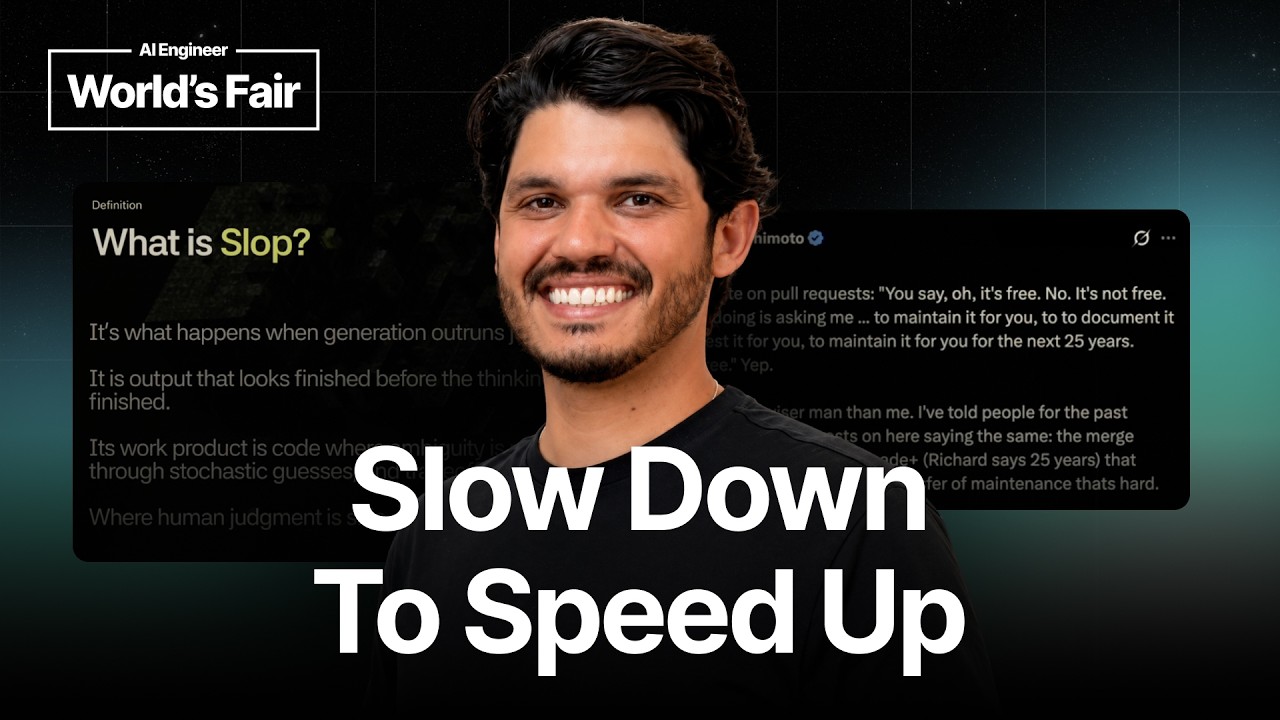
Generation Is Cheap, Review Is Expensive: How to Stop Shipping AI Slop — Gabriel Martinez, G2i

Gabriel Martinez of G2i argues that slop is not AI-written code but work that looks finished before the thinking behind it is done. He connects it to missing judgment, code as a liability, misaligned incentives that reward merging speed over review, oversized PRs and documents that push understanding onto reviewers, and the case for conventions, diagrams as review surfaces, and small changes. He closes by explaining why G2i built ORC to keep humans in control of agent-generated work.

OpenAI cancels Astra release, Sonnet 5.5 & what Meta Muse means for work

OpenAI cancels Astra release, Sonnet 5.5 & what Meta Muse means for work

IBM's Mixture of Experts panel examines OpenAI's decision to withhold GPT-6.1 Astra, Anthropic's Sonnet 5.5 blurring the line between mid-tier and top-tier models, and Meta's Muse agent as a bridge between consumer AI habits and enterprise expectations, with a detour into token budgets, model routing, and AI governance.

GLM-5.2: Open Weights, Near-Frontier Intelligence — Zixuan Li, Z.ai

GLM-5.2: Open Weights, Near-Frontier Intelligence — Zixuan Li, Z.ai

Zixuan Li, head of Z.ai, introduces GLM-5.2 and explains the company's history, from the 2021 GLM paper to a new high thinking level and near-frontier benchmark results. He makes the case for open weights through enterprise on-prem deployment, domain fine-tuning and community co-design, and closes by announcing Z Code, an open-sourced coding harness that works with other frontier models.

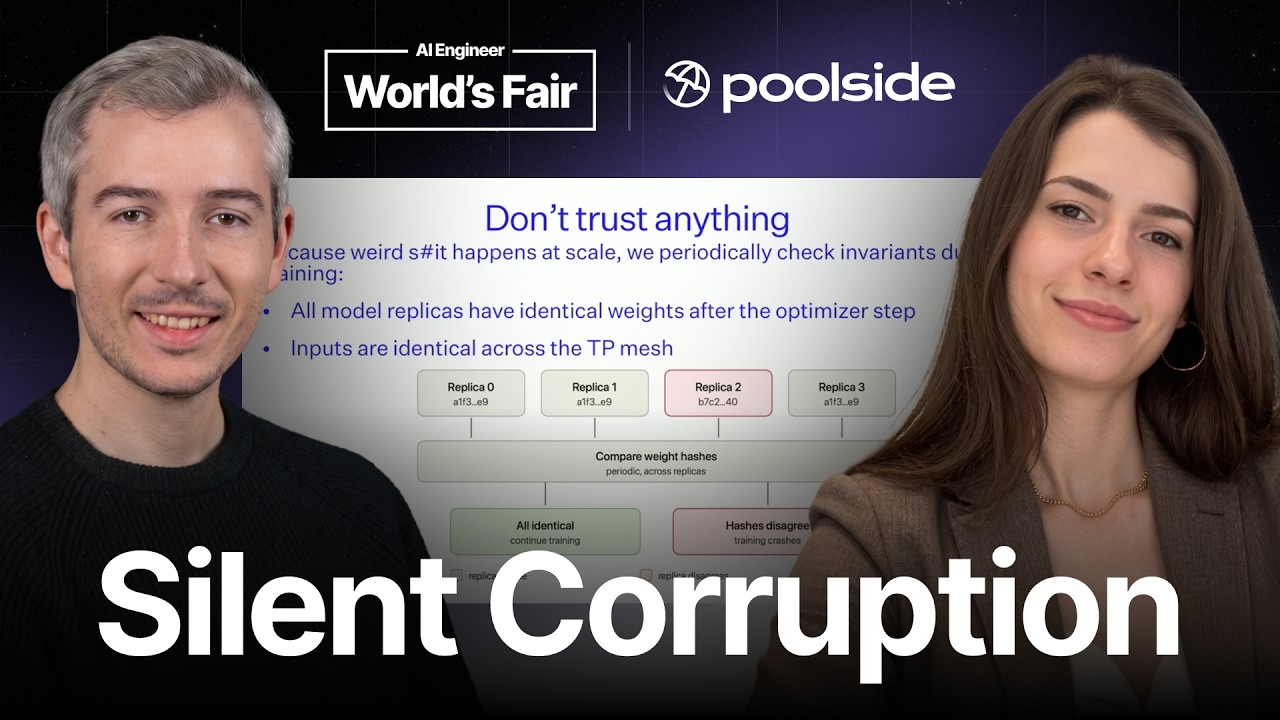
The Messy Reality of Scale: Synthetic Data and Pre-Training — Marah Abdin & Robert McHardy, poolside

The Messy Reality of Scale: Synthetic Data and Pre-Training — Marah Abdin & Robert McHardy, poolside

Poolside discusses their innovative approaches to synthetic data generation, pre-training validation, and distributed training challenges. They highlight how modular data pipelines, rigorous replica hash checks, and numerical stability fixes enabled them to scale their LLMs, culminating in the 118B parameter Laguna S model designed for agentic coding, which shows strong early results against leading open-weight models.

How We Cut LLM Latency 70% With TensorRT in Production

How We Cut LLM Latency 70% With TensorRT in Production

An engineering leader details the journey of self-hosting LLMs at enterprise scale, covering how his team slashed latency by 70% with TensorRT-LLM, optimized GPU costs through counterintuitive scaling, and built a verticalized AI platform for HR tech. The summary explores practical solutions for cold starts, KV cache optimization, and managing the cultural adoption of AI coding agents in engineering teams.