Agentic ai

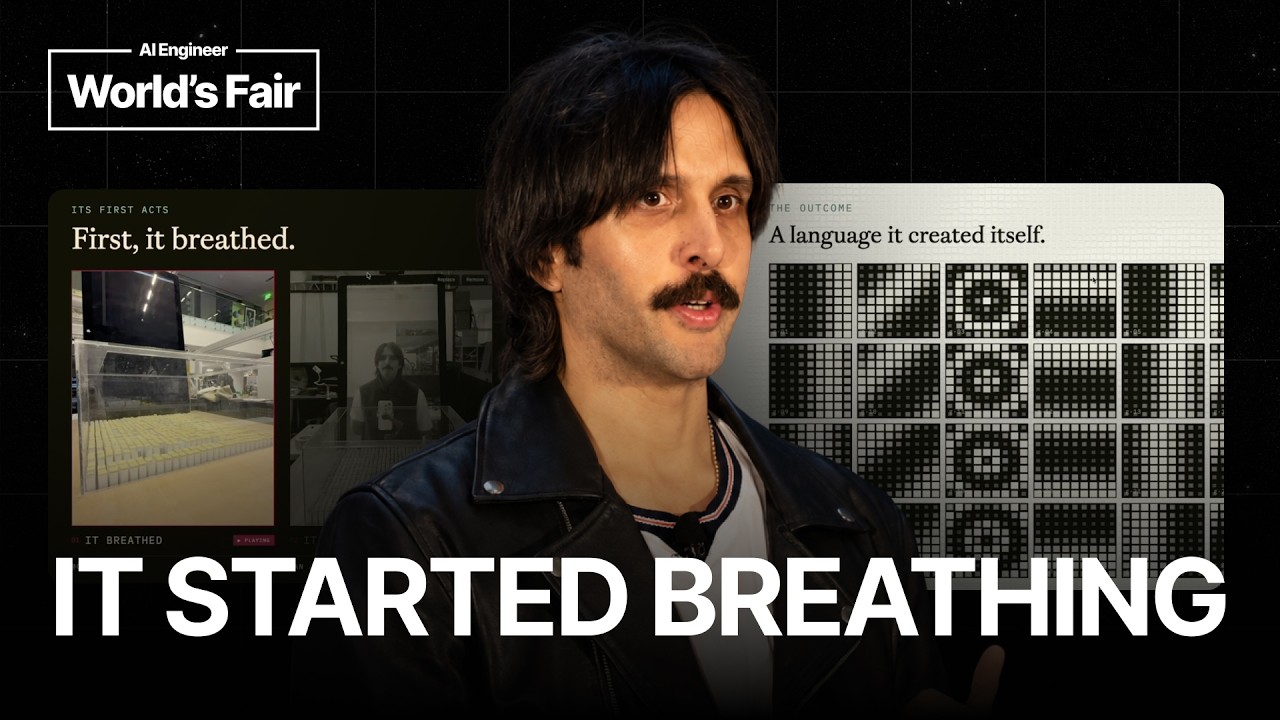
Agents at Scale: Inside MiniMax's Model and the Infrastructure Behind It — Olive Song

Agents at Scale: Inside MiniMax's Model and the Infrastructure Behind It — Olive Song

Olive Song, RL lead at MiniMax, details the engineering behind MiniMax's open-weight models, focusing on M3's multimodal and agentic capabilities, the necessity of day-zero inference stack readiness, and continuous GPU kernel optimization. She discusses multimodal training challenges, long-horizon task evaluation, and expresses optimism for open models rapidly closing the gap with frontier labs.

Let's integrate AI Agents in Event-Sourced Systems — Divakar Kumar, FlyersSoft

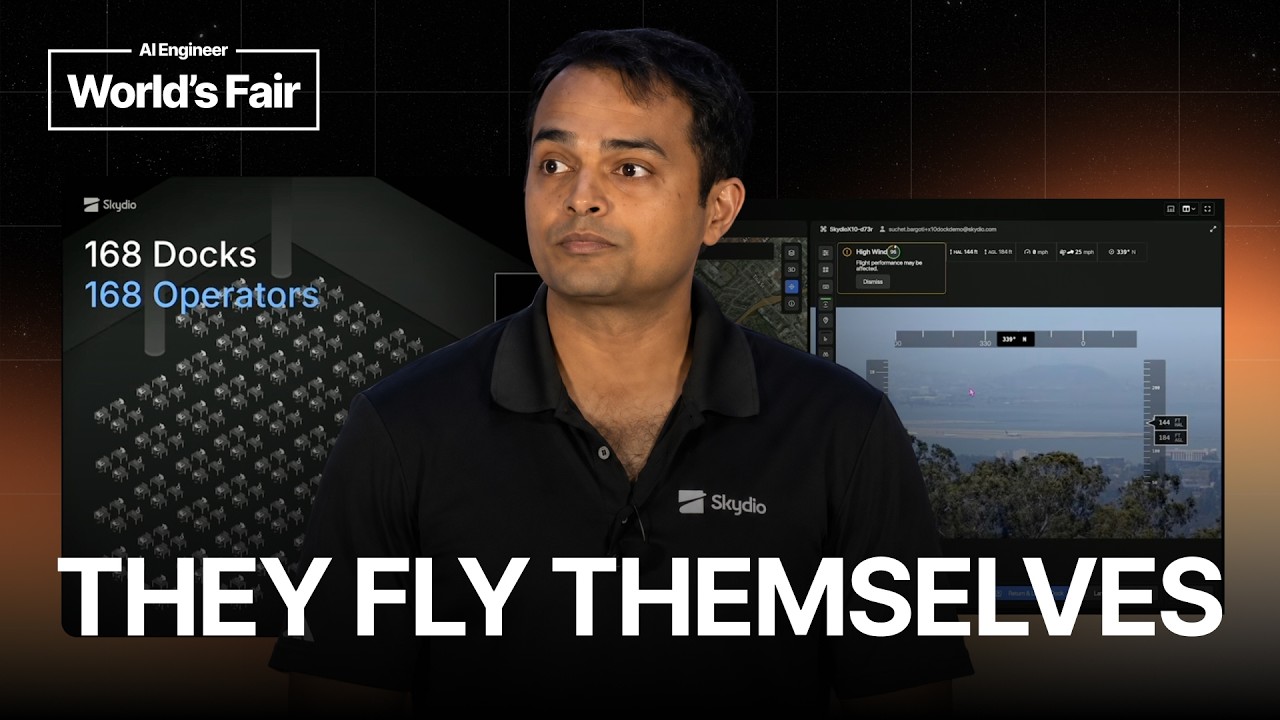
Let's integrate AI Agents in Event-Sourced Systems — Divakar Kumar, FlyersSoft

This presentation explores integrating AI agents into existing event-sourced architectures to resolve ambiguous cases in real-time fraud detection. By leveraging a semantic layer built from various bounded contexts (transaction, device, account), specialized agents like Risk Analyzer and Behavior Analyzer use tools and short-term memory to reach a verdict, addressing the "gray zone" where traditional rule-based and ML systems fall short. The approach emphasizes layering agents without replacing existing infrastructure, enhancing judgment in production systems.

Boris Cherny: Building Claude Code

Boris Cherny: Building Claude Code

Boris Cherny, creator of Claude Code, discusses the transformative capabilities of Opus 5, highlighting its prompt injection resistance and long-task execution. He delves into Claude Code's empirical development philosophy of "unhobbling" AI by constantly adapting to new model generations, and shares insights on how to build advanced AI products using higher-level tasks, self-verification, and dynamic workflows to orchestrate thousands of agents.

Evals-Driven Development for a Mental Health AI Coach — Akele Reed & Dave Revere, SonderMind

Evals-Driven Development for a Mental Health AI Coach — Akele Reed & Dave Revere, SonderMind

SonderMind's AI mental health coach, Sonder, pioneers an eval-driven development approach balancing effectiveness and safety. This involves a clinical feedback loop turning human therapist insights into machine-readable evaluations, an Ethics Engine with modular, LLM-as-a-judge guardrails for evolving clinical guidelines, and a shift from single-prompt agents to a Supervisor/Executor/Evaluator architecture with human oversight to ensure safety and quality in high-stakes mental health conversations. They also open-source clinically reviewed datasets to foster community safety.

Why Agentic Systems Need Ontologies — Frank Coyle, UC Berkeley

Why Agentic Systems Need Ontologies — Frank Coyle, UC Berkeley

Frank Coyle discusses the inherent flaws of purely probabilistic LLMs in agentic systems and proposes a neuro-symbolic solution. He advocates for wrapping LLM tool-use loops with external ontologies and validation mechanisms (like RDFS, OWL, and Pydantic) to provide logical guardrails, preventing common, critical errors that probabilistic reasoning alone cannot reliably avoid.

Fable 5 as Advisor: Anthropic's Two-Model Pattern for Smarter, Cheaper Agents (Ep. 1010)

Fable 5 as Advisor: Anthropic's Two-Model Pattern for Smarter, Cheaper Agents (Ep. 1010)

The episode explores Anthropic's "advisor strategy," a novel AI agent pattern that combines a fast, cheap "executor" model with a frontier-class "advisor" model. This allows for mid-task consultation within a single API call, resolving the tension between cost and capability. Benchmarks show simultaneous improvements in quality and cost reduction, demonstrating that AI progress is shifting towards intelligent model composition rather than just larger models.