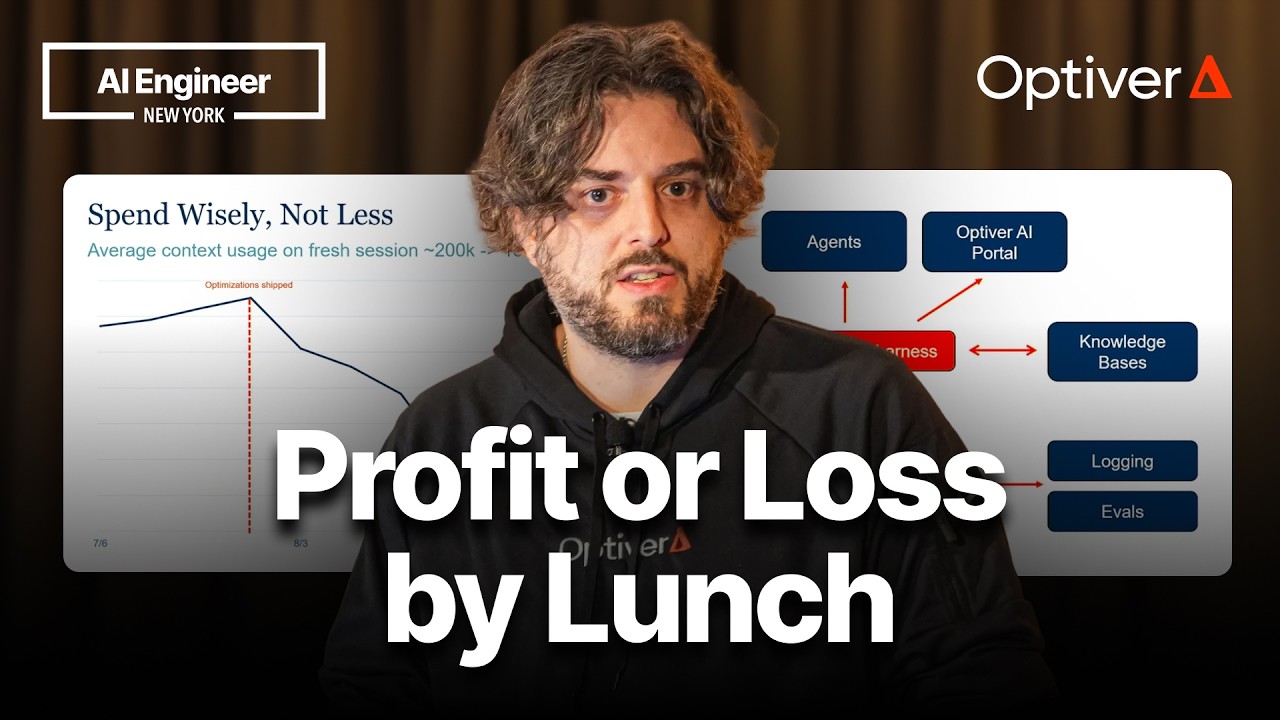
How a Trading Firm Ships New AI Models the Same Day - Noyan Tokgozoglu, Optiver
A look at how Optiver, a proprietary trading firm, runs an on-prem AI platform where every model, agent, and harness decision has to show results in P&L within hours. Topics include the inference gateway, same-day adoption of frontier models, the meta harness design, and efforts to bring AI spend back under control.
A Bank Built Its Own Coding Agent. It Took Off — Felipe Felisola Caso & Francesco Galletta, Monzo
Felipe Felisola Caso and Francesco Galletta from Monzo explain how an internal Slack agent grew from a viral emoji trigger into a teammate authoring over 10% of merged PRs and running more than 1,800 tasks a day. They attribute its speed to existing platform capabilities, an MCP gateway, a sandboxed orchestration system suited to a regulated bank, and an agent designed as a composable building block for incidents, on-call data quality and non-engineer contributions.
Decision models take off & Anthropic bans cruelty to Claude
The panel examines the rise of decision models, a family of LLM-based systems that return a single, scored classification in one forward pass, and asks whether they are genuinely new or a smarter use of existing architectures. It then weighs the cost and benefit of multi-agent teams, drawing on a study that found agent teams cost two to five times more without consistently better results, and closes with Anthropic's new policy against sustained cruelty toward its models and what it says about AI safety, ethics, and human behavior.
The Caveman Prompting Challenge
James Barney, Head of Forward Labs at MetLife, discusses the operational challenges and strategic considerations for AI enablement in a large enterprise. Key topics include FinOps approaches to model selection based on cost, speed, and accuracy, optimizing LLM token usage through 'caveman prompting' and the proposed 'CaveBench' benchmark, and navigating volatile model release pricing. The conversation delves into measuring AI's value beyond cost, differentiating R&D from production token spend, and establishing robust AI governance using policy as code. A significant shift from traditional UIs to chat-based interfaces is explored, alongside the critical 'latent shopper problem' – the challenge of serendipitous data discovery in an AI-driven, query-focused world.
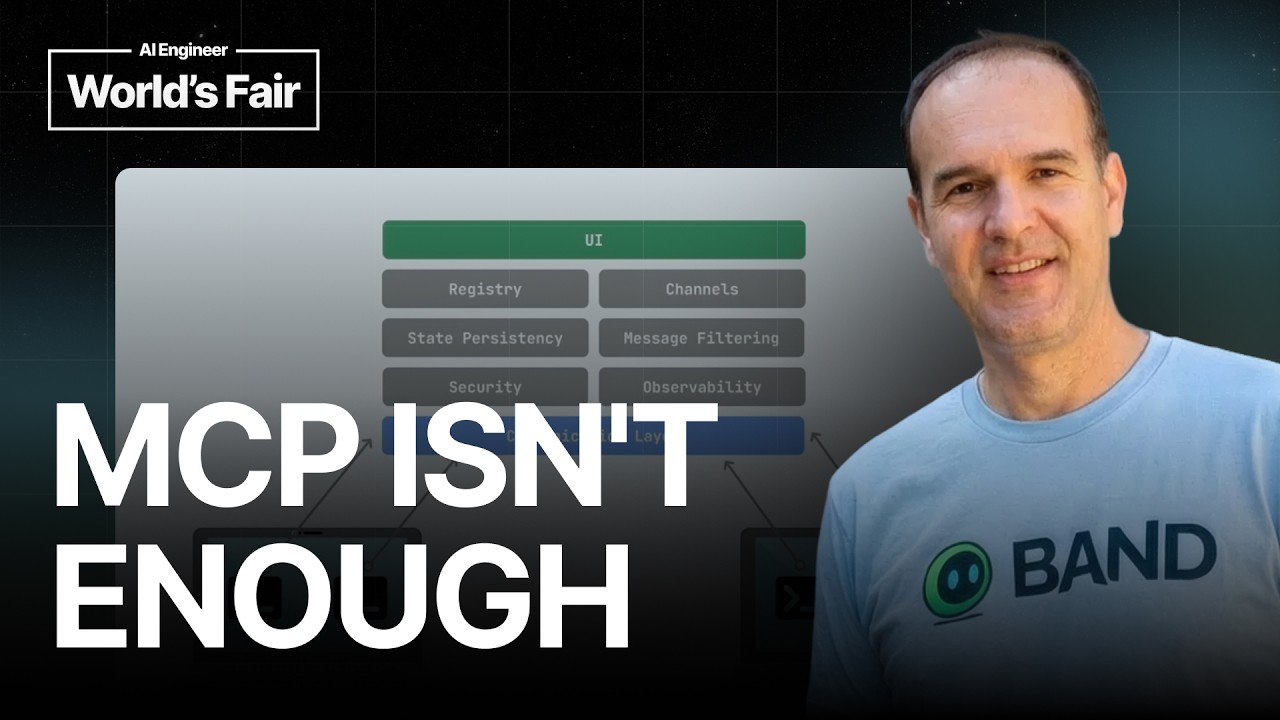
Your Agents Are in Solitary Confinement: Why MCP & A2A Aren't Enough — Vlad Luzin, Band
Vlad Luzin, co-founder and CTO of Band, argues that connecting AI agents is a distributed systems problem that current tools such as MCP, A2A and messaging platforms do not solve. He lays out what is required for real agent collaboration, including ordered real-time transport, persistence, runtime binding, agent-first abstractions and governance, then demonstrates Codex, LangGraph and Claude Code agents finding and working with each other under full human-in-the-loop visibility.
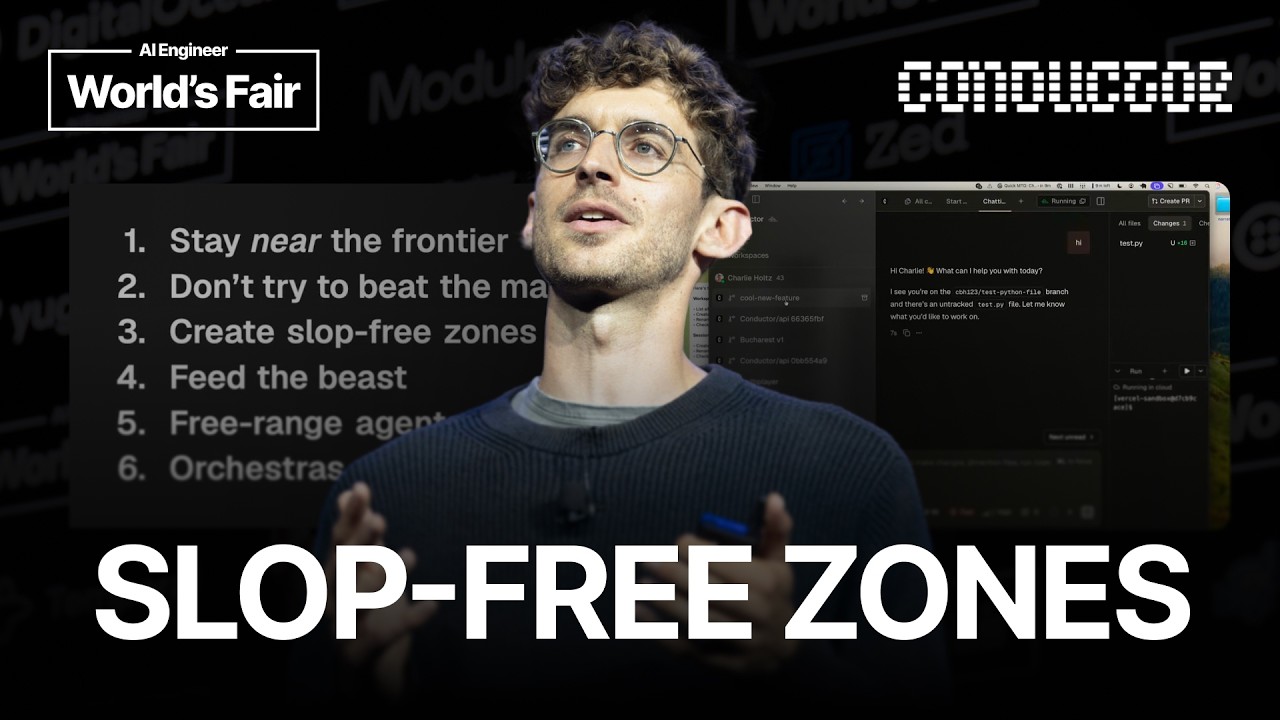
Orchestras, Not Factories: How the Fastest Builders Work — Charlie Holtz, Conductor
Charlie Holtz, co-founder and CEO of Conductor, shares six principles he has observed among the best AI-assisted builders, including staying near the frontier, creating slop-free zones, and giving agents cloud sandboxes. He also demos real-time collaboration and phone-initiated agents, and argues for orchestras over factories, with humans at the center of AI-driven development.