Agent orchestration

Agents Are Where Microservices Were in 2015 — Roberto Milev & Uday Kanagala, Navan

Agents Are Where Microservices Were in 2015 — Roberto Milev & Uday Kanagala, Navan

Roberto Milev and Uday Kanagala from Navan discuss the challenges and emerging best practices in building and operating AI agents, drawing parallels with microservices. They highlight the shift to stateful runtimes, innovative memory and context management using 'skills,' and crucial solutions for observability and testing non-deterministic systems. A central theme is the critical need for robust authorization and guardrails, given the blurring line of agentic action, and a preference for mastering single-agent loops before scaling to complex orchestrations. They conclude by outlining the solved and unsolved problems, with cost and debugging remaining significant hurdles.

Reading Group July 2026 - Loop Engineering

Reading Group July 2026 - Loop Engineering

This session provides an in-depth exploration of Loop Engineering, a paradigm shift from manual AI prompting to designing autonomous systems that orchestrate AI agents. Speakers share practical experiences, from building production-grade platforms with automated code generation and adversarial AI reviews to experimental loop structures and foundational infrastructure layers. Key discussions address challenges like managing token costs, preventing agent chaos, and implementing robust verification mechanisms for industrializing software development.

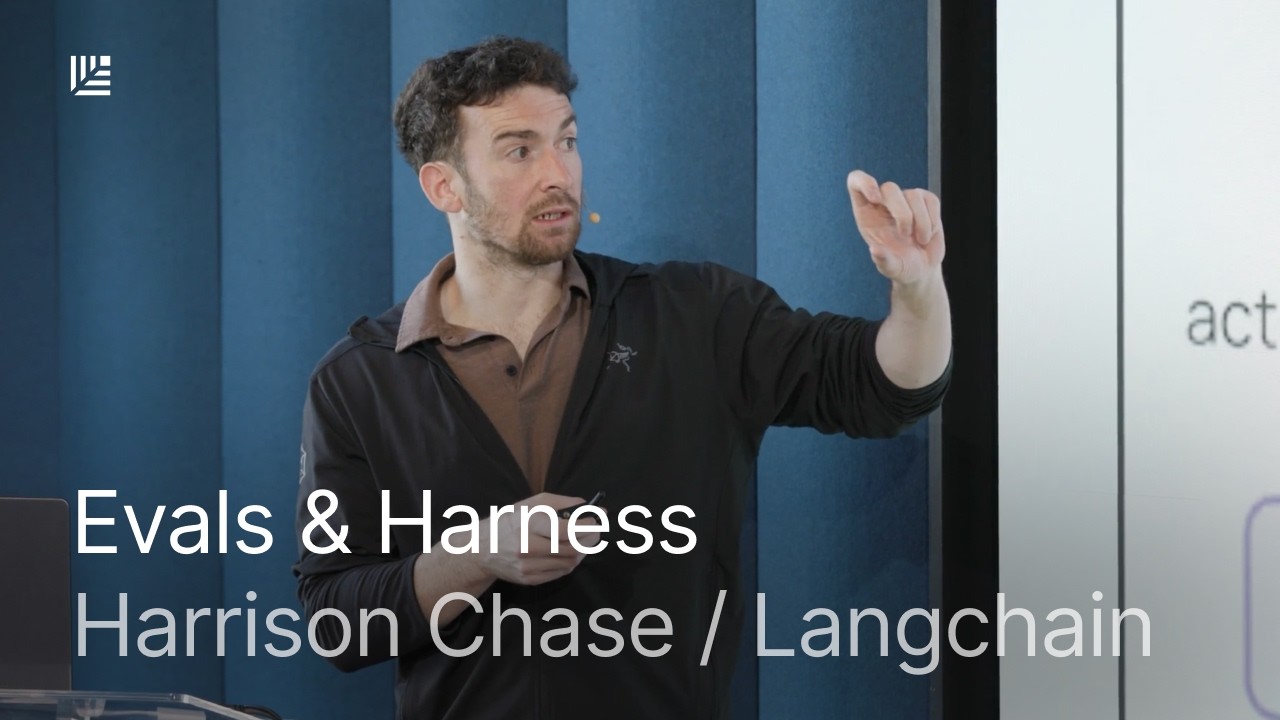
When to Build Your Own Agent Harness | Harrison Chase, LangChain

When to Build Your Own Agent Harness | Harrison Chase, LangChain

Harrison Chase, co-founder of LangChain, delves into the critical role of the 'harness' in LLM agents, explaining how it orchestrates models and context. He covers customizing harnesses with middleware and sub-agents, the trade-offs between off-the-shelf and custom solutions for in- and out-of-distribution tasks, and the importance of evaluations and observability for continuous agent improvement. The discussion culminates in the 'data flywheel' concept and the `LangSmith Engine` for automating agent intelligence through iterative refinement.

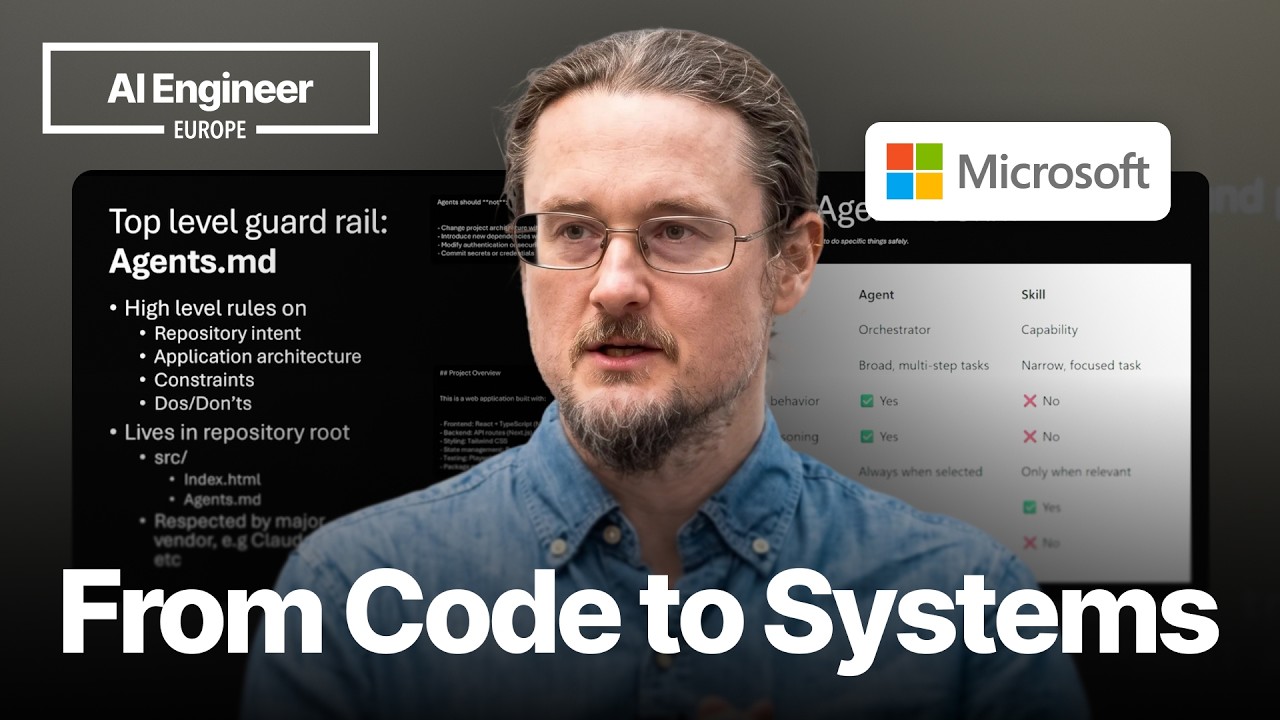
From Writing Code to Designing Systems: How the Developer Role is Changing — Chris Noring, Microsoft

From Writing Code to Designing Systems: How the Developer Role is Changing — Chris Noring, Microsoft

This talk introduces a paradigm shift in software development, moving developers from pure code producers to system designers and agent orchestrators. It details a new workflow leveraging GitHub Copilot CLI, custom Copilot agents, and explicit guardrails like `agents.md` and skills. The focus is on how to decompose complex problems, delegate implementation to AI, and encode architectural standards and constraints directly, enabling higher consistency, quality, and accelerated delivery through a "human-in-the-loop" delegation model.

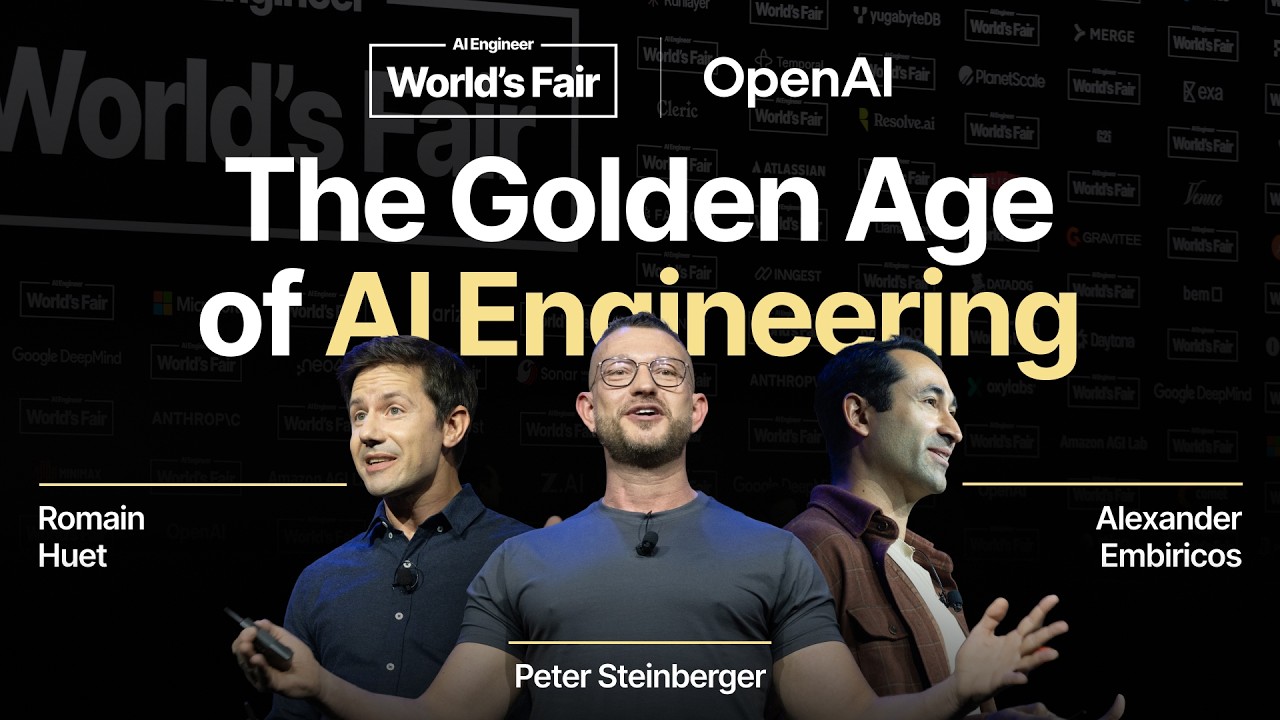
The Golden Age of AI Engineering — Alexander Embiricos & Romain Huet & Peter Steinberger, OpenAI

The Golden Age of AI Engineering — Alexander Embiricos & Romain Huet & Peter Steinberger, OpenAI

OpenAI's Romain Huet and Alexander Embiricos, joined by Peter Steinberger, outline the explosive progress of Codex at Dev Day 2024. They highlight the shift from manual coding to managing autonomous agents, enabled by rapid model iteration (every 6 weeks), open-source developer tools, and optimizations for cost-effectiveness ($1/M input tokens) and blazing inference speed (750 tokens/sec). The discussion centers on empowering AI engineers, not replacing them, by evolving agent capabilities, fostering an open ecosystem, and addressing future challenges like seamless local/cloud task execution and human attention as the new bottleneck in agent orchestration.

The Future Is Domain-Specific Agents - Justin Schroeder, StandardAgents

The Future Is Domain-Specific Agents - Justin Schroeder, StandardAgents

Justin Schroeder argues for a paradigm shift in AI agent development from monolithic, context-inflated agents (inheritance) to modular, domain-specific agents (DSAs) that operate through composition. He explains how DSAs offer superior token efficiency, cost savings with smaller models, enhanced security through capability limits, and better scalability, predicting their widespread adoption by 2027 as a solution to rising AI costs and the need for practical, customer-facing AI.