Agent memory

Citation Needed: Provenance for LLM-Built Knowledge Graphs — Daniel Chalef, Zep AI

Citation Needed: Provenance for LLM-Built Knowledge Graphs — Daniel Chalef, Zep AI

Daniel Chalef discusses how LLM synthesis destroys data provenance, making it difficult to trace information back to its sources. He introduces Graphiti, an open-source temporal graph framework, and Zep, an agent memory infrastructure built upon it. This system models provenance as a graph, treating sources as 'episodes' and derived facts as interconnected nodes and edges. This approach enables robust lineage tracing, handles entity merges and fact invalidation through temporal mechanisms, facilitates metadata-driven trust evaluation, and allows for compliant data deletion (e.g., GDPR) based on source support. The benefits include enhanced compliance, improved data veracity, and debuggable AI agents, addressing a critical engineering challenge in LLM applications.

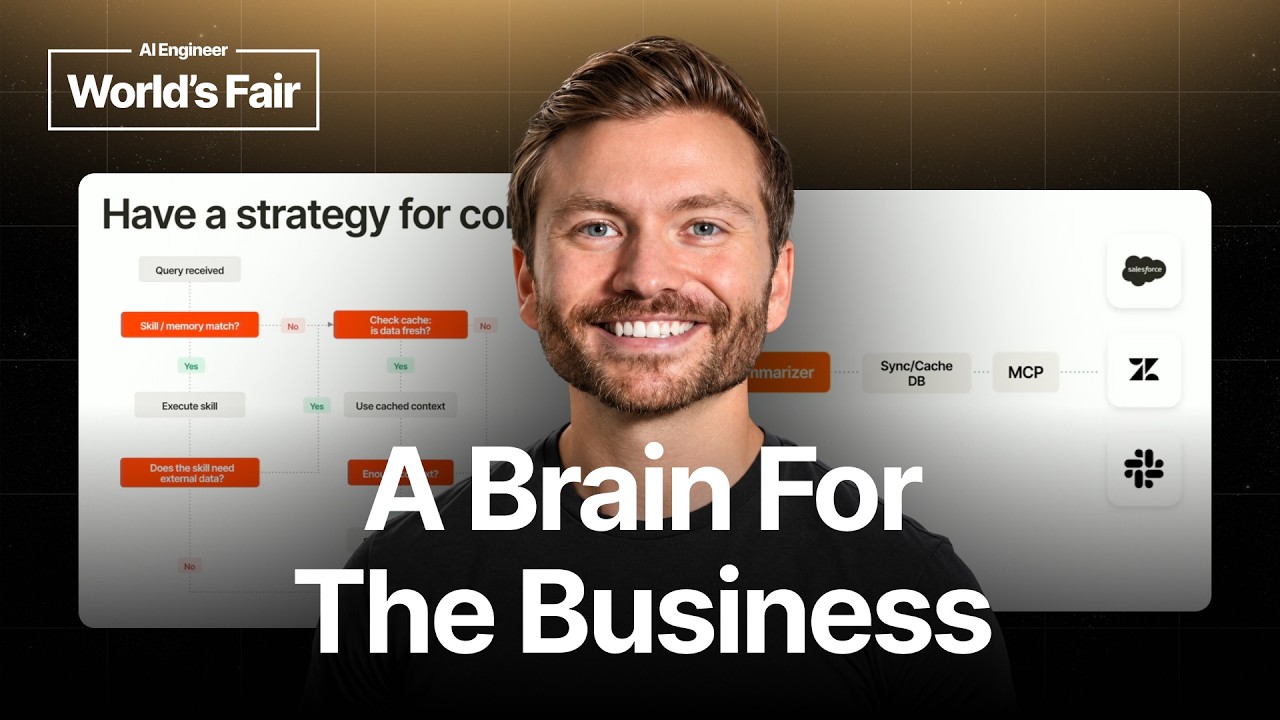
CrabRAG: Why Automated Assistants Need Graph Memory, Not More Tokens — Stephen Chin, Neo4j

CrabRAG: Why Automated Assistants Need Graph Memory, Not More Tokens — Stephen Chin, Neo4j

Stephen Chin demonstrates how current LLM agent memory systems, relying on markdown files or vector databases, lead to token inefficiency, hallucinations, and a lack of multi-hop reasoning. He showcases graph databases as a superior alternative, providing precise, explainable, and auditable answers for complex, large-scale problems through a live demo of a home lab digital twin.

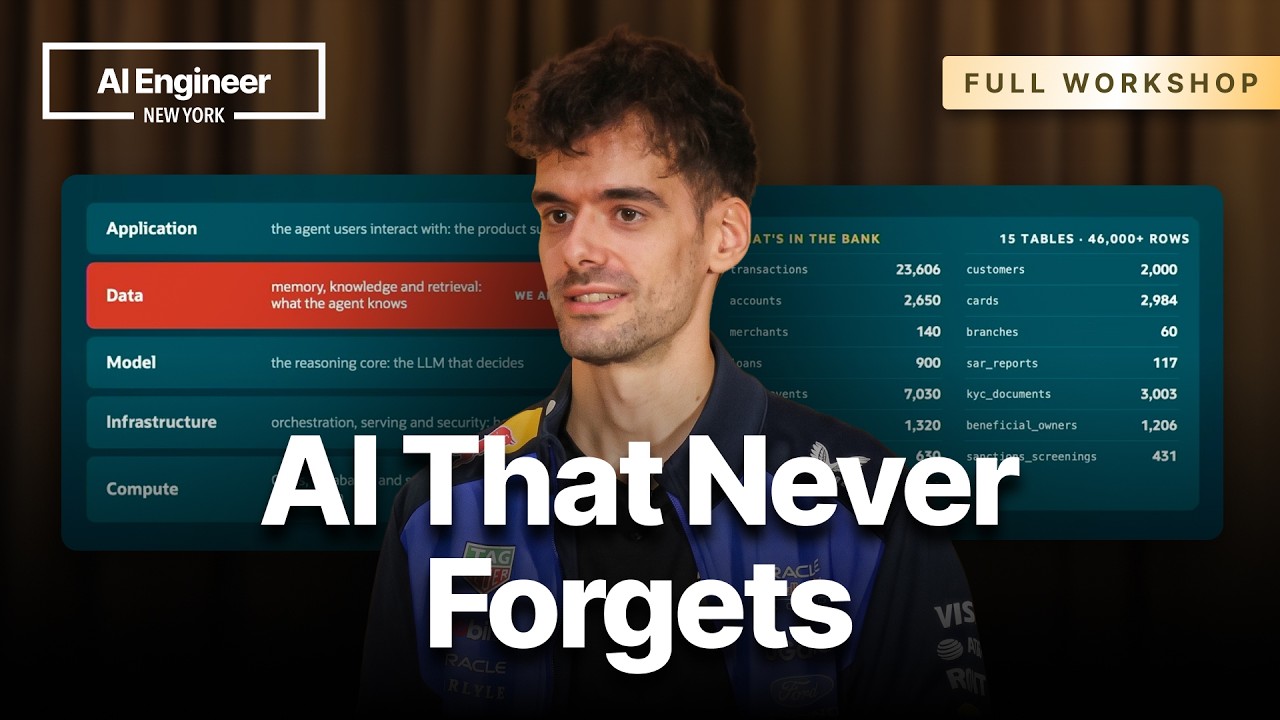
The Four Types of Memory Every AI Agent Needs — with Richmond Alake

The Four Types of Memory Every AI Agent Needs — with Richmond Alake

Richmond Alake from Oracle explains the critical role of Agent Memory in building adaptive AI agents, detailing the four types of memory, the limitations of Retrieval-Augmented Generation (RAG), and the architecture of the modern agent stack.