Agent harness

Automating document work with Long-Horizon AI Agents at LlamaIndex

Automating document work with Long-Horizon AI Agents at LlamaIndex

Jerry, CEO of LlamaIndex, argues that as AI agents move from answering questions to running long-lived workflows, documents become their most important context source. He walks through the evolution from simple RAG to agent harnesses, explains why PDFs are hard to parse, and presents the company's approach to OCR, extraction with grounding, and document search. He closes by outlining unsolved problems: agent-native document formats, in-place editing, versioning, distilling frontier workflows into cheaper models, and long-horizon background agents.
Building on the Codex Harness — Dominik Kundel, OpenAI

Building on the Codex Harness — Dominik Kundel, OpenAI

Dominik Kundel from OpenAI's Codex team explains the Codex App Server, the open-source JSON-RPC protocol that wraps the Codex harness and powers the Codex app, IDE extensions, and third-party clients. He covers live protocol events, more than 120 client messages, ChatGPT sign-in, developer instructions, deferred dynamic tools, shipping and binding generation, the Python SDK, and a demo of Codex running inside Doom.

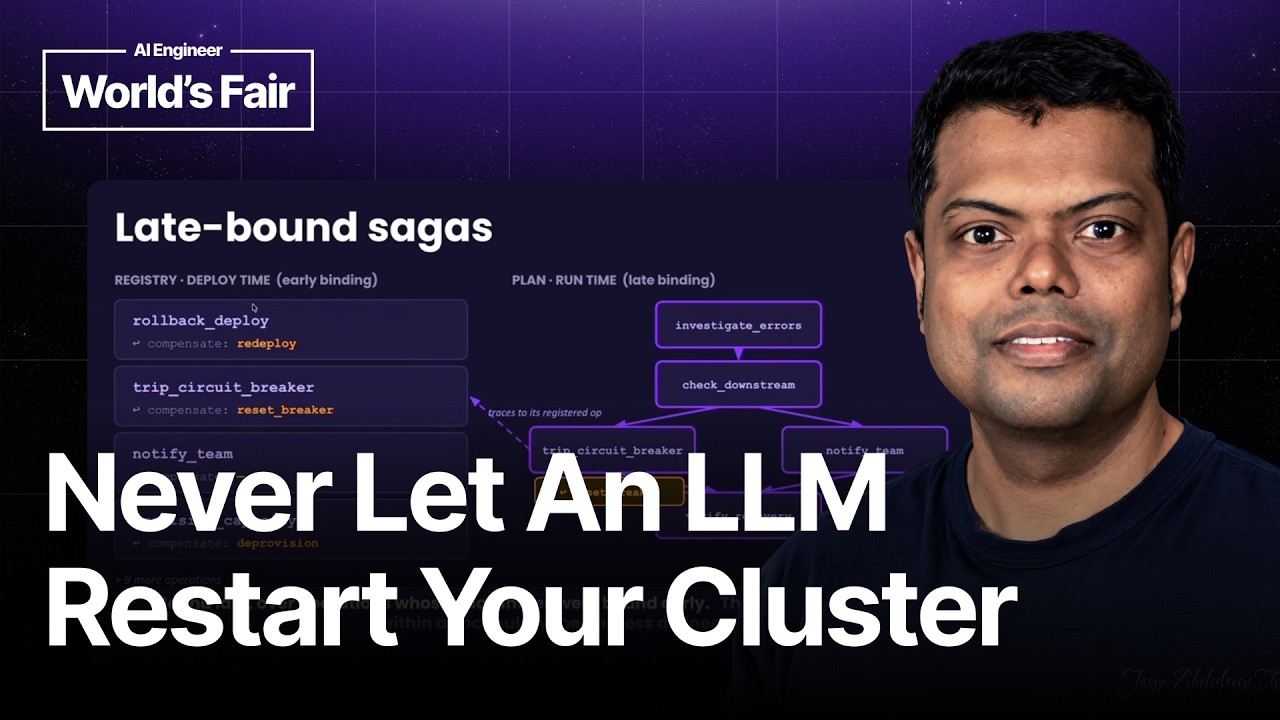
Brains vs Hands: How to Run AI Agents Safely in Production — Viren Baraiya

Brains vs Hands: How to Run AI Agents Safely in Production — Viren Baraiya

Viren Baraiya, CTO of Orkes and original creator of Netflix Conductor, explains why production agents behave like applications built from microservices. He argues for splitting the work between a non-deterministic LLM that plans and a deterministic, durable harness that executes, with approval gates, idempotent steps, and recorded side effects. He frames agent harnesses as late-bound sagas and demos an SRE remediation agent whose plan is compiled into a Conductor workflow.

How Cline Embraces an Open-Weights Model Ecosystem for AI Agents

How Cline Embraces an Open-Weights Model Ecosystem for AI Agents

Cline's CEO explains why open-weight models are rapidly taking over coding-agent workloads, and why the agent harness, not raw model capability, determines reliability. The talk covers model-specific tuning and failure handling, context and token optimization, self-improving harness loops, an SDK-first and UI-agnostic architecture, interactive evaluation built from real-world usage data, and production inference challenges such as KV cache hit rates.

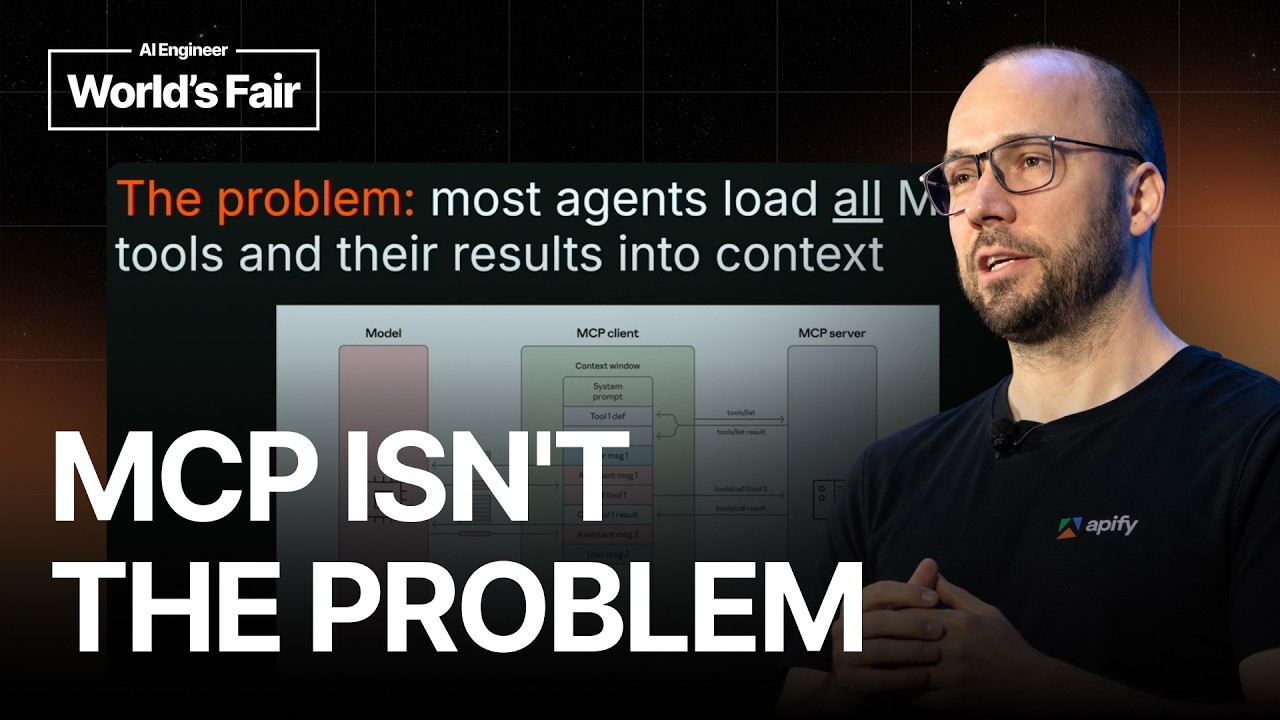
MCP Doesn't Suck. Your Agent Does. — Jan Čurn, Apify

MCP Doesn't Suck. Your Agent Does. — Jan Čurn, Apify

Jan Čurn, founder and CEO of Apify, argues that the backlash against MCP targets the wrong layer. Context bloat and token burn come from naive agent harnesses, not the protocol. He reviews the industry's three main fixes (sub-agents, progressive tool discovery and Code Mode), explains why agents work well with CLIs, proposes MCP for remote access and CLIs for local use, and demos mcpc, Apify's open-source universal MCP CLI client, alongside early Connector Evals results.

Total Recall: Agent Memory and Harness Engineering — Ignacio Martinez, Oracle

Total Recall: Agent Memory and Harness Engineering — Ignacio Martinez, Oracle

Ignacio Martinez's workshop delves into agent harness engineering, emphasizing that while LLMs are a 'frozen' reasoning core, the surrounding harness is where control and reliability are established. He outlines a seven-layer architecture for building robust agent harnesses, covering critical aspects like hybrid storage solutions, advanced memory engineering (including in-database embeddings and context card management), the semantic layer (Umwelt), agent loops, and context engineering. The session also explores continual learning through 'skill promotion' and addresses practical challenges like managing vast tool sets and optimizing model interactions.