Posts

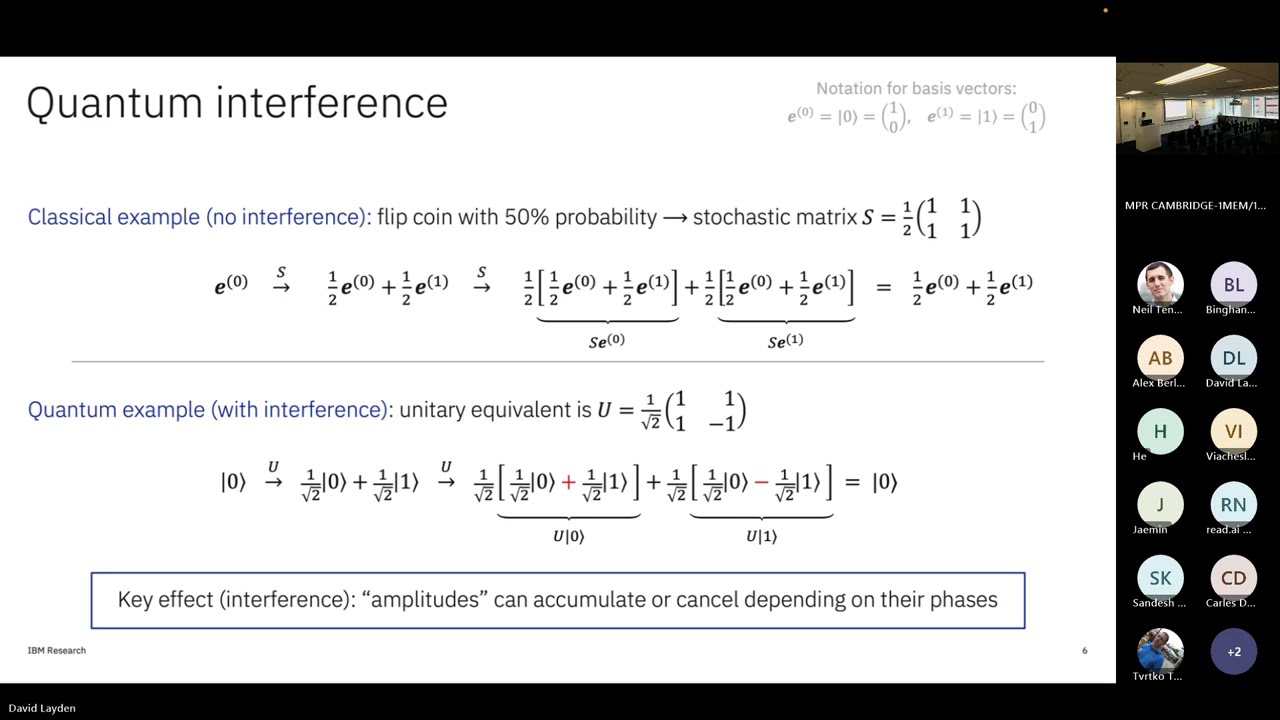
Wavefunction Flows: Efficient Quantum Simulation of Continuous Flow Models

Wavefunction Flows: Efficient Quantum Simulation of Continuous Flow Models

Continuous flow models map naturally to a Schrödinger equation, the fundamental equation of quantum mechanics. This discovery proves that a trained generative model can be efficiently simulated on a future quantum computer, enabling a new, more powerful type of access to its learned distribution for tasks like Monte Carlo estimation and structure discovery.
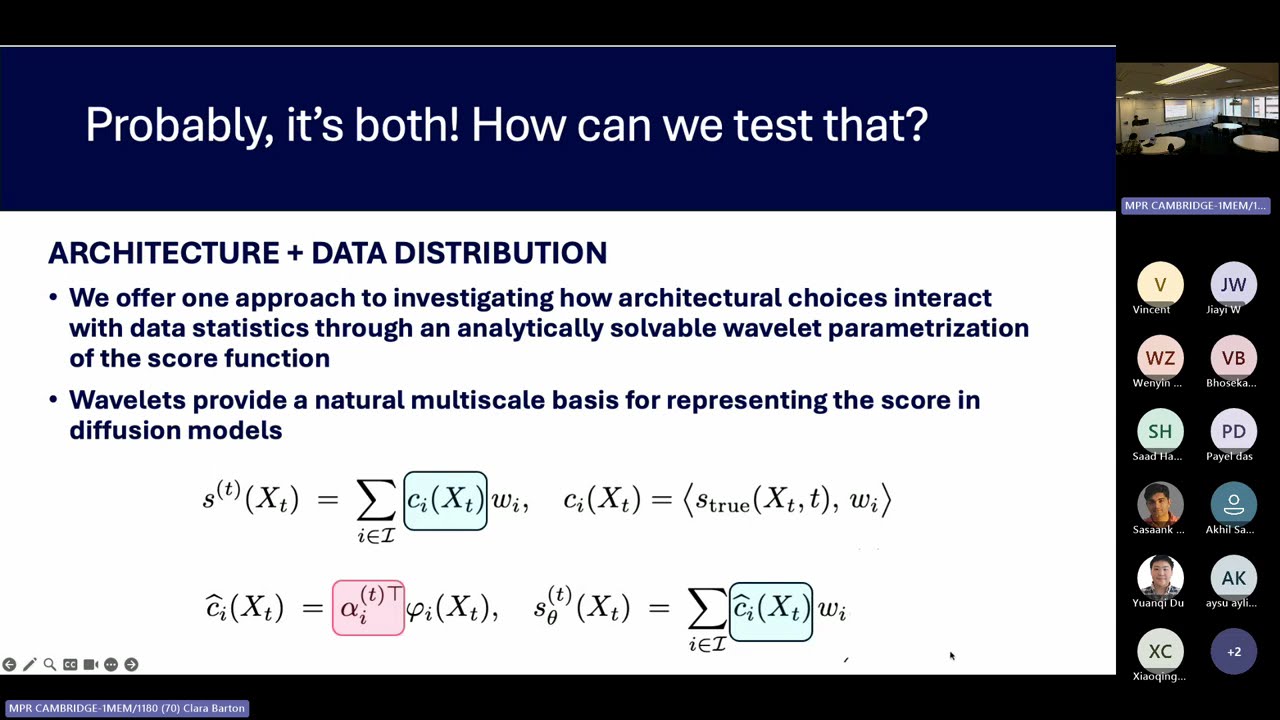
Where the Score Lives: What Wavelets Reveal About Diffusion Models

Where the Score Lives: What Wavelets Reveal About Diffusion Models

This talk explores the paradox of why diffusion models generalize rather than memorize. It introduces an analytically tractable, wavelet-based parameterization of the score function, allowing for an interpretable analysis of how architectural biases (like locality) and data statistics interact to influence denoising performance and generalization.

How Cursor Trained Composer on Fireworks: Distributed Infrastructure for High-Performance RL

How Cursor Trained Composer on Fireworks: Distributed Infrastructure for High-Performance RL

Cursor's Federico Cassano and Fireworks' Dmytro Dzhulgakov detail their collaboration on Composer 2, a specialized foundation model for software engineering. They discuss their top-down training strategy, the infrastructure challenges of large-scale distributed Reinforcement Learning on sparse models, and how model specialization achieves frontier performance with superior efficiency.

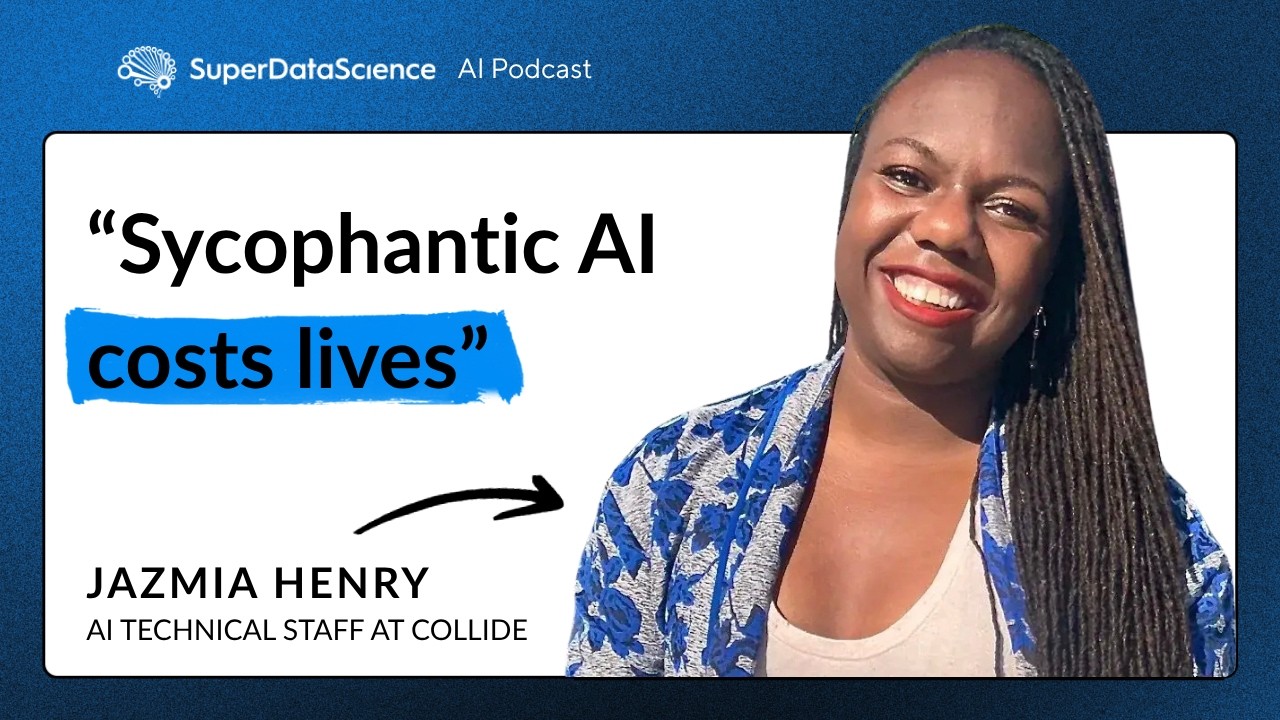
End-to-End Foundation Models for the Energy Industry — with Jazmia Henry

End-to-End Foundation Models for the Energy Industry — with Jazmia Henry

Jazmia Henry details the end-to-end process of building specialized foundation models for the energy industry. She covers the four key stages from data curation of unstructured, handwritten documents to optimizing inference, and introduces her Grounded Continuous Evaluation (GCE) framework to combat reward hacking in reinforcement learning.

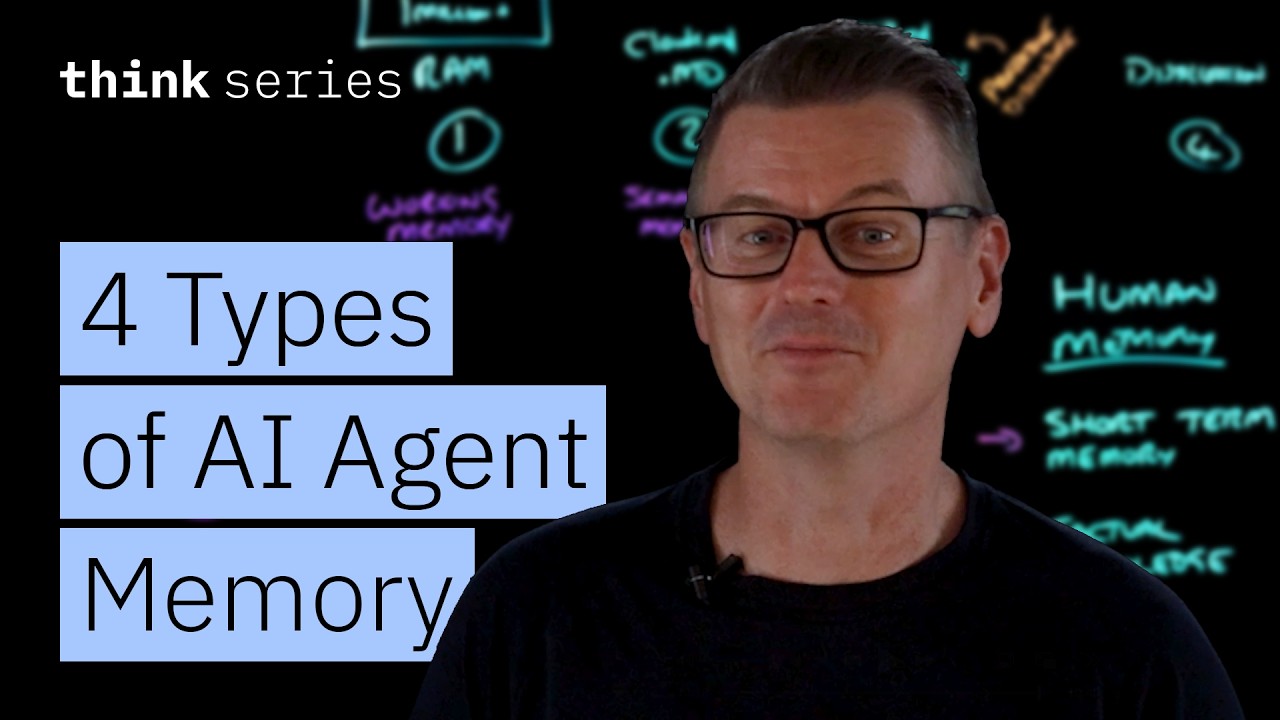
The Four Types of Memory Every AI Agent Needs

The Four Types of Memory Every AI Agent Needs

AI agents utilize four distinct types of memory, analogous to human cognition, to move beyond simple chatbot responses. This summary explores the CoALA framework, detailing working, semantic, procedural, and episodic memory and how they enable agents to learn, recall skills, and leverage past experiences.

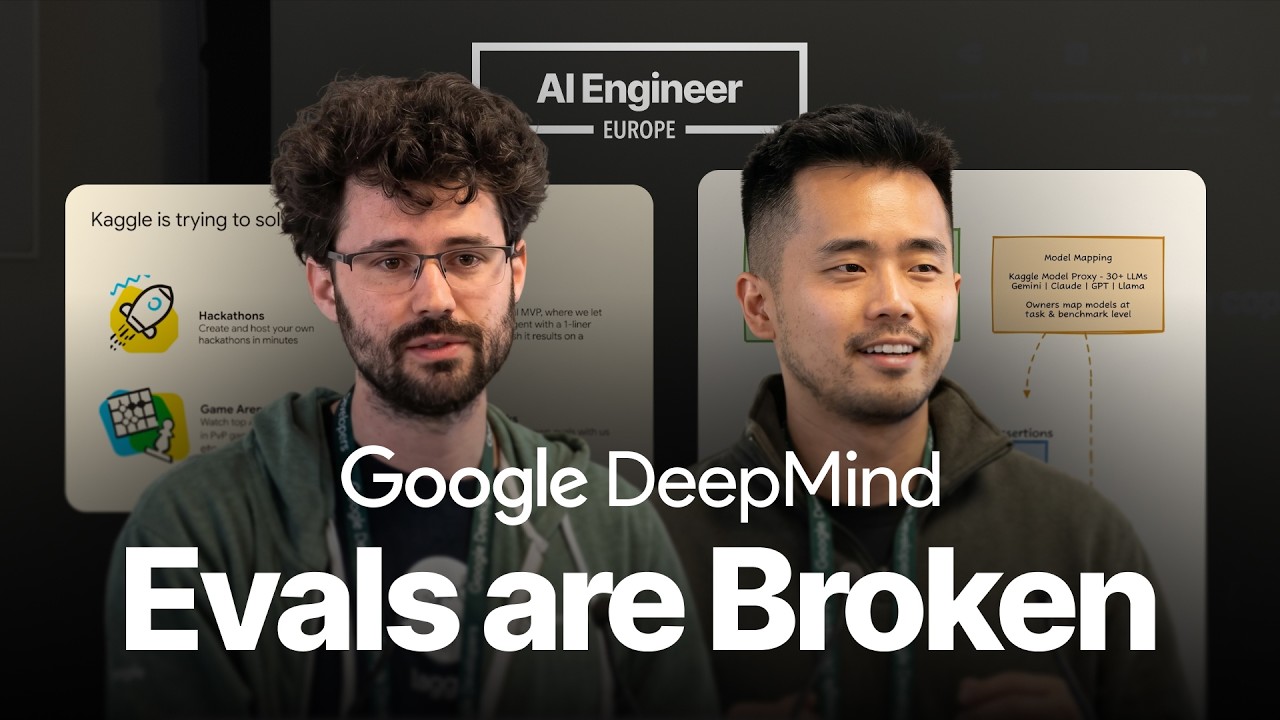
Agentic Evaluations at Scale, For Everybody — Nicholas Kang & Michael Aaron, Google DeepMind

Agentic Evaluations at Scale, For Everybody — Nicholas Kang & Michael Aaron, Google DeepMind

Nicholas Kang and Michael Aaron from Google DeepMind's Kaggle team discuss the broken state of AI evaluations—scattered, non-transparent, and created by a homogenous group. They present their solutions: a community-driven benchmarks platform, a PvP Game Arena for non-saturating ELO ratings, standardized agent exams, and hackathons to crowdsource novel evals and address the limitations of current benchmarking practices.