Posts

2026 Cost of a Data Breach Report: AI Is Changing Cybersecurity

2026 Cost of a Data Breach Report: AI Is Changing Cybersecurity

The 2026 Cost of a Data Breach Report reveals how AI is transforming cybersecurity, accelerating both attack sophistication and defense capabilities. It highlights rising breach costs, persistent vulnerabilities like phishing and ransomware, and the critical need for organizations to leverage AI and automation to reduce financial impact, improve response times, and strengthen overall security posture against AI-driven threats and future risks like quantum computing.
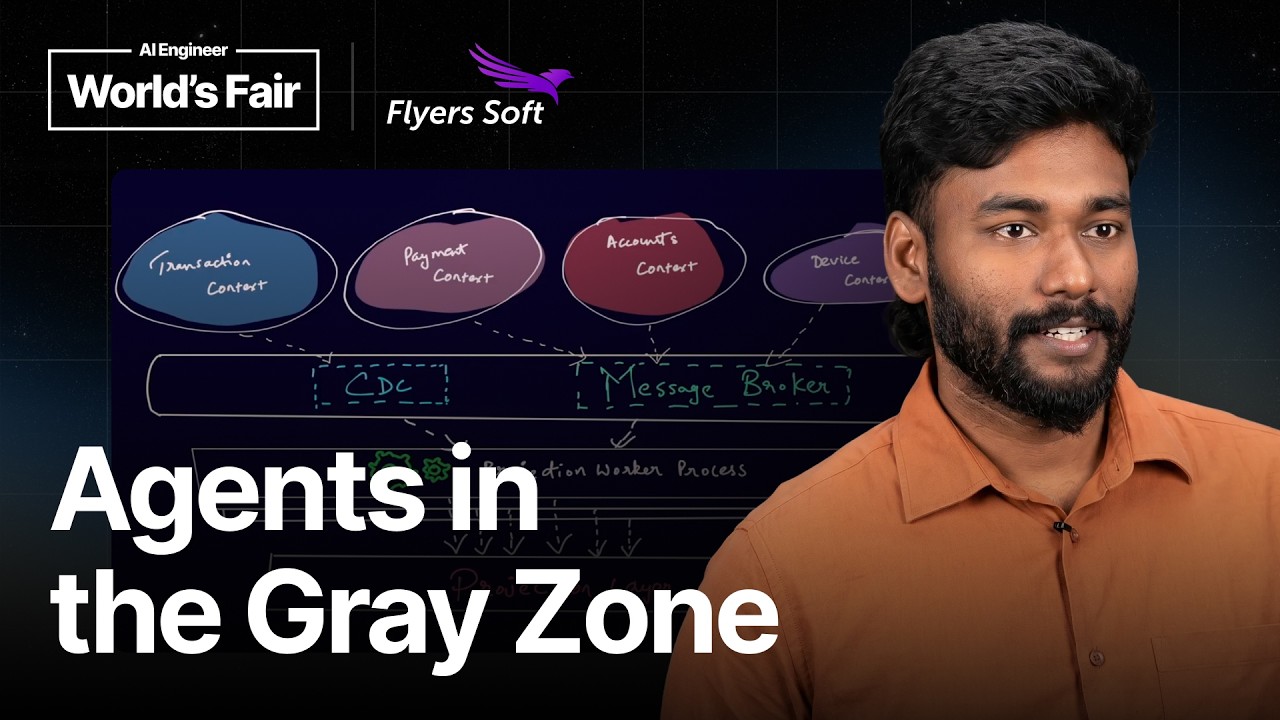

Let's integrate AI Agents in Event-Sourced Systems — Divakar Kumar, FlyersSoft

Let's integrate AI Agents in Event-Sourced Systems — Divakar Kumar, FlyersSoft

This presentation explores integrating AI agents into existing event-sourced architectures to resolve ambiguous cases in real-time fraud detection. By leveraging a semantic layer built from various bounded contexts (transaction, device, account), specialized agents like Risk Analyzer and Behavior Analyzer use tools and short-term memory to reach a verdict, addressing the "gray zone" where traditional rule-based and ML systems fall short. The approach emphasizes layering agents without replacing existing infrastructure, enhancing judgment in production systems.

Multi-GPU Kernels, Intelligence per Watt, Heterogeneous Inference, and More | YC Paper Club

Multi-GPU Kernels, Intelligence per Watt, Heterogeneous Inference, and More | YC Paper Club

This YC Paper Club explored the growing trend of specialization in AI hardware and software, covering multi-GPU kernel optimization, intelligence per watt metrics for local AI inference, the implications of AI writing systems code, heterogeneous hardware designs for inference, and GPU-accelerated game engines for reinforcement learning.

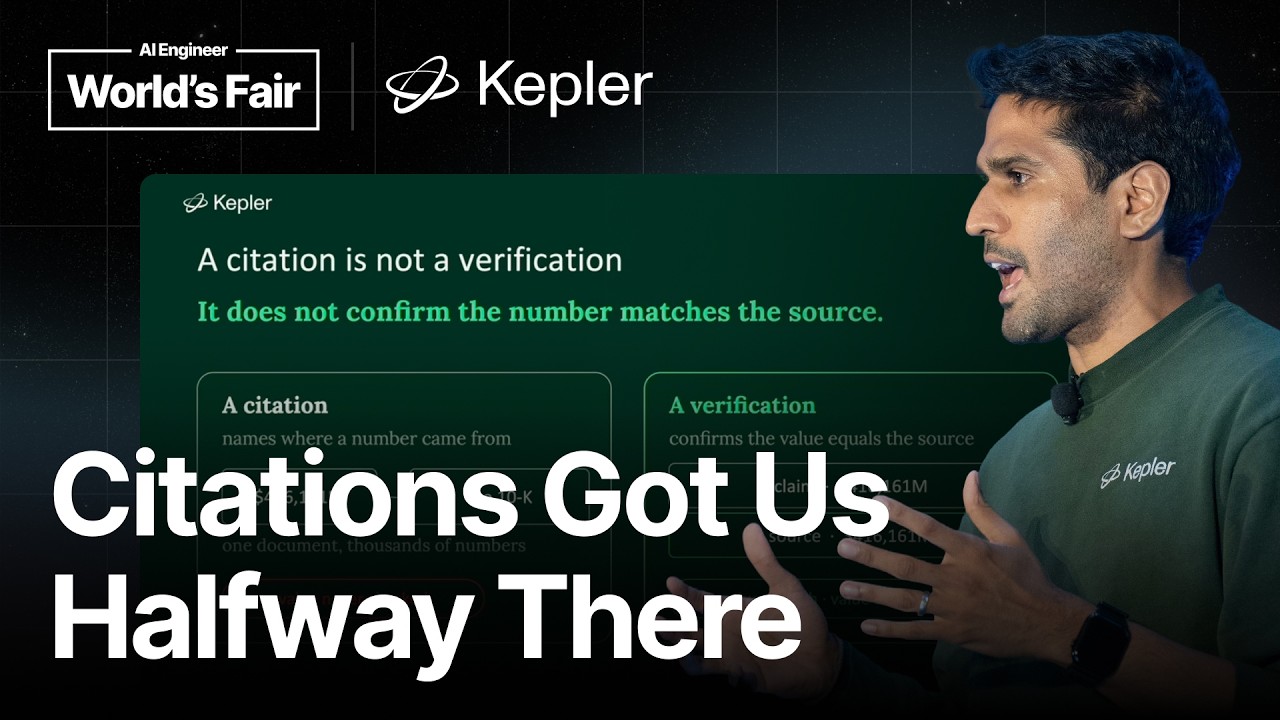
How Kepler Built Verifiable AI for Financial Services — Vinoo Ganesh

How Kepler Built Verifiable AI for Financial Services — Vinoo Ganesh

Vinoo Ganesh, CEO of Kepler, discusses building verifiable AI for financial services. He argues that while LLMs are powerful probability machines, they are unreliable for deterministic financial tasks. Kepler's solution involves a deterministic substrate that wraps AI, based on three tenets: atomic provenance (AI references, not creates, numbers), scope determinism (AI decides what to compute, but deterministic tools perform the math), and derivation chains (traceable calculation paths for derived figures). This ensures numerical accuracy, verifiability, and traceability, moving beyond simple citations to true proof of work.

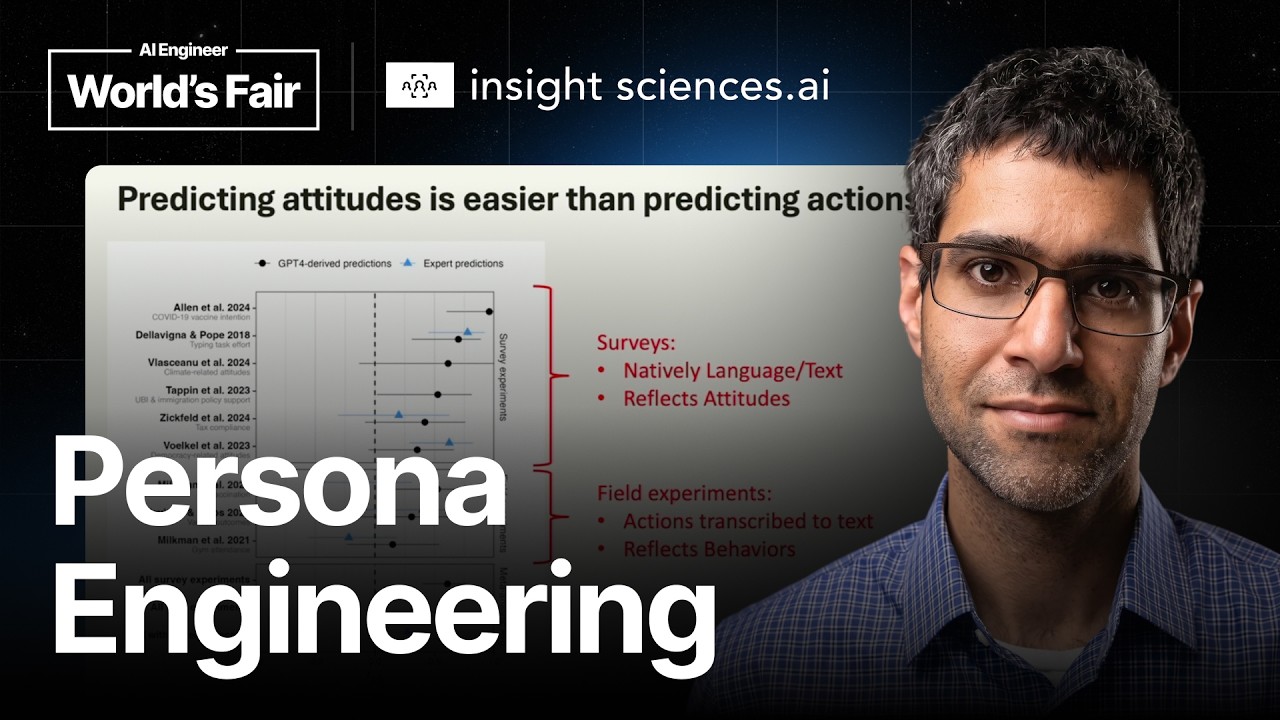
Persona Engineering: A Field Guide to AI Synthetic Personas — Ishan Anand, InsightSciences.ai

Persona Engineering: A Field Guide to AI Synthetic Personas — Ishan Anand, InsightSciences.ai

Ishan Anand discusses synthetic personas for market research, drawing parallels to weather forecasting. He outlines three key failure modes—latent confounders, prompt sensitivity, and difficulty predicting actions—and explores techniques like fine-tuning and calibrated prompting to overcome them. Anand stresses the importance of validating personas against human data using distributional metrics and establishing a "noise floor" based on human-to-human consistency, advocating for their use as economic actors and complements to, rather than replacements for, human research.

Alexandr Wang: From Los Alamos to Superintelligence

Alexandr Wang: From Los Alamos to Superintelligence

Alexandr Wang discusses his journey from Scale AI to Meta's superintelligence lab, emphasizing the importance of conviction, systems thinking, and identifying exponential growth opportunities in AI. He highlights Meta's vision for 'personal superintelligence,' the strategic role of open-source and affordable models, and the immense potential of agentic looping for driving innovation and outcompeting incumbents. His core advice for young entrepreneurs is to develop an unshakeable internal compass for the future, embracing vision and ambition as the new scarce resources.