Rebuilding CI for AI-Scale Commit Volume — Gautam Korlam, SonarSource
A talk on why coding agents shift the bottleneck from code generation to CI, merge queues, review, and approvals, and how to redesign those systems around speed, automated repair, policy enforcement, and auditable records.
AI slop stalls bug bounties, malware hides in IoT and agents hit Wikipedia
This Security Intelligence episode examines three converging stories about AI-driven security risk: Google pausing part of its open source bug bounty program amid a flood of AI-generated reports while its PageBreak agent finds hundreds of real flaws, the ClingSTUN Linux malware exploiting unpatched IoT and enterprise devices by hiding in legitimate STUN traffic, and OpenAI agents crawling and probing Wikimedia services with partial outage consequences. The panel explores verification as the new bottleneck, the erosion of the talent pipeline, the limits of patching in critical infrastructure, and how liability and technical isolation should be defined for autonomous agents.
The true price of Intelligence: an economic study by Signal65
A Signal65 TCO study, presented with CoreWeave, examining the fully loaded economics of AI training and inference. It covers hidden costs such as storage fees, support, and reliability, how performance compounds with price to set cost per million tokens, and how serverless and dedicated inference models differ on useful-token economics.
Automating document work with Long-Horizon AI Agents at LlamaIndex
Jerry, CEO of LlamaIndex, argues that as AI agents move from answering questions to running long-lived workflows, documents become their most important context source. He walks through the evolution from simple RAG to agent harnesses, explains why PDFs are hard to parse, and presents the company's approach to OCR, extraction with grounding, and document search. He closes by outlining unsolved problems: agent-native document formats, in-place editing, versioning, distilling frontier workflows into cheaper models, and long-horizon background agents.
Empowering Intelligence: democratizing data access and driving smarter decisions at Nasdaq
A NASDAQ executive explains how high-performance compute and agentic AI are reshaping both the physical trading infrastructure (data centers, colocation, liquid cooling, and CoreWeave partnership) and the fintech software stack (Verafin, Axiom, Calypso) through a shared intelligence layer. The talk centers on trust, resilience, governance and the bounded-exception problem that makes agentic workflows hard to scale in a regulated market.
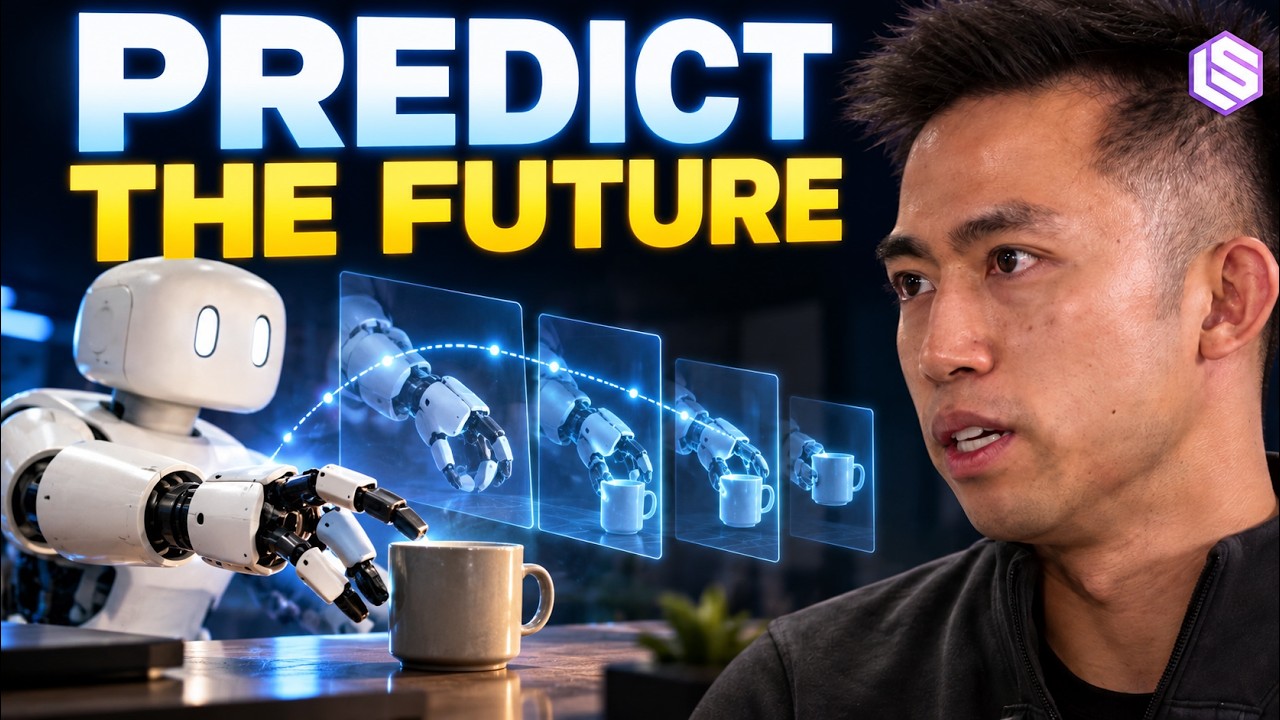
Robots That Predict the Future: Dyna-2 & Physical AI — Jason Ma, Dyna Robotics
Dyna Robotics is pioneering physical AI with Dyna-2, a world-action model trained on over a million hours of human video, predicting future states and generating robot actions. Co-founder Jason Ma explains how this enables robots to learn new tasks from minimal demonstrations, tackles the robotics data bottleneck with synthetic data and self-improving models, and details their full-stack approach, including custom semi-humanoid hardware for real-world deployments at Din Tai Fung. The discussion delves into diffusion transformers, agentic harnesses for hour-long workflows, the "Bitter Lesson" of scaling data, and the distinction between world-action models and VLAs, all driven by a deployment-first research culture.