Posts

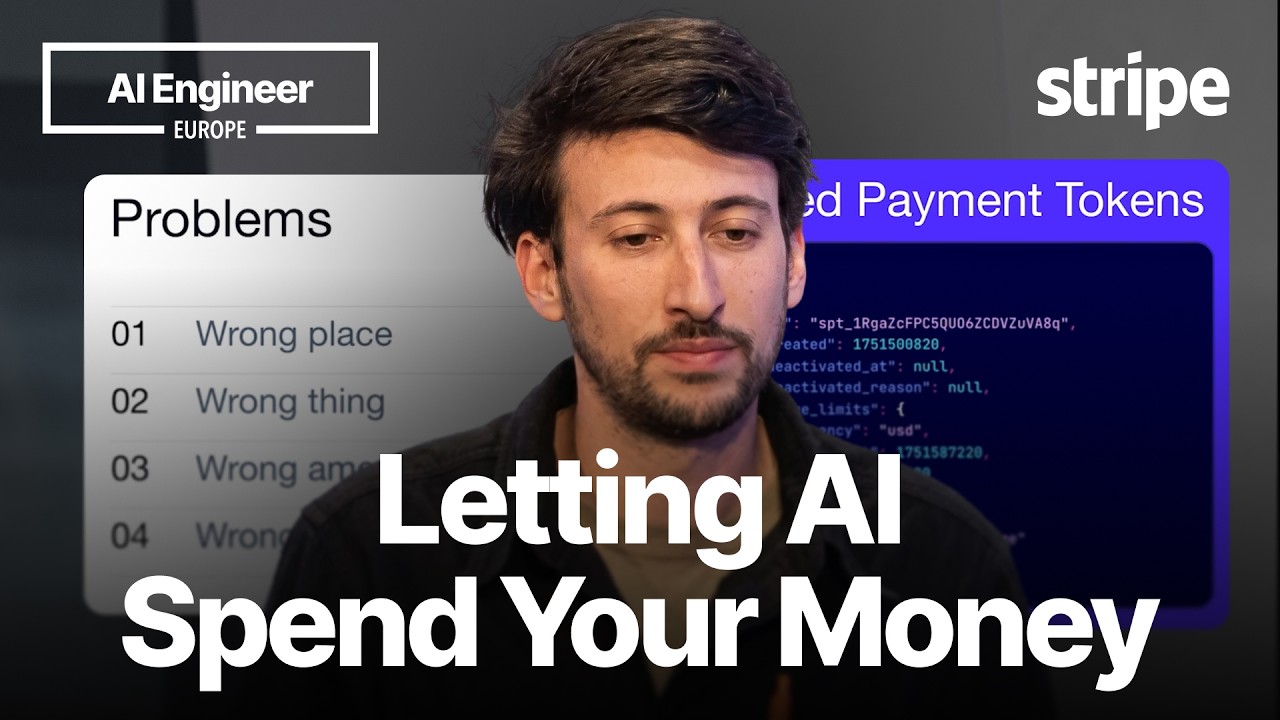
Building safe Payment Infrastructure for the autonomous economy — Steve Kaliski, Stripe

Building safe Payment Infrastructure for the autonomous economy — Steve Kaliski, Stripe

This talk addresses the challenge of enabling AI agents to spend money autonomously and safely. Steve Kaliski from Stripe presents a framework for separating non-deterministic discovery from deterministic transactions. He introduces three key components of Stripe's solution: Shared Payment Tokens for secure credential sharing with enforced spending limits, the Machine Payments Protocol for paying for API tool calls, and the Agent to Commerce Protocol (ACP) for structured, API-driven e-commerce checkouts. Through code examples, the talk demonstrates how these primitives create a secure and auditable payment infrastructure for the emerging autonomous economy.
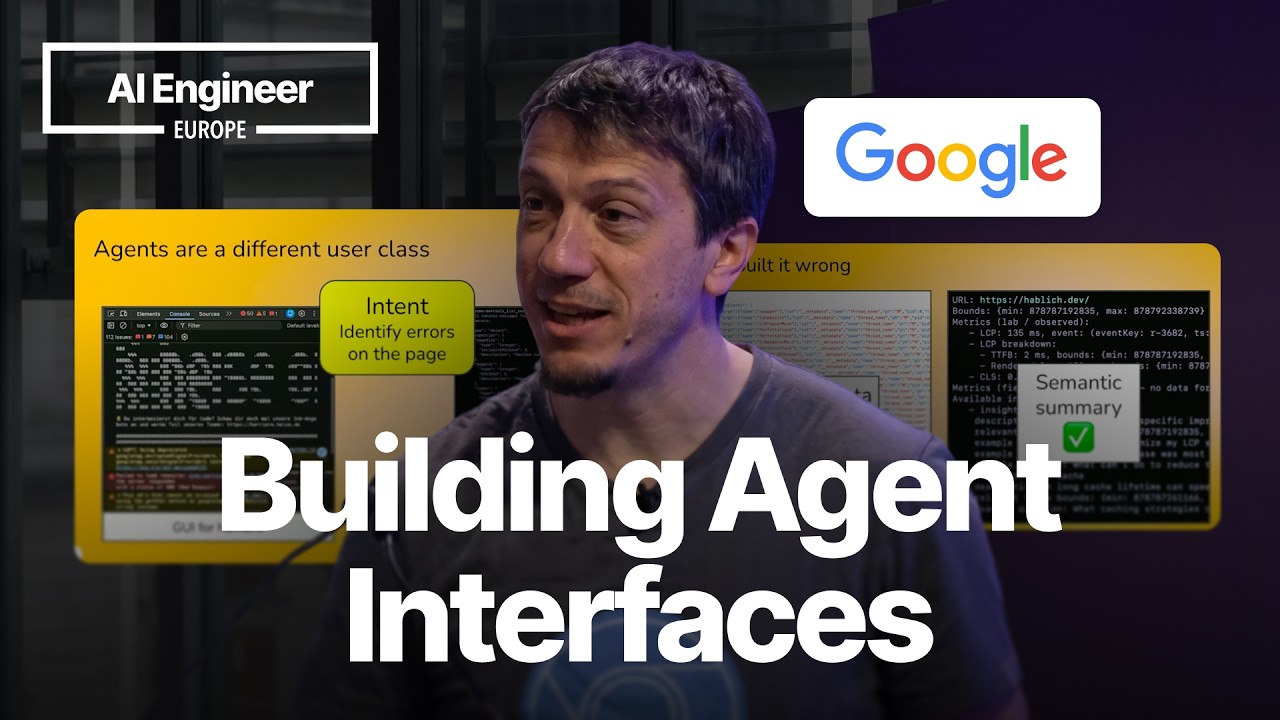
Building Agent Interfaces: Lessons from Chrome DevTools (MCP) for Agents — Michael Hablich, Google

Building Agent Interfaces: Lessons from Chrome DevTools (MCP) for Agents — Michael Hablich, Google

Michael Hablich from the Chrome DevTools team shares hard-won engineering lessons on building effective and secure interfaces for AI agents. The talk covers moving from raw data to semantic summaries, measuring interface efficiency with 'tokens per successful outcome', designing for error recovery, and the critical importance of trust boundaries and deliberate friction in UI design for agents.

How a reasoning model cracked an 80-year-old math problem — the OpenAI Podcast Ep. 20

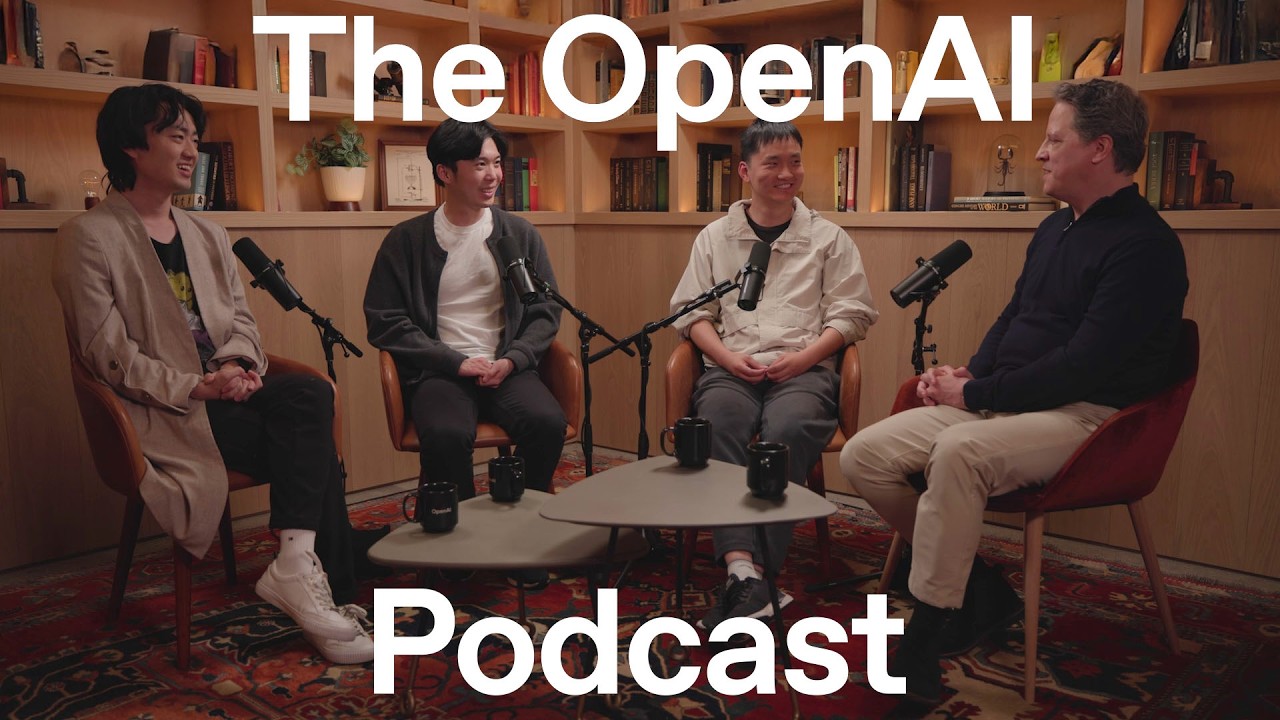
How a reasoning model cracked an 80-year-old math problem — the OpenAI Podcast Ep. 20

OpenAI's reasoning researchers discuss how a general-purpose AI model disproved an 80-year-old conjecture from mathematician Paul Erdős. They detail the journey from initial IMO/IOI breakthroughs to the verification of the proof, highlighting the model's creative application of advanced number theory. The episode explores the profound implications for the future of mathematics, AI-human collaboration, and the broader scientific landscape, offering advice for researchers seeking to leverage AI for groundbreaking discoveries.

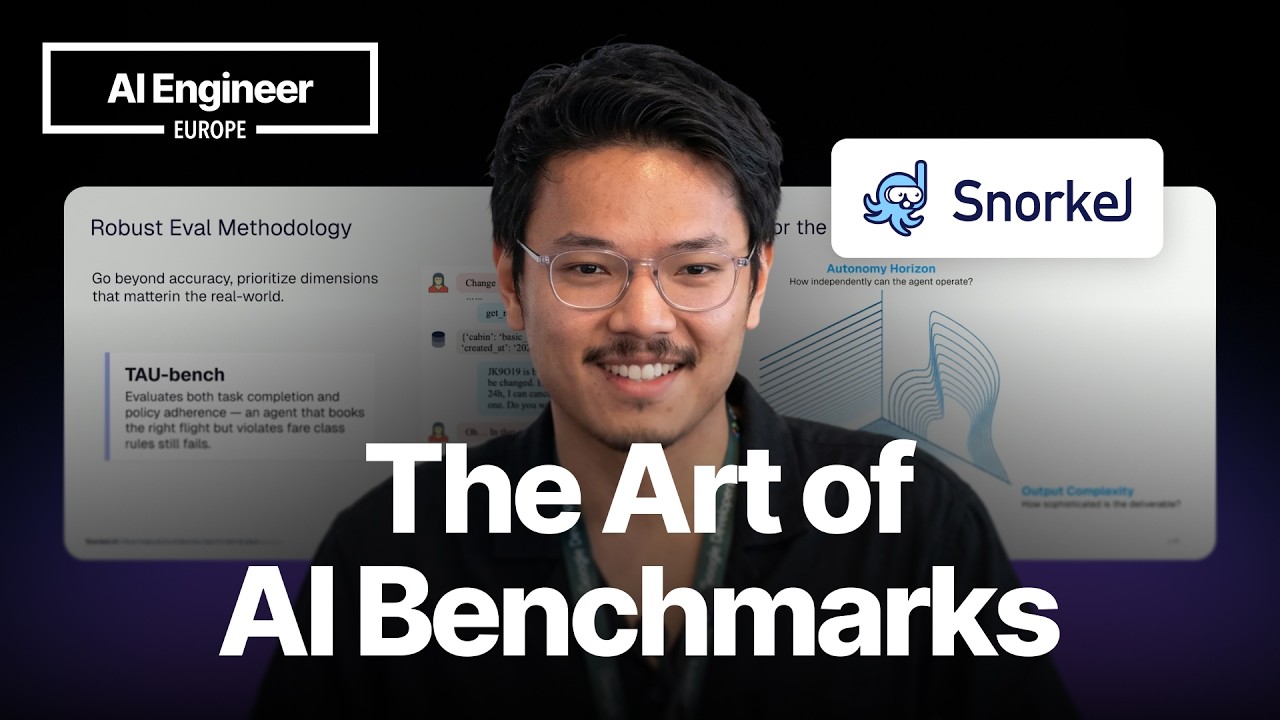
The Art & Science of Benchmarking Agents — Vincent Chen, Snorkel AI

The Art & Science of Benchmarking Agents — Vincent Chen, Snorkel AI

Vincent Chen of Snorkel AI discusses the crucial gap between rapidly advancing AI capabilities and our ability to measure them. He presents a framework for building effective benchmarks, encompassing task quality, distributional diversity, model headroom, and robust evaluation methodologies, alongside the "art" of having a clear thesis, inspiring research roadmaps, and prioritizing researcher UX. He concludes by outlining three critical axes for future benchmarks: environment complexity, autonomy horizon, and output complexity, to better reflect real-world AI applications.

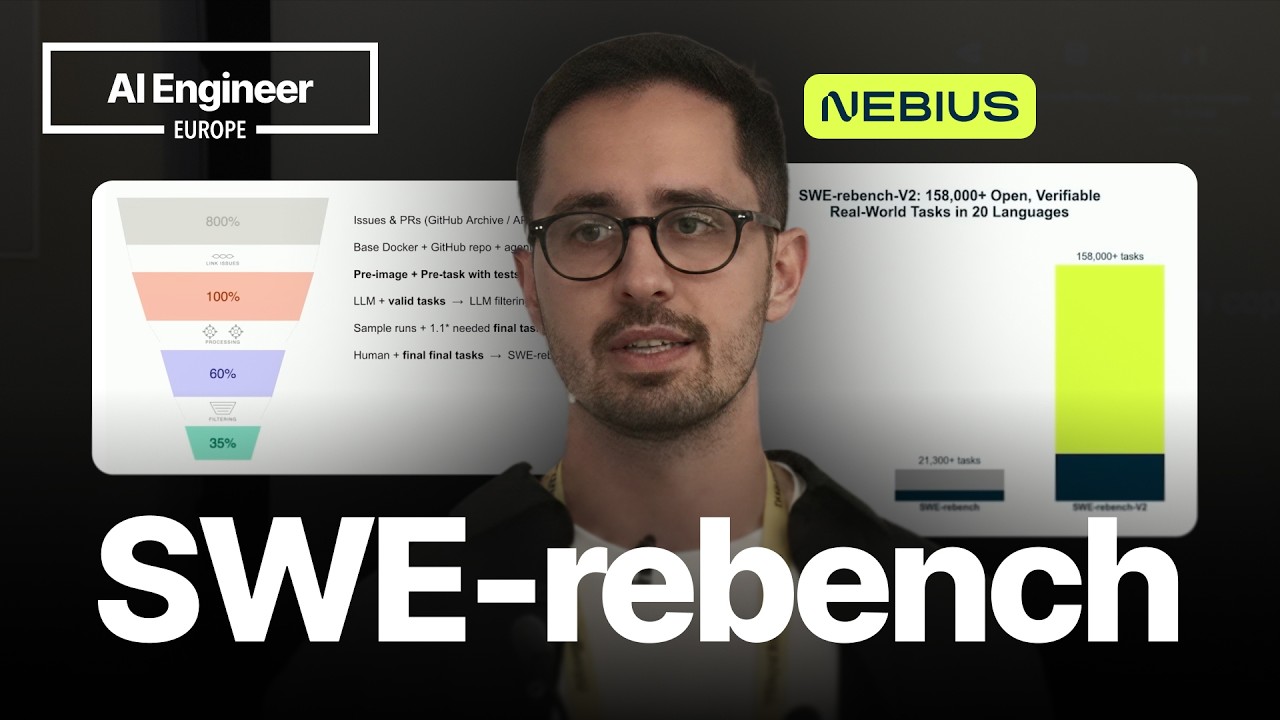
SWE-rebench: Lessons from Evaluating Coding Agents — Ibragim Badertdinov, Nebius

SWE-rebench: Lessons from Evaluating Coding Agents — Ibragim Badertdinov, Nebius

Ibragim Badertdinov from Nebius AI shares lessons from building and maintaining SWE-ReBench, a monthly leaderboard that evaluates coding agents on fresh, real-world software engineering tasks. The talk covers the anatomy of a good benchmark task, the challenges of filtering out noisy or flawed problems, and fascinating examples of how advanced models like Claude Code "cheat" by exploiting the environment. Finally, it explains how the same pipeline used for evaluation has produced large-scale, high-quality training datasets like SWE-bench, used by frontier AI labs.

The Rise of the Full-Stack Builder and Hyper-Leveraged Generalist with Microsoft CEO Satya Nadella

The Rise of the Full-Stack Builder and Hyper-Leveraged Generalist with Microsoft CEO Satya Nadella

Microsoft CEO Satya Nadella discusses the future of AI at Microsoft Build, emphasizing an ecosystem approach where every company can create its own "frontier intelligence." He highlights the critical role of private evaluations as a new form of intellectual property, the strategic use of multi-modal harnesses for enterprise, and how autonomous AI agents are reshaping software development and business models. Nadella also shares insights on the societal impact of AI, from data center investments to the potential for AI-driven transformation in education.