Posts

How to build an AI-Native Health Company — Dan Feng, Maven Clinic

How to build an AI-Native Health Company — Dan Feng, Maven Clinic

Dan Feng outlines Maven Clinic's transformation into an AI-native company, driven by the realization that "building is cheap and arguing is expensive" in the AI era. This shift has reshaped planning to short, iterative sprints, revolutionized software development with AI coding tools, forced adaptive changes in code review processes, and necessitated a nuanced, multi-layered approach to ensuring reliability in generative AI systems.

Healthcare’s Agent Bytecode: X12 as the Harness for AI Agents — Vasant Kearney, Onlay

Healthcare’s Agent Bytecode: X12 as the Harness for AI Agents — Vasant Kearney, Onlay

Vasant Kearney presents a nuanced perspective on implementing AI in healthcare, particularly in insurance. He highlights that while AI is evolving rapidly, real-world application requires understanding that solving isolated problems doesn't equate to complex solutions. His core argument is the utility of X12 as a 'harness' for agentic AI, providing a structured, confining framework for LLMs in healthcare. This approach acknowledges that X12 defines the contract between providers and payers, and even phone calls can be seen as X12 transactions. However, he cautions that X12, or any payer data, isn't ground truth due to disparate system origins, necessitating an internal 'semi-correct' representation. Kearney advocates for a balanced "AI pilled and AI skeptical" stance, embracing AI's potential while remaining cautious about its inherent limitations, cost, and the necessity for robust system design and evaluation.

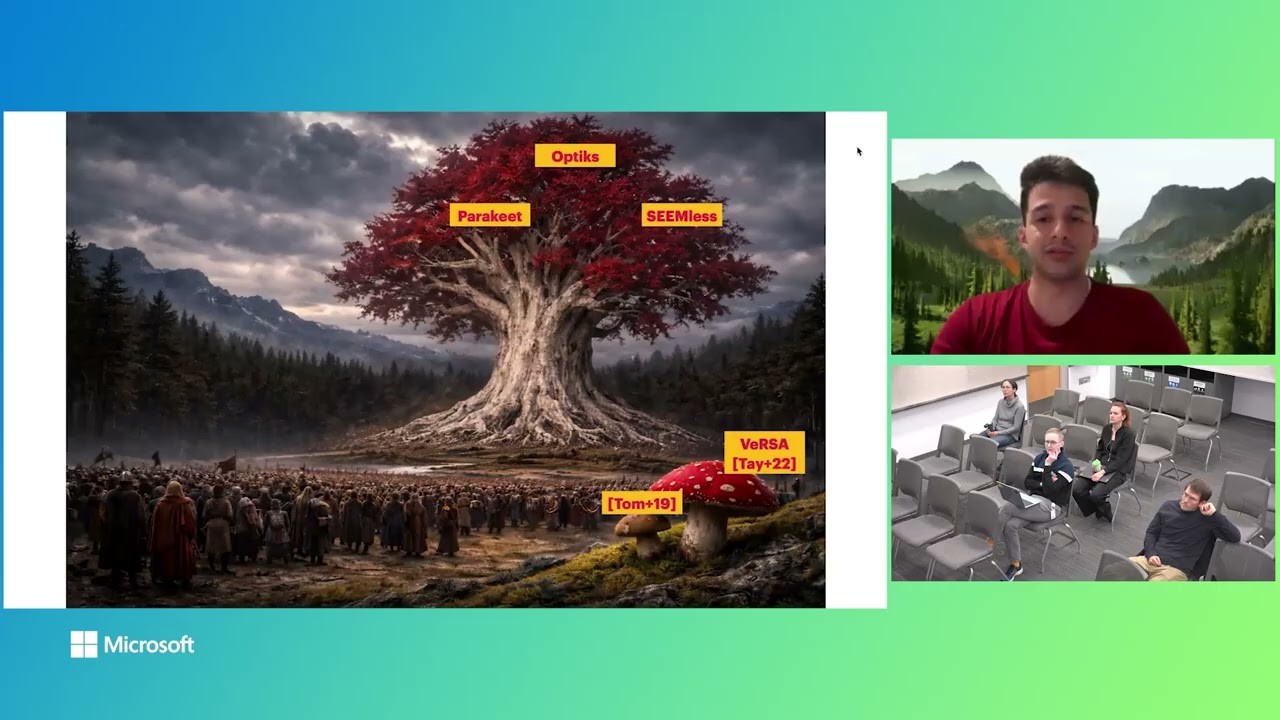
PhylaFlow: Hybrid flow matching in phylogenetic tree space

PhylaFlow: Hybrid flow matching in phylogenetic tree space

PhylaFlow is a hybrid flow-matching framework that navigates Billera–Holmes–Vogtmann (BHV) tree space to accelerate Bayesian phylogenetic inference. By learning geodesic paths from random trees to posterior samples, PhylaFlow efficiently initializes MCMC chains, drastically reducing the "burn-in" time. A PhylaFlow-MCMC variant, which guides MrBayes move acceptance, significantly outperforms traditional methods and even existing machine learning baselines for posterior sampling, achieving better results within the same computational budget. The work also explores conditioning on sequence embeddings, aiming for a future phylogenetics foundation model capable of zero-shot inference.

Stateless, Yet Durable: MCP Tasks v2

Stateless, Yet Durable: MCP Tasks v2

Cornelia Davis explores the evolution of MCP Tasks, detailing the transition from v1 to v2. She highlights how v2's stateless protocol design supports durable, long-running agentic workflows by shifting durability responsibilities to the client and simplifying elicitation. The presentation includes a demo of a purchase order process and discusses future scalability enhancements through a notification-based approach.

MCPs for Observability Stacks

MCPs for Observability Stacks

Diana Todea, Head of Developer Relations at VictoriaMetrics, demonstrates how Model-Controller-Pair (MCP) servers enhance observability stacks for faster, smarter troubleshooting. She highlights the use of AI-driven anomaly detection, natural language querying, and customizable "skills" to investigate production issues, manage metrics, and generate alerts, showcasing practical applications with two interconnected MCP servers.

Modern Enterprise Architecture: Architecting for Outcomes • Simon Rohrer • GOTO 2025

Modern Enterprise Architecture: Architecting for Outcomes • Simon Rohrer • GOTO 2025

Simon Rohrer challenges traditional Enterprise Architecture (EA) principles, proposing a modern approach focused on outcomes, continuous evolution, and socio-technical alignment. He outlines five key tenets: Aligning Value, People & Technology; achieving Better Value Sooner, Safer, Happier; implementing Continuous Conversational & Automated Governance; scaling DevOps across the enterprise; and fostering Evolutionary Enterprise Architecture.