The Moonshot Mindset with Adam Savage and Sergey Brin: The Moonshot Podcast
Astro Teller, Captain of Moonshots at X, and Google co-founder Sergey Brin discuss the philosophy of radical innovation, X's unique culture of embracing failure and pressure testing ideas, and their reflections on past moonshots like Google Glass, Wing, and Waymo. They delve into the exponential nature of AI, its historical context, and the challenges of anticipating its future impact, while also highlighting crucial unsolved "white whale" moonshots for humanity, including education, battery technology, and redefining the intrinsic value of work beyond monetary compensation.
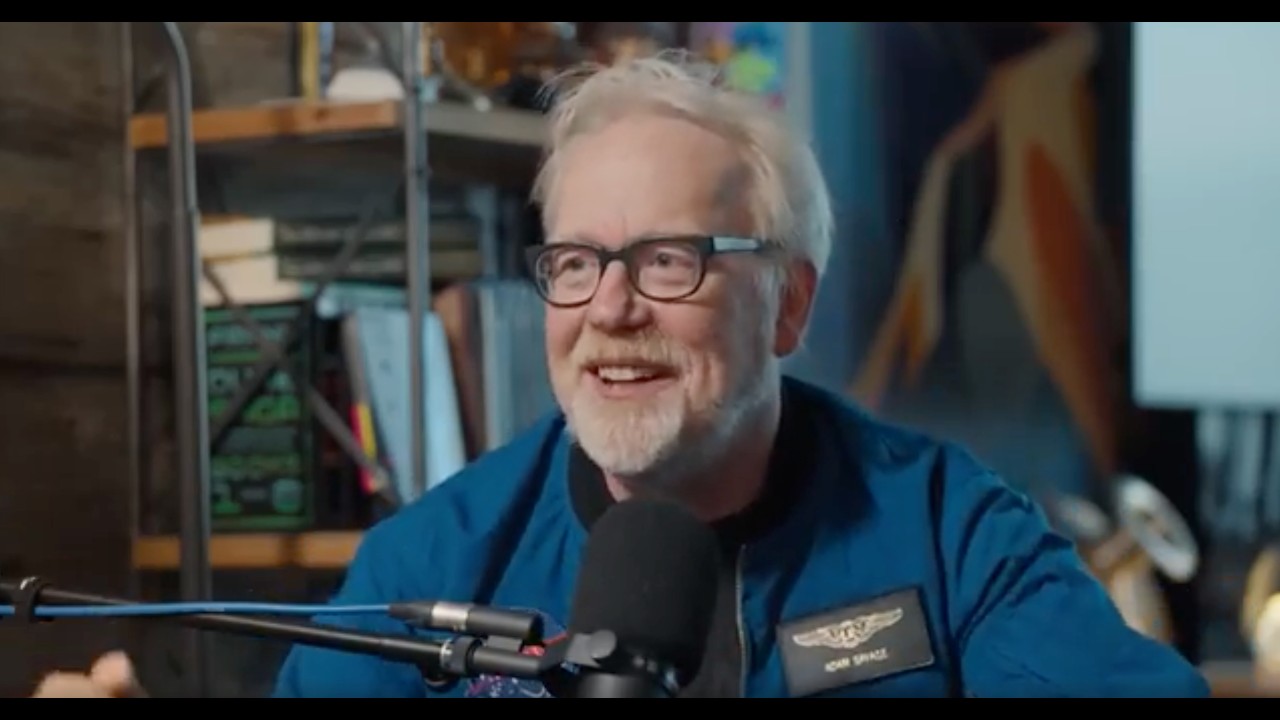
In the final episode of Season 2, Astro Teller, Captain of Moonshots at X, the Moonshot Factory, engages in a deep dive into radical innovation with Adam Savage and Google co-founder Sergey Brin. The episode explores the genesis and philosophy behind X, reflects on past moonshots, and speculates on the future of technology, particularly AI.
The Ethos of Radical Innovation at X
Astro Teller dedicates his life to the “meta moonshot” of systematizing radical innovation. He emphasizes that innovation is a team sport, not the result of individual genius. The core mission of X, envisioned by Google founders Larry Page and Sergey Brin, was to create a division separate from Google’s core business, tasked with finding new problems for Alphabet to solve, rather than addressing existing ones. This approach aimed to counteract the “corporate physics that companies tend to calcify as they get larger.”
Key principles of X’s culture include:
- Embracing Failure and Learning: Astro states, “Radical innovation is mostly about failure and learning. It is not a story of success where some genius just had the right idea.” Employees are encouraged to shift their self-worth from “I made my thing work” to “I’m world-class at discovering which of the hundred things we’re looking at is worth making work.” This philosophy is encapsulated by the term “moonshot compost,” where learnings, patents, code, and even personnel from failed projects are repurposed for new ventures.
- Pressure Testing Ideas: Adam Savage aptly calls X staff “moonshot busters.” Their goal is to vigorously challenge and try to “bust” ideas to identify their fundamental flaws early. This includes techno-economics as a critical early-stage consideration, especially in commoditized fields like energy.
- Focusing on the Riskiest Part First: Illustrated by the “monkey on a pedestal” analogy, X prioritizes tackling the most challenging and uncertain aspects of a project first. “If we build the pedestal, we’re half done. But in that extreme case, we can all see that we’re not half done. We’re 0% done because the entire risk… is piled up on the monkey.”
- “Bad Idea Brainstorms”: To foster creativity, X conducts brainstorms where participants are explicitly asked to generate terrible ideas. This removes the pressure to be brilliant and often leads to unexpected insights, as “it doesn’t take that long before someone’s like, ‘You know, that idea might not be totally bad.’”
- The Beginner’s Mindset: Astro champions the “tarot card of the fool” and the beginner’s mindset, which fosters joy and playfulness – essential ingredients for creativity.
Astro Teller’s Influences and Adam Savage’s Connection
Astro reflects on his upbringing, influenced by his Nobel laureate grandfather and Edward Teller (father of the hydrogen bomb). Growing up in an environment where intelligence was paramount, he learned to value broader skills like leadership and creativity, drawing inspiration from the intense, focused work environment of the Manhattan Project at Los Alamos. Adam Savage, with his MythBusters background, resonates with X’s approach, noting that in both art and science, the “experiment takes precedence over the filming,” and that “moonshot busters” succeed when their attempts to debunk an idea fail.
The Evolution and Future of AI
Astro, holding a PhD in AI from nearly 30 years ago, provides historical context, having experienced an “AI winter.” He highlights X’s pivotal role in the modern AI explosion, with Google Brain (responsible for the Transformer and TPUs) originating there. He cautions against treating AI as a buzzword, equating it to pitching a business by saying “there’s going to be electricity in our business.” Instead, the focus should be on the human benefits and practical applications.
Sergey Brin emphasizes the “complicated treadmill” of AI development, noting that progress will not freeze. He warns against designing solutions based on today’s AI capabilities, as the “thing that the AI model is going to do the next year is going to be that much greater.” Both agree on the challenge of human linear thinking confronting technological exponential growth, especially with AI’s doubling time potentially being as short as three months.
Notable Moonshots and Future Aspirations
Sergey Brin shares his perspective on X’s past projects:
- Google Glass: Though “ahead of its time” and “premature at productizing,” it served as a “phenomenal learning platform.” Sergey remains optimistic about the form factor’s long-term potential.
- Wing (drone delivery): Described as a “slow burn,” Wing has quietly ramped up operations and is becoming routine in areas like Australia and Texas, demonstrating steady, autonomous progress.
- Waymo (self-driving cars): Acknowledged as a massive undertaking, Waymo has “crested this acceptance” and, despite the immense work, has brought the world to believe in self-driving technology.
- Google Brain/DeepMind: Sergey calls this the “most important project” to have emerged, noting its perseverance during a period when neural networks were “anti-popular.”
Looking ahead, Astro identifies several “white whale” moonshots he wishes to tackle:
- Education and Civic Engagement/Democracy: Recognizing these as foundational issues, X continues to seek radical solutions in these spaces.
- Battery Technology: A “10x improvement” in gravimetric, volumetric, or dollar density would enable breakthroughs like electric aircraft, profoundly changing the world.
- Redefining Work: Astro worries that as AI changes how we earn money, humanity risks losing the non-monetary aspects of work: a sense of purpose, community, and mastery. He envisions moonshots that help people self-organize around these core human needs, even if pay is secondary.
Sergey Brin, playfully, suggests Von Neumann machines – self-replicating probes for space exploration – as an intriguing future moonshot, acknowledging the techno-economics challenge.
Both Astro and Sergey conclude with optimism, asserting that despite fears, the world is “awash in problems” and humanity’s creativity ensures that “moonshots are speeding up, not slowing down.” The key is to approach the future with wide-open eyes, not crippled by fear, and to learn to think exponentially.