Moonshot Podcast Deep Dive: Sebastian Thrun on Waymo’s Early Days
Sebastian Thrun, co-founder of Google's Moonshot Factory, recounts the early days of X and the Waymo self-driving car project. He shares insights into the unique management philosophy that fostered radical innovation, the ethical responsibilities of technologists, and his optimistic vision for the future of AI.
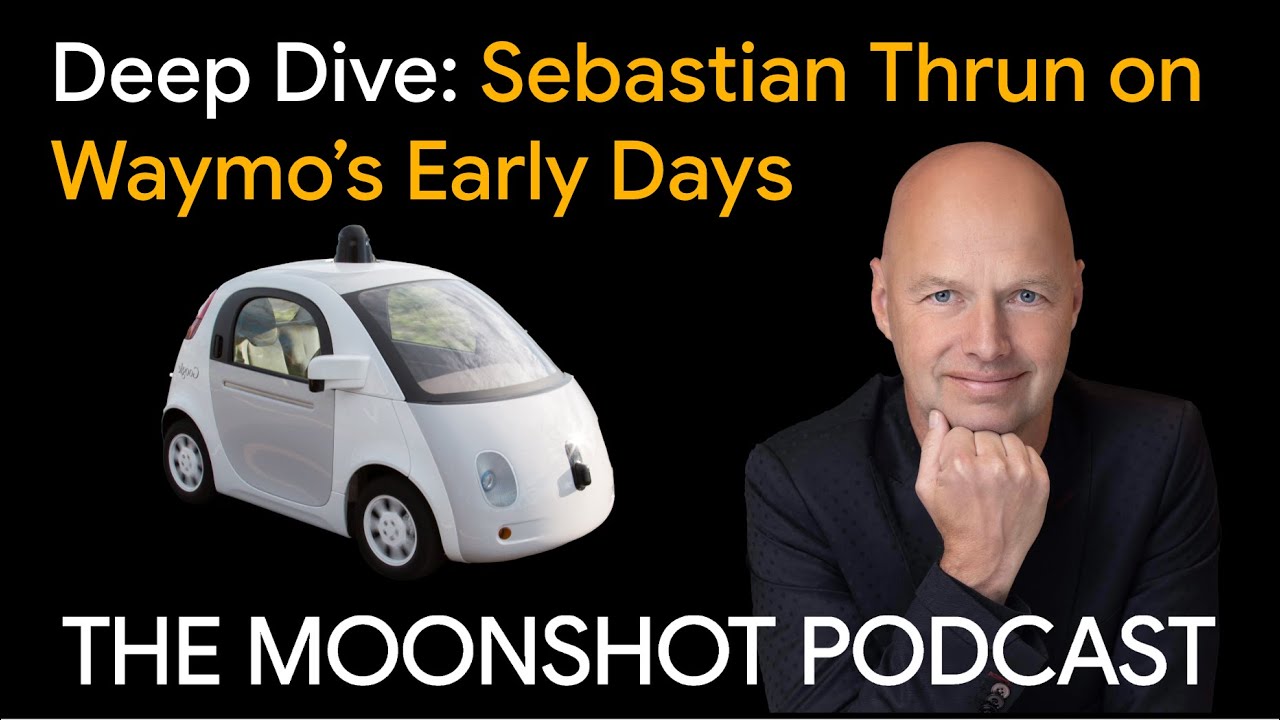
Sebastian Thrun, a key figure in the development of autonomous vehicles and the co-founder of Google X, shares the foundational stories and philosophies that shaped some of today’s most advanced technologies.
The Genesis of the Self-Driving Car
The self-driving car project, initially named Chauffeur and now known as Waymo, was born out of a direct challenge from Google co-founder Larry Page. In 2009, Page proposed building a car that could navigate anywhere in California. At the time, even Thrun, a winner of the DARPA Grand Challenge, was skeptical, calling the idea “insanely hard” and likening driving down Lombard Street to “homicide.” The state-of-the-art in 2005 involved robots struggling to drive 10-20 miles in an empty desert.
Larry Page’s insistence, however, was pivotal. He framed the problem with a safety-first approach: “Maybe in the beginning it’s not quite safe yet. You can have a safety driver, but as you progress, you can make it safer and safer.” This perspective, combined with the sheer technical challenge, ultimately convinced Thrun.
The project was also deeply motivated by a desire to improve safety on the roads. Thrun recounts a pivotal moment in his life at age 18 when his friend Harold died in a traffic accident. This personal tragedy fueled his passion for leveraging technology to prevent the 1.2 million traffic fatalities that occur globally each year, a staggering number that often goes unremarked.
The team observed an exponential rate of progress, far exceeding Moore’s Law. Every 1.5 years, the distance the cars could drive without critical human intervention increased by a factor of 10. This exponential growth curve allowed them to project a future where the vehicles would be safer than human drivers, a reality that has now come to pass.
Forging the Moonshot Factory: The Culture of X
When Larry and Sergey asked Thrun to build more “crazy businesses at the edge of technology,” the concept for Google X (now X) was born. The operational and cultural model was heavily inspired by Lockheed Martin’s Skunk Works, emphasizing small, focused teams working without the typical distractions of corporate bureaucracy.
The core principles of X’s early culture included:
- Extreme Focus Through Milestones: Instead of vague goals, teams operated with clear, non-negotiable milestones that were negotiated with immense thought. For the self-driving car team, this was the “Larry 1000”: driving 1,000 miles on the most challenging roads in California, personally selected by Larry Page and Sergey Brin, entirely hands-off. This milestone acted as a contractual document, providing absolute clarity and eliminating internal arguments about direction.
- Eliminating Bureaucracy: The early days of X featured a moratorium on PowerPoint presentations and reporting. Thrun’s philosophy was that management chains often complicate and bloat pristine engineering goals. His advice to his reports, including Astro Teller, was simple: “Ignore your manager.” The role of a manager was not to oversee but to “remove roadblocks” and empower their people.
- A “No Publication” Rule: To ensure long-term commitment to building products, X adopted a strict anti-publication stance. Thrun, an academic with hundreds of papers to his name, stopped publishing entirely. The team was faced with a choice:
You can have a thousand people reference your paper or a billion people use your product and you can only pick one. Which one is it going to be? This philosophy weeded out those focused on personal academic branding and fostered a culture dedicated to tangible, real-world impact.
- Celebrating Failure: From the beginning, there was an understanding that not all projects would succeed. Projects like Loon and the initial version of Google Glass were considered great technological achievements, even if they didn’t become viable businesses. The culture encouraged taking these big swings and had the discipline to gracefully conclude projects that didn’t work out.
The Future of AI and the Ethics of Innovation
Thrun holds a deeply optimistic view of technological progress, stating that “probably less than 1% of interesting things have been invented yet.” He believes that the primary barrier to solving major problems is not a lack of technology, but that “we don’t try hard enough.”
On the subject of artificial intelligence, particularly large language models, he sees it as a powerful democratizing force. AI gives the skillset of a small number of experts—doctors, lawyers, financial analysts—to a much broader population. Rather than seeing AI as a job eliminator, he compares its impact to the agricultural revolution. While farming jobs disappeared as technology allowed one farmer to feed 400 people instead of four, it created a plethora of new, more diverse jobs. AI will similarly eliminate inefficiencies, creating more value and opportunity.
Regarding the ethics of technology, Thrun’s perspective is pragmatic:
Everything that can be made will be made. Whether you say it should or should not be made is immaterial because it will be made. Our job is not to stop making things. Our job is to prevent the misuse of things that we make.
He argues that technology has been an overwhelmingly positive force for humanity, and the responsibility to guide it is a societal one, requiring collaboration between technologists, politicians, and the public.