From Restoring Sight to Reimagining the Brain, with Max Hodak
Max Hodak, co-founder and CEO of Science.xyz, discusses their revolutionary PRIMA retinal implant, restoring functional vision to the blind. He elaborates on treating the brain as a computational system, unlocking new medical approaches, and explores the broader potential of neural devices—from restoring capabilities to expanding human potential, touching on identity, consciousness, and AI-brain parallels. Science's long-term vision aims to reduce human fragility by repairing, replacing, and upgrading ourselves.
Science.xyz: A Mission to Redefine Medicine Through the Brain
Max Hodak, CEO of Science.xyz (formerly of Neuralink), positions his company as a medical device firm driven by a fundamental understanding of the universe to improve the human condition. The core philosophy centers on leveraging insights into brain function to achieve significant therapeutic effect sizes, often elusive in conventional medicine.
The PRIMA Retinal Prosthesis: Restoring Functional Vision
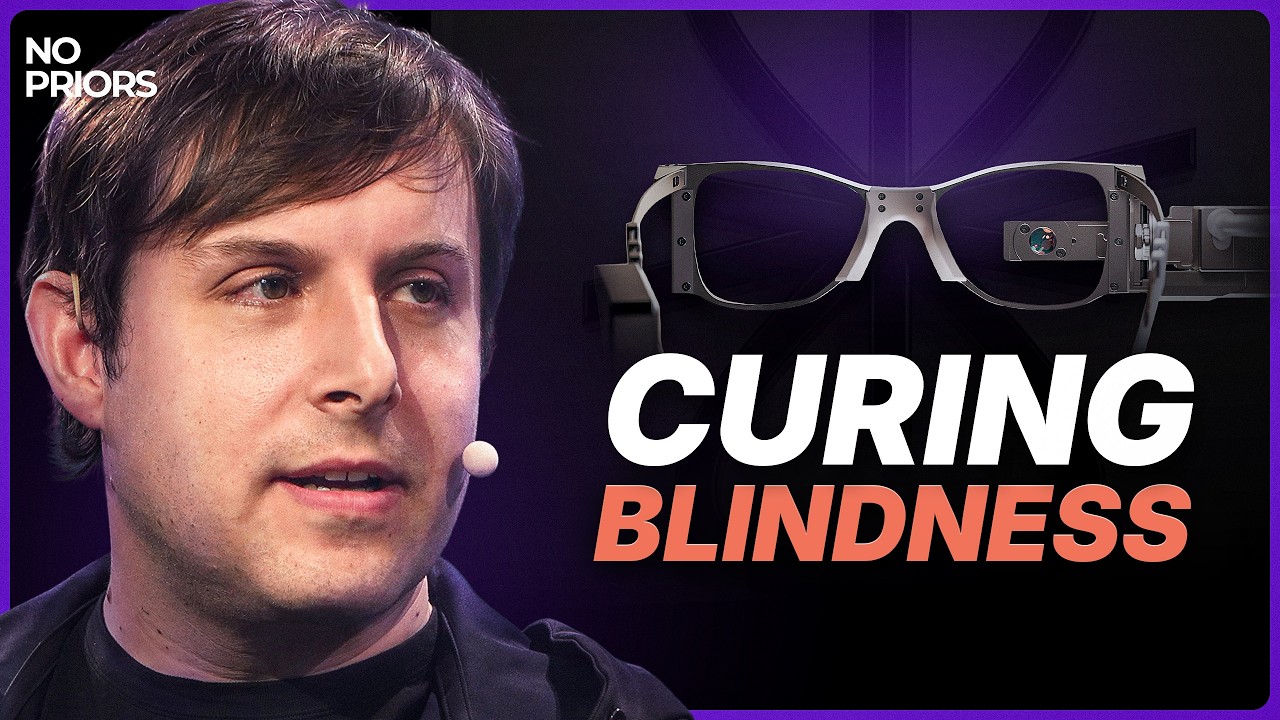
Science’s flagship product, the PRIMA retinal prosthesis, functions akin to a cochlear implant for the eye.
- Mechanism: A tiny chip implanted under the retina bypasses damaged light-sensitive cells (rods and cones). Patients wear glasses with a laser projector that beams an image onto the implant, stimulating the retina directly to send visual signals to the brain.
- Target Conditions: Primarily for blindness caused by macular degeneration, with ongoing studies for retinitis pigmentosa and Stargardt’s disease.
- Development Path: Science acquired Pixium, a French company with state-of-the-art retinal stimulation technology, which originated from Stanford research.
- Regulatory Milestone: Recently received CE mark marketing approval in Europe, allowing commercial sales to commence, marking a significant step from “moonshot” to viable business.
- Clinical Efficacy: Early clinical trials demonstrated unprecedented success, with patients able to perform tasks like Sudoku puzzles and reading. While current capabilities offer a small, black-and-white field of view (“looking through a straw”), there’s a clear engineering roadmap to enhance depth of grayscale and introduce red/green color perception.
The Brain as a Computer: A Core Philosophy and its Implications
Hodak asserts a literal interpretation of the brain as a computer, a view he acknowledges as controversial but fundamental to Science’s approach.
- Computational View: The brain is seen as a system that solves computational problems by arranging matter, akin to how the universe itself can be viewed as a computer. This perspective contrasts with traditional biological drug discovery, which often involves complex, difficult-to-predict molecular interactions.
- Effectiveness of Neural Interfaces: Treating the brain computationally allows for highly effective interventions, exemplified by cochlear implants, deep brain stimulators, and motor cortex implants enabling quadriplegic patients to play video games within an hour. This direct computational interaction often yields more immediate and predictable results than decades-long drug discovery efforts.
- Cultural Divide: Science operates more like a tech company than a conventional biotech firm, attracting tech investors due to its device-centric view of biological problems.
The Broader Landscape of Brain-Computer Interfaces (BCI)
Hodak views BCI as a broad category, akin to “pharma,” with diverse applications and hypotheses.
- Spectrum of BCI: From “silent speech” devices (often hand substitutes with ambiguous intent) to profound interventions.
- Science’s Focus: The company prioritizes restoring or expanding fundamental human capabilities: vision, hearing, balance, and high-bandwidth motor control (kilobits per second), aiming for “halfway to the Matrix” rather than peripheral enhancements.
- Defining the Boundary: A key research area involves understanding the transition point where a device moves from merely communicating with the brain to fundamentally redrawing the brain’s internal boundaries and capabilities, similar to how brain hemispheres integrate.
Exploring Consciousness and the Nature of Identity
A central philosophical inquiry for Hodak revolves around “what is you,” particularly in the context of advanced neural interfaces and substrate independence.
- Continuity of Experience: He emphasizes the importance of phenomenal continuity for identity, suggesting that while identity can drift over time, an abrupt discontinuity (e.g., a perfect software replica without continuous experience) is less satisfying than even dramatic morphing with continuity.
- Operators of Existence: Drawing parallels to physics, Hodak discusses “creation” and “annihilation” operators for life/mind/soul, along with transformations while intact, as crucial for understanding identity.
- Consciousness Research: Science aims to understand how the brain constructs parallel sensory experiences (vision, hearing, smell) and integrates them into a unified, exclusive conscious moment (“my vision and your hearing” never mix).
- Role of Connectomics: Achieving substrate independence and a deeper understanding of brain architecture requires significant progress in connectomics, with mouse connectomes potentially paving the way for human understanding.
Parallels Between AI Models and Biological Brains
Hodak highlights the “Platonic representation hypothesis,” positing deep structural similarities between AI models and biological brains.
- Empirical Evidence: Internal representations within large AI models exhibit mathematical objects and geometry strikingly similar to those found in neuroscience when representing concepts. Science practically leverages this, achieving alignments between animal brain neural recordings and AI model internal representations.
- Implications for Intelligence: This suggests AI models are grasping true underlying data manifolds, hinting at a fundamental aspect of the universe where sufficient computation applied to matter yields intelligence.
- Fertile Ground for Neuroscience: Paradoxically, Hodak suggests working on AI might be one of the most fertile ways to study neuroscience today, as models offer an easier experimental platform.
Science’s Long-Term Vision: Reducing Human Fragility
Science’s ambition extends beyond treating specific ailments to fundamentally altering the human condition.
- Commercialization Path: Restoring vision is a substantial business, with precedents for high reimbursement ($150,000 for older retinal prostheses, nearly $500,000 per eye for limited gene therapy). The current PRIMA targets hundreds of thousands of patients, with next-generation versions potentially reaching millions.
- Beyond Support Organs: Hodak views organs like the heart, pancreas, and liver as “support characters” for the brain, which is the central object. Future medicine could bypass complex biology by using advanced human-engineered toolboxes to achieve similar goals, preventing “being murdered by your pancreas.”
- Ultimate Goals:
- Reduce Fragility: Mitigate the inherent jeopardy of the human condition, making humans less fragile by enabling the upgrade and replacement of body parts.
- Combat Major Diseases: Address leading causes of death like cardiovascular disease and cancer metastasizing to the brain.
- Space Adaptation: Facilitate human adaptation for space exploration by re-engineering bodies for non-Earth environments, converging with the goal of self-preservation and adaptation (substrate independence).
Distinguishing Approaches: Why Not a “Brain Keyboard”?
Hodak explicitly differentiates Science’s focus from common BCI pursuits like high-bandwidth communication with AI models.
- Cognitive Bottleneck: He argues that “talking or writing is thinking,” implying that a pre-formed thought waiting to be extracted faster via BCI might be a misconception. The brain has a deeply evolved cognitive bottleneck of about 10 bits per second for conscious processing.
- Product Differentiation: While a “brain keyboard” or monologue-based AI interaction might be valuable (e.g., via EEG/MEG), Science prioritizes more fundamental interventions: generating vision, hearing, or achieving substrate independence. These represent vastly different company types and product goals.