Goldman Sachs Chairman on AI and the Future of Finance | The a16z Show
Lloyd Blankfein, former CEO of Goldman Sachs, shares insights on leadership in crisis, the philosophy of risk management, and the evolution of institutional culture. He discusses navigating the 2008 financial crisis, the transition from a partnership to a public company, and the profound impact of technology and AI on finance and risk.
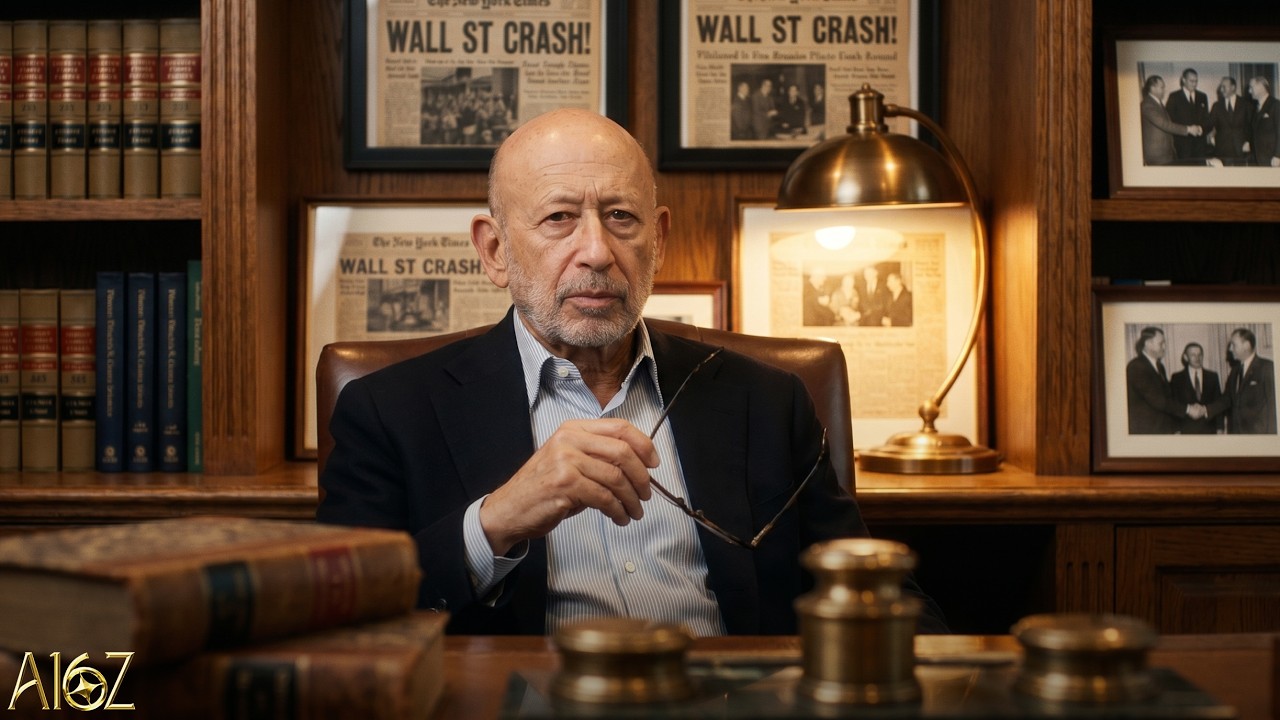
On Leadership and Crisis Management
In moments of crisis, the most critical leadership function is to enable people to do their jobs without being paralyzed by chaos. Lloyd Blankfein notes that during high-pressure situations, his perception of time slows down, allowing him to become more sensitive to the people around him and guide them back to their responsibilities.
He cautions that you cannot predict who will perform well under pressure. Experience is the only reliable indicator. > “I think a good place to go is find people who’ve already gone through a crisis… when somebody’s gone through a crisis, I think that’s your best bet.”
This experience taught him the value of socializing difficult decisions. Rather than issuing top-down directives, he would gather input to enlist support and honor the “ownership” culture of the firm. This process might slow down decision-making, but it builds a more stable, committed organization where people feel a sense of collective ownership and purpose.
The Philosophy of Risk Management
Investing involves a fundamental duality: the drive to take risks to generate returns and the discipline to manage those risks to protect the enterprise. Blankfein emphasizes that risk management is not primarily about predicting the future.
> “Most of what we do with respect to risk is not so much predicting, it’s a lot of contingency planning.”
The key exercise is to ask, “What will you do if X happens?” regardless of its perceived probability. This constant planning makes an organization more alert and quicker to react, creating the illusion of foresight because they “hear the gun go off before anybody else.”
A crucial distinction for any manager is separating when someone is wrong versus when they are stupid. Smart people are often wrong, and it’s a mistake to judge past decisions with the clarity of hindsight. One must appreciate the “fog” of the present in which decisions are actually made.
A rigorous “mark-to-market” culture serves as an essential risk management tool. It’s an early warning system. During the lead-up to the 2008 crisis, when AAA-rated assets had no buyers at their marked price, it was a clear signal that the market’s assessment—not the rating—was the reality. This forced the firm to confront losses as they occurred, rather than letting them accumulate.
The Evolution of Goldman Sachs’ Culture
Blankfein’s career spanned the firm’s transformation from a private partnership to a public company. He worked to preserve the core tenets of the partnership culture, which he sees as a key competitive advantage.
- Partnership Mentality: In a partnership, the partners’ personal capital and homes are at risk. This unlimited liability fosters an intense focus on risk management and a sense of responsibility for the entire firm, not just one’s own silo. Partners expect transparency, influence, and a say in major decisions.
- Firm Over Fund: After going public, this ethos was maintained by tying compensation primarily to the performance of the entire firm. This encourages collaboration and incentivizes partners to make short-term sacrifices for the long-term health of the platform. The goal is to build an enduring institution, not just to optimize returns for a single fund cycle.
- Building an Institution: An institution is built to outlast its founders. This requires a long-term perspective, where reputation and relationships are paramount. Honoring commitments, even during a crisis, is essential because the firm must be in business on the other side. This long-term greedy approach is what defines an institution.
Technology, Finance, and the Rise of AI
Technology has always been a “winner-take-all” force in finance, where milliseconds in execution can determine success or failure. For a regulated entity like Goldman Sachs, adopting new technology is a delicate balance. New systems must be run in parallel with trusted, existing ones until they are proven to be flawless. This means that initially, technology increases costs before it delivers efficiency gains. Early investments in flexible, modular risk systems like SecDB provided a significant and lasting advantage.
On the subject of AI, Blankfein offers a pragmatic view:
- Uncertain but Inevitable: While the ultimate impact of AI is unknown, its development is unstoppable. He notes with interest that the largest bets are being made by founding shareholders of major tech companies, who are risking their own capital and reputation, signaling a deep conviction in its potential.
- The Risk of Leverage and Lost Intuition: The primary danger of AI in finance is not a sentient takeover but the immense leverage it provides. A single software error can trigger tens of thousands of transactions and cause billions in losses instantly. Furthermore, as automated systems become more complex and opaque, we lose the human intuition that can sense when something is wrong. > “Before this technological age… could you have had a mistake that could cost billions of dollars? Um, not really. But now you can… The leverage in these things is themselves a problem… because we don’t have the ability to test whether it’s right or not.”
- Navigating the Future: The focus should not be on stopping AI, as you cannot force people to “unlearn” what is known. Instead, society must focus on managing the risks and adapting to the changes, just as it adapted to previous technological revolutions like electrification and the internet.
Career and Leadership Wisdom
For young professionals starting their careers, Blankfein advises against premature specialization. > “Your early life is for becoming a complete person. A range of activities for your own sake to make you appreciative of things… your life will be better and your commercial life will be better if you are more and your resilience will be higher.”
Learning history and humanities provides context and resilience, reminding us that previous generations have navigated periods of intense polarization and crisis.
For new managers, he offers a simple but powerful piece of advice: understand that your reports go home every night and talk about you. The question to ask is, “What do you want them saying about you?” The goal isn’t to be liked, but to be appreciated as a leader who makes their team better, worries about their well-being, and leads them effectively.