Inside Garry Tan's Claude Code Setup
Garry Tan, President & CEO of Y Combinator, introduces GStack, an open-source toolkit that structures Claude into a complete AI engineering team. He demonstrates how GStack's skills—like 'Office Hours' for idea validation, 'Design Shotgun' for UI mockups, and browser-based QA—streamline the development process from concept to code.
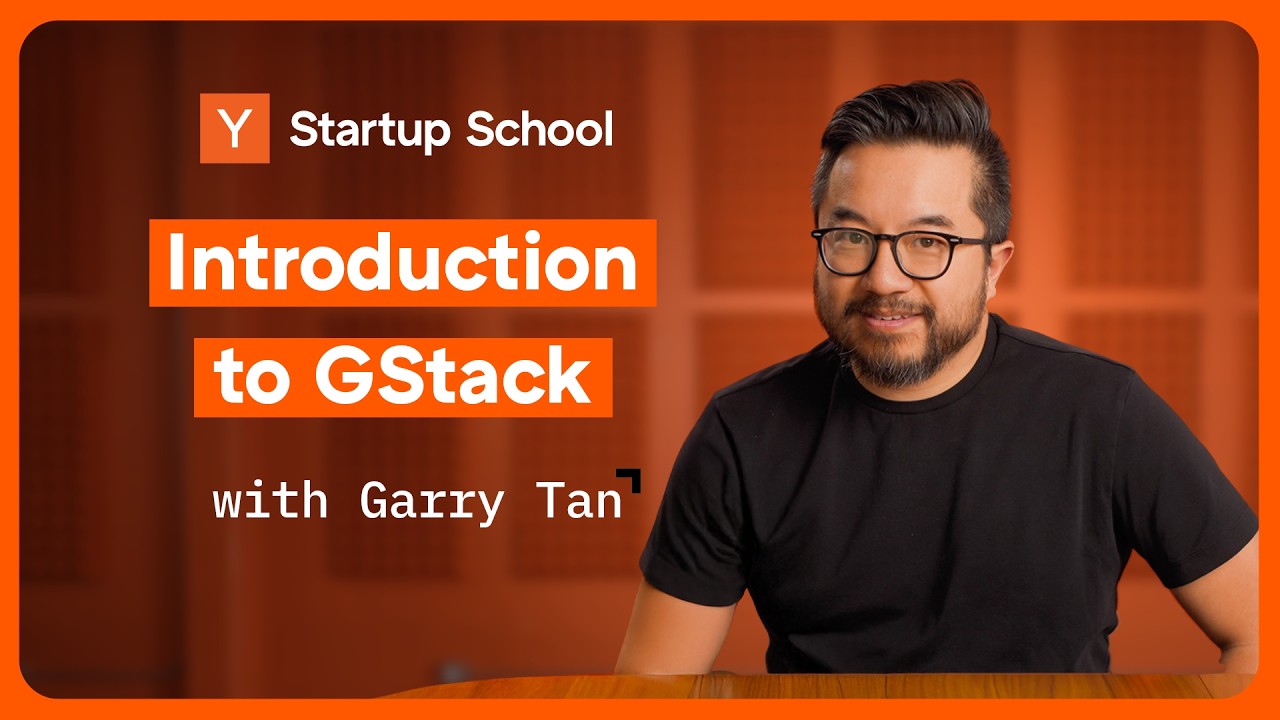
Garry Tan, President and CEO of Y Combinator, posits that we have entered a new era of software development: the “agent era.” To effectively leverage AI agents for real work, they must be organized like a human team—with distinct roles, processes, and review stages. GStack is his open-source implementation of this philosophy, a toolkit that transforms Claude into a specialized AI engineering team.
The GStack Philosophy: Thin Harness, Fat Skills
The core problem with out-of-the-box models is their tendency to “wander” and guess, leading to plausible-looking code that is subtly broken. The bottleneck isn’t the model’s intelligence but the lack of structure. GStack provides this structure through a “thin harness, fat skills” approach. It’s a lightweight framework that orchestrates a collection of powerful, specialized “skills” that emulate an engineering team’s functions.
The Core Skill: Office Hours
The process begins with the Office Hours skill, which is modeled directly after the rigorous, pressure-testing sessions YC partners hold with startup founders. Before writing any code, this skill challenges the core premise of an idea through a series of forcing questions.
Live Demo: A 1099 Tax Assistant
To demonstrate, Garry proposes a simple idea: an app to find and aggregate 1099 tax forms from a user’s Gmail and bank portals. The Office Hours agent immediately begins a conversational, adversarial process:
- Probing Questions: It starts with the most critical question: “What’s the strongest evidence that you have that someone actually wants this?”
- Challenging Assumptions: It points out existing solutions like TurboTax and Plaid, forcing a deeper consideration of the unique value proposition.
- Evolving the Business Model: Through this dialogue, the initial idea of a simple document aggregator evolves. The agent identifies a “classic wedge strategy”: the initial hook is finding the 1099s, but the real business is a lead-generation marketplace for tax preparers. This reframes the project from a simple utility to a potentially valuable business.
- Technical Approach Refinement: The conversation also refines the technical implementation. Instead of relying on complex and sensitive solutions like Plaid or storing credentials, the agent proposes using browser automation. The user would log into their accounts in a visible browser, and the AI would take over to navigate, find, and download the necessary documents—a more secure and transparent approach.
This process transforms a half-baked idea into a well-considered plan, sometimes even revealing that an idea isn’t worth pursuing, saving valuable time.
From Plan to Mockup: Adversarial Review and Design
Once a direction is set, GStack moves to formalize the plan.
- Adversarial Review: The system performs a multi-step adversarial review of the proposed plan, identifying weaknesses. In the demo, it found 16 issues, such as a lack of failure handling and privacy considerations, and automatically fixed most of them, improving the plan’s score from a 6/10 to an 8/10.
- Design Shotgun: After the plan is approved, the
Design Shotgunskill helps with visual brainstorming. It generates multiple, distinct UI/UX mockups for a chosen view (e.g., the main dashboard). For the tax app, it produced three concepts: a dense “Command Center,” a “Friendly Progress” view with cards, and a “Split View.” The user can then select the most promising direction to lock in the design.
The Complete GStack Workflow and Automated QA
GStack provides a suite of skills to cover the entire development sprint.
- Planning and Review: Skills like
Auto PlanandCEO Reviewstreamline the planning phase, whileReviewprovides a staff-level code review to catch bugs after the code is written. - Automating QA with Browser Automation: A significant bottleneck in an agent-driven workflow is manual QA. To solve this, GStack includes a powerful browser automation tool built on Playwright and Chromium. This was developed after finding previous solutions to be slow and inefficient. The GStack tools (
SLQAandSL browse) allow the AI agent to:- Operate a real browser (headed or headless).
- Take screenshots and download media.
- Perform complex interactions like clicking, filling forms, and running regression tests.
- Assess and debug real browser issues, including JavaScript and CSS bugs.
A New Way of Working
Garry Tan describes his personal workflow as running 10-15 parallel GStack sessions at once across multiple projects. Instead of a to-do list, he maintains a “work tree” in the Conductor UI, where each new idea, bug report, or feature request becomes a work item. This allows him to manage a massive volume of work, including reviewing hundreds of PRs for his open-source projects and landing up to 50 PRs in a single day. He particularly emphasizes using GStack to securely vet open-source contributions against supply chain attacks.
The barrier to building software has collapsed. GStack demonstrates a future where developers can leverage AI agent teams to move from idea to production at an unprecedented speed.