4 Ways AI Agents Should Behave for Smarter Systems
Grant Miller challenges the "Hollywood view" of AI super agents, proposing a shift towards collaborative, specialized agentic systems. He introduces a framework for categorizing agents based on their risk and capability, detailing how to design safer, more effective AI applications by minimizing access, implementing dynamic controls, and incorporating a human-in-the-loop for high-risk tasks.
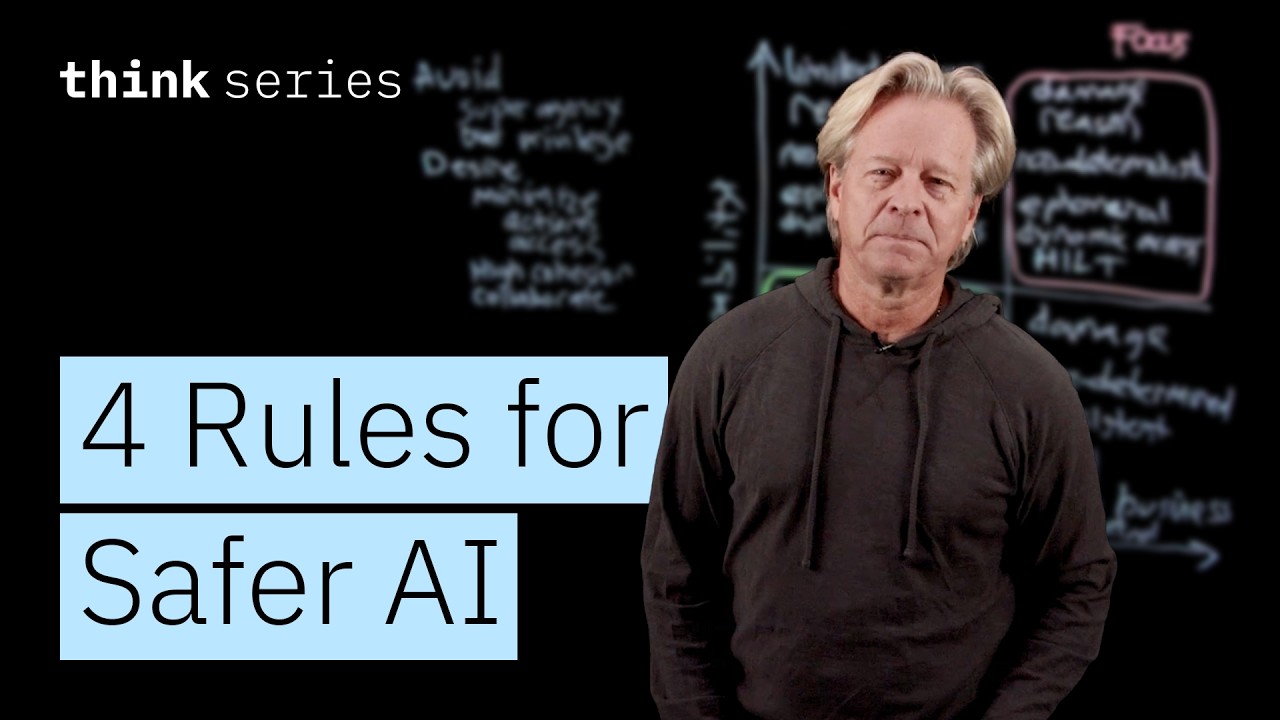
The common perception of AI agents, often shaped by Hollywood, is that of “super agents”—monolithic entities capable of interacting with any system and performing any task. This view is not only unrealistic but also dangerous, as it overlooks the inherent risks of creating overly powerful and unrestricted AI. A more effective and safer approach is to design systems composed of multiple, specialized agents that collaborate to achieve a larger goal.
Core Principles for Designing Agentic Systems
To build robust and safe agentic systems, we must shift our thinking from creating a single, all-powerful agent to orchestrating a team of specialists. This involves adhering to two key principles: what to avoid and what to desire.
1. What to Avoid:
- Super Agency: An agent should not have the freedom to go “off-script” and perform any action it wants. Its scope must be clearly defined and constrained.
- Over-Privilege: An agent’s permissions must be strictly limited to what is necessary for its designated task. Granting broad privileges like read, write, and delete access without context is a significant risk.
2. What to Desire:
- Minimized Actions and Access: The goal is to achieve high cohesion, where an agent’s function, the action it performs, and the access it requires are tightly coupled. Each agent should have a minimal, well-defined set of actions and the least-privilege access needed to perform them.
- Collaboration: Instead of a single agent handling a complex process, the system should rely on a set of agents working in concert. The focus should be on orchestrating the flow of tasks between these specialized agents.
A Framework for Categorizing Agents
Not all agents are created equal, and a one-size-fits-all approach to design is inadequate. Agents should be categorized on a spectrum of risk and capability. This can be visualized as a two-by-two matrix:
- Low Capability / Low Risk: These agents perform simple, predetermined tasks with non-sensitive data.
- Example: A simple RAG model that queries an internal company wiki.
- High Capability / Low Risk: These agents can perform more complex, non-deterministic actions but operate on non-sensitive data.
- Example: An internal style guide editor that can read and rewrite content to match a specific tone.
- Low Capability / High Risk: These agents perform a single, specific task but interact with sensitive systems or data.
- Example: A finance data extractor with read-only access to financial records for summarization.
- High Capability / High Risk: These agents have significant reasoning ability and interact with critical, high-stakes systems.
- Example: An accounts payable agent that can identify an invoice, determine the payment amount, and initiate a financial transaction.
Designing Agent Behaviors Based on Risk
The quadrant an agent falls into dictates its design, behavior, and the controls placed upon it.
| Characteristic | Low Capability / Low Risk | High Capability / High Risk |
|---|---|---|
| Potential Damage | Limited | High |
| Reasoning | Predetermined Actions | Non-Deterministic Reasoning |
| Persistence | Persistent: Can be long-lived. | Ephemeral: Should be created for a task and destroyed upon completion to limit exposure. |
| Access Control | Static Access: Can use traditional non-human identities like persistent API keys or credentials. | Dynamic Access: Access rights should be granted contextually and just-in-time, based on the specific path and actions the agent needs to take for a given task. |
| Safety Controls | Standard business and IT controls. | Human-in-the-Loop: For critical actions, like issuing a payment, a human must provide final approval before the agent can proceed. |
By breaking down tasks, creating specialized agents, and applying controls based on their specific risk and capability profile, we can build powerful and sophisticated agentic systems that are both effective and safe.