AI skills security, Open AI Deployment Company & zero days
This discussion explores IBM Research's MELLEA, a skills compiler designed to secure AI agents by transforming natural language skills into verifiable Python programs. It also analyzes OpenAI's new consulting venture, the "Deployment Company", and debates the future of AI in consulting. Finally, it delves into the escalating AI-driven cybersecurity arms race, highlighted by Google's discovery of an AI-found zero-day, and wraps with insights from the Red Hat Summit on enterprise AI transformation being a cultural challenge before a technological one.
MELLEA: Bringing Order to AI Agent Skills
The current ecosystem for AI agent skills, particularly within marketplaces like OpenClaw, is fraught with security risks, unreliability, and “weirdness.” To address this, IBM Research has introduced MELLEA, a skills compiler developed under the paradigm of “generative computing.” This approach integrates generative AI as a component within the robust framework of traditional computer science.
The core idea of MELLEA is to take a natural language skill file (e.g., a .md file) and compile it into a structured, hardened, and more efficient Python program. This process, dubbed “Mellia-ing,” allows for a hybrid approach:
- Deterministic Code: The compiled program uses regular code for control flow and other deterministic tasks.
- Generative Slots: It only calls on LLMs in specific “slots” where they excel, such as dealing with context or composing elements.
This methodology treats natural language as a high-level authoring medium, which is then compiled into a more solid program suitable for enterprise deployment. The compiler also injects “guardian hooks” into the code to safeguard the skill during execution. This structured approach helps protect against prompt injection and instruction hacking by creating a verifiable, trusted asset. The ultimate goal is to apply proven computer science principles—like compilers and operating systems—to the generative AI landscape to manage the “claw havoc.”
OpenAI’s Pivot to Enterprise Consulting
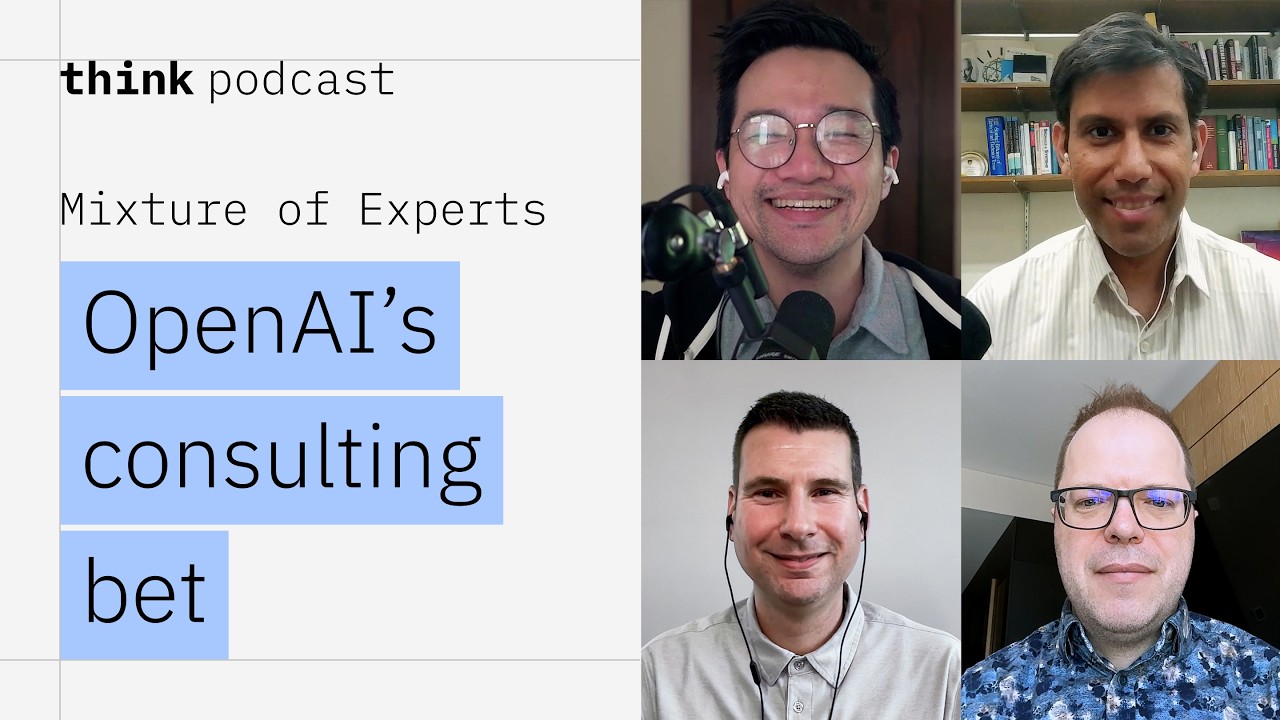
OpenAI has launched the “Deployment Company,” a consulting and services venture aimed at helping large enterprises integrate AI. This move is significant because it suggests that even a leading AGI-focused lab recognizes that the primary business opportunity may not be the models themselves—which are becoming commoditized—but the complex integration and change management required to deploy them effectively.
This strategy raises several key questions:
- Vendor Neutrality: An enterprise consultancy typically needs to be model-agnostic, meeting clients with solutions that fit their existing, diverse tech stacks (e.g., AWS, Azure, various foundation models). OpenAI’s inherent bias towards its own models presents a potential conflict. Their partnerships with firms like McKinsey and Capgemini may be a way to navigate this and approach the broader ecosystem.
- The Future of Consulting: This development challenges the notion that AI will simply replace consultants. Instead, it points to a future where consulting itself is transformed. The field is likely to see a merger of software and human expertise, with consultants augmented by “virtual workers”—AI agents with verifiable, domain-specific skills. This symbiotic relationship will enable them to solve problems of a complexity that was previously out of reach.
The AI-Driven Cybersecurity Arms Race
A recent disclosure from Google revealed a zero-day vulnerability that was discovered and exploited using AI. This news comes amid concerns about advanced models like Anthropic’s “Mythos,” which is reportedly so effective at cyber exploits that its release is being carefully managed.
However, the reality is that the AI cybersecurity nightmare is already here. Key insights from the discussion include:
- Offense is Already AI-Powered: AI has been used to find vulnerabilities for some time, leading to a “patch apocalypse” where bugs that have been dormant for over a decade are now being rapidly discovered and fixed. The key differentiator of next-gen models like Mythos is not just finding a single bug, but their ability to chain together dozens of steps for a complete penetration test.
- Defense is Keeping Pace: The good news is that AI is equally adept at helping defenders. It accelerates the process of finding these same vulnerabilities and, crucially, verifying the patches.
- A New Balance: While attackers are using AI, these tools often operate at “lightning speed,” making them noisy and easier to detect than slower, more methodical human attackers. This provides an advantage to defenders. The central debate is shifting from whether to release frontier models (as they will inevitably disseminate) to what policy trade-offs are necessary to ensure defensive capabilities accelerate faster than offensive ones.
- The Real-World Problem: The most significant threat is not necessarily AI-discovered zero-days, but the fact that many organizations struggle to apply patches for well-known vulnerabilities in a timely manner. The industry must adapt to a much faster operational tempo.
Enterprise AI: A Cultural and Practical Challenge
Insights from the Red Hat Summit confirm that the conversation around enterprise AI has matured beyond proofs-of-concept to tackling real-world, at-scale challenges. Practitioners are now focused on securing AI, implementing guardrails, managing model upgrades, and ensuring consistent architecture across on-prem and cloud environments.
A critical takeaway is that AI transformation is a culture problem first and a technology problem second. To truly benefit from AI, organizations must change their behavior. This includes better documentation and increased transparency to create workflows where AI agents can be effectively applied.
Finally, the role of design in the age of AI is more critical than ever. As user expectations shift, all software will be expected to have AI seamlessly integrated to assist with tasks. This requires a focus on designing user experiences that expose the right data and metadata, enabling the AI to deliver optimal outputs and making the technology accessible to a broader audience.